
Last updated November 2, 2026
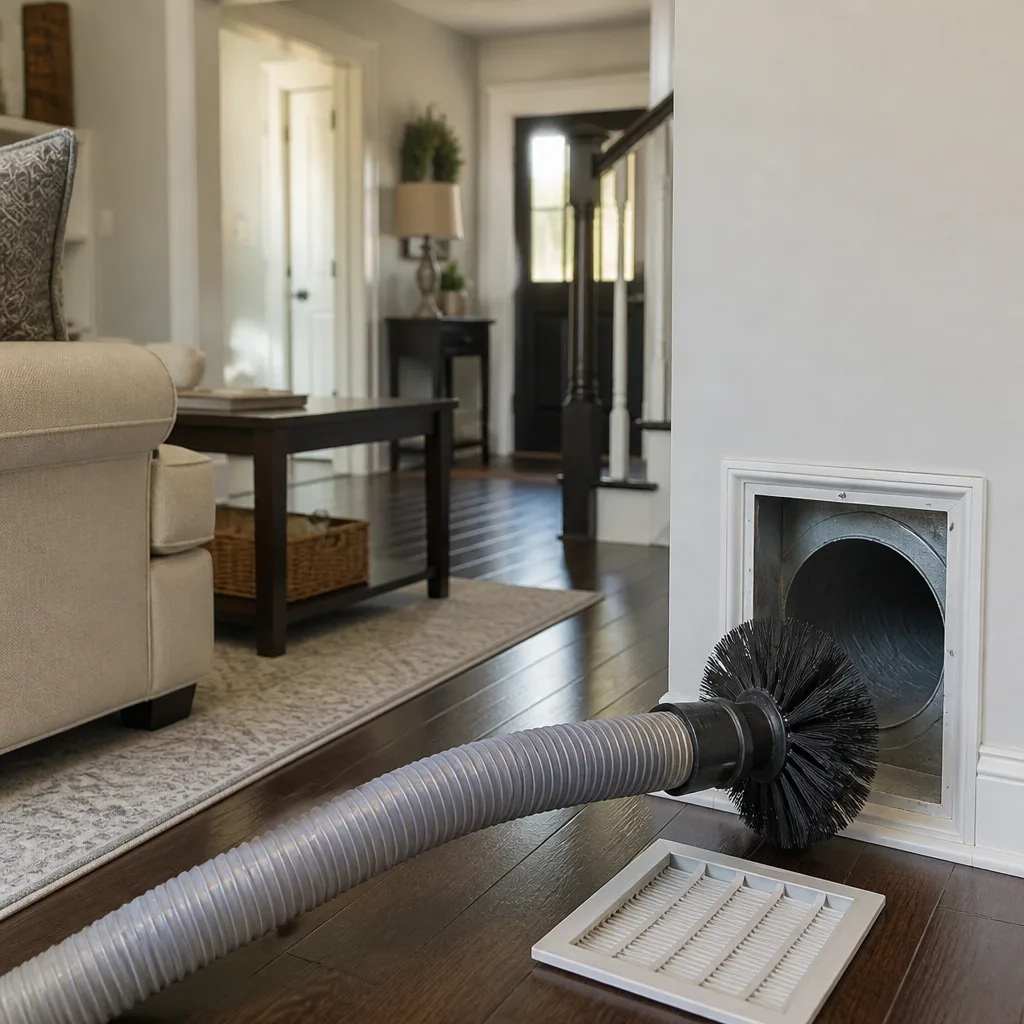 Whole-home duct cleaning
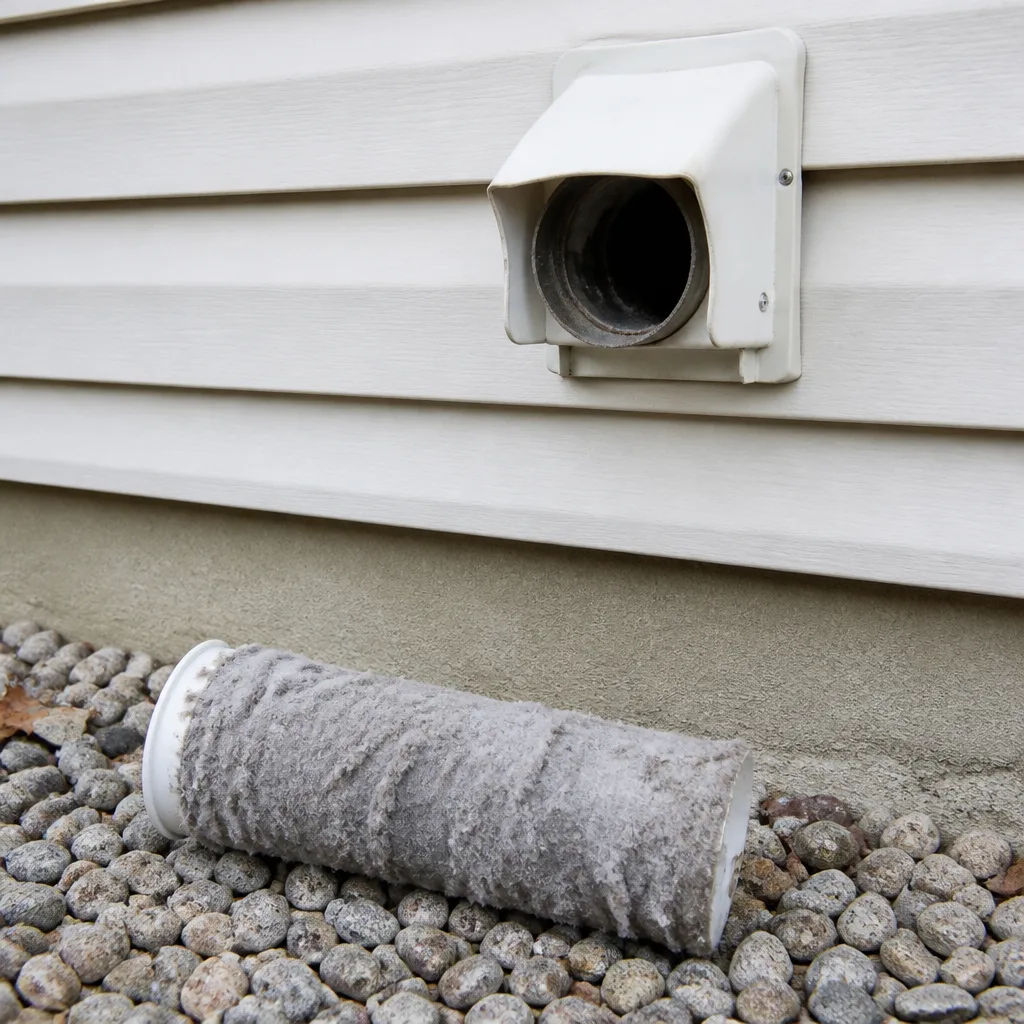 Dryer vent cleaning
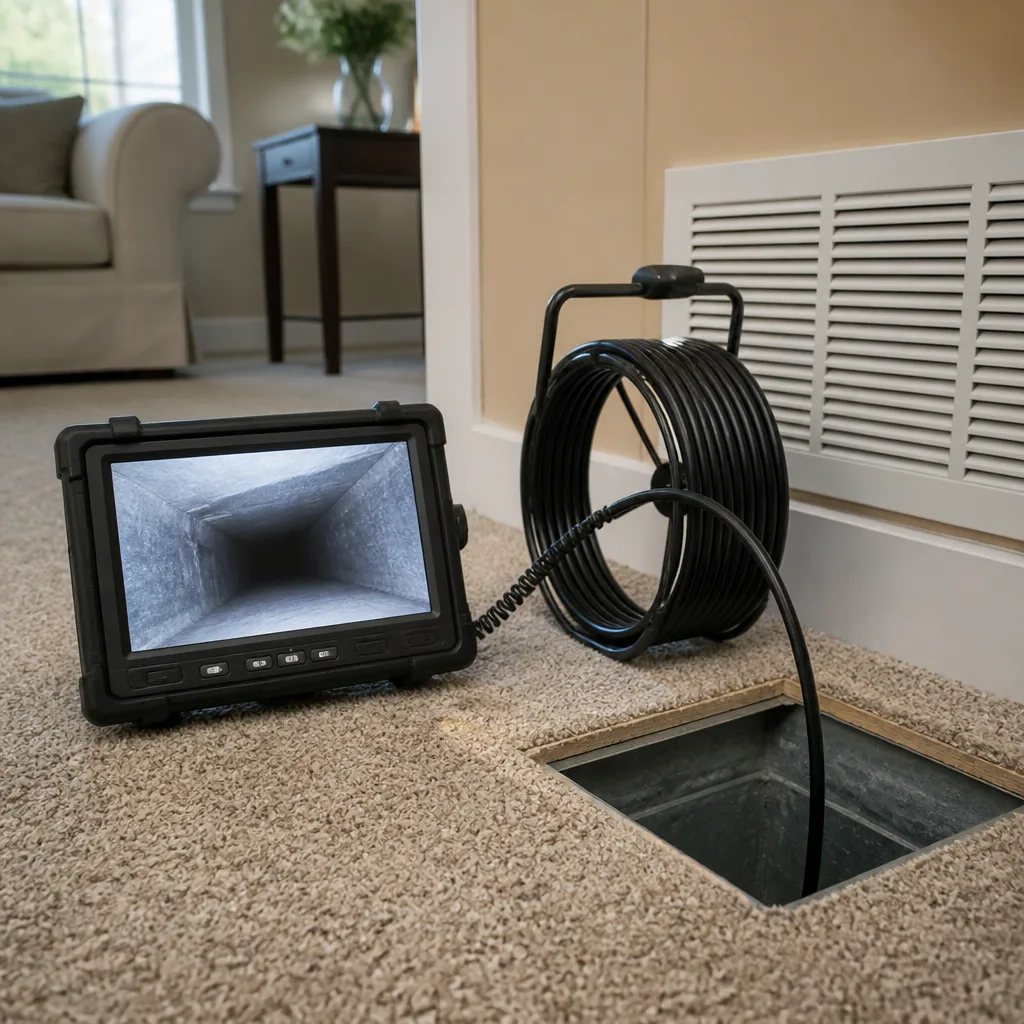 Camera inspection
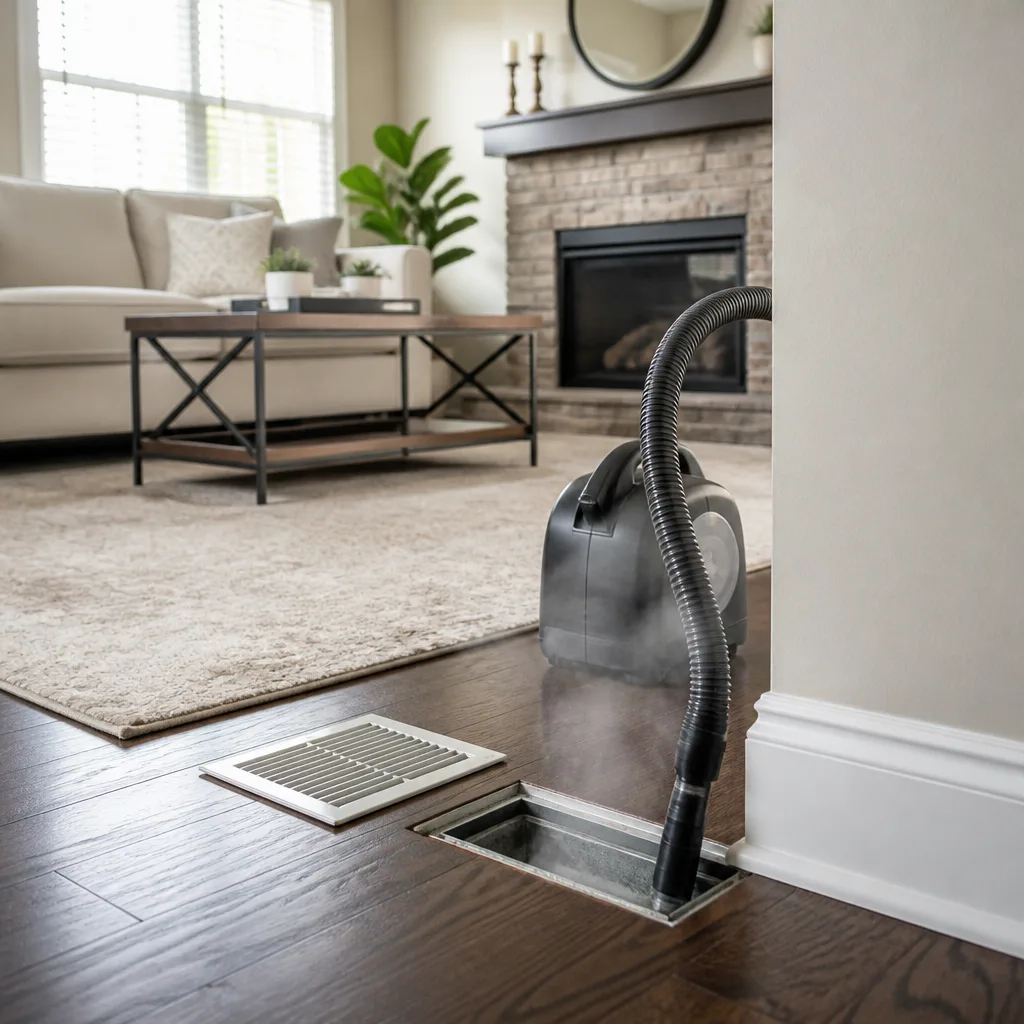 Sanitizing & deodorizing
Whole-system duct and dryer vent check with before-and-after photos - you see exactly what came out of your vents
That "$99 whole-house special" is a bait ad - the real number appears once they are in your hallway, or the "clean" is a shop-vac at the register. We photograph the inside of your ducts before and after instead.
Air Duct Cleaning Troubleshooting: Common Problems and How to Fix Them
Here’s a stat that shocks most Westminster homeowners: roughly one in five residential duct cleanings performed by discount operators leaves the system functionally unchanged. Not slightly better. Functionally unchanged. The vacuum unit was too weak, the brush was the wrong diameter, or entire sections got skipped because the access point was inconvenient. If your home still smells musty two weeks after a duct cleaning, statistically the technician either bypassed the plenum or ran a portable vacuum unit rated below 3,000 CFM – neither of which cleans a residential duct system. This guide walks through each failure mode, teaches you to diagnose what actually went wrong, and shows what a proper Air Duct Cleaning fix looks like. We’re writing this from Westminster, where coastal humidity and older ranch homes create a specific set of duct problems we see week after week.
Quick Answer
If air duct cleaning didn’t solve your air quality problem, the cause is almost never “the ducts needed more cleaning.” In our experience, persistent odor, dust, or poor airflow after a cleaning traces to one of three failures: insufficient vacuum pressure during the service (below 3,000 CFM can’t extract debris from a residential trunk line), upstream contamination sources the cleaning never addressed (coil mold, drain pan sludge, flex duct liner degradation), or pre-existing duct geometry problems that cleaning can’t fix – like disconnected sections, crushed flex runs, or undersized returns.
Styles & brands we work with
- Whole-home duct cleaning
- Dryer vent cleaning
- Camera inspection
- Sanitizing & deodorizing
Table of Contents
- How to Tell If Your Previous Duct Cleaning Was Incomplete
- The Three Pressure-Related Failure Modes
- When Odor Returns: Coil, Drain Pan, and Flex Duct Problems
- Testing Airflow After Cleaning: The $15 Anemometer Method
- When Duct Cleaning Is the Wrong Solution Entirely
- New Contamination Sources That Enter After Service
- What a Proper Duct Cleaning Actually Includes
- Westminster-Specific Factors That Affect Duct Systems
How to Tell If Your Previous Duct Cleaning Was Incomplete
Before you schedule another cleaning, check our Air Duct Cleaning Warning Signs: A Westminster Homeowner’s Reference Guide for evidence that the first one actually failed. A complete duct cleaning leaves specific physical traces. An incomplete one leaves equally specific signs. Here’s what to check in order:
- Remove a register and reach inside with your phone camera. Take a photo looking both directions down the duct. A properly cleaned duct shows bare metal or clean flex liner. If you see a visible debris line – especially where the trunk line meets the branch – the technician stopped short of the full run.
- Check the plenum. The plenum is the large box directly above or below your furnace. This is the single most commonly skipped section in discount cleanings because it’s the hardest to access. If your registers are clean but the plenum holds a quarter inch of settled dust, the entire system now pulls air through that debris field every time the blower runs.
- Look for invoice line items that shouldn’t exist on a real service. If the entire cleaning took 45 minutes from van door open to van door close, the math doesn’t work. A proper residential cleaning – trunk lines, branches, returns, plenum, and coil – takes a two-person crew two to four hours in a typical Westminster ranch home.
- Smell test each register individually. Close all other registers and put your nose directly at one. If odor is concentrated in specific rooms, you may have a disconnected or crushed flex run that’s pulling air from a crawlspace or attic, not dust in the main trunk.
The single most useful diagnostic: remove a floor register in a hallway near the center of the home and look for debris accumulation within the first 12 inches of branch duct. Any dust there means the vacuum never achieved sufficient airflow velocity through that section, or the section was skipped entirely.
The Three Pressure-Related Failure Modes
Duct cleaning is a physics problem before it’s a cleaning problem. To extract debris from a residential duct system, the vacuum unit must move enough air volume to create transport velocity – the speed at which air physically lifts and carries particulates back to the collection point. Fail that, and the cleaning is cosmetic. There are three ways it fails in practice:
1. Insufficient Vacuum Pressure
Portable vacuum units rated below 3,000 CFM simply cannot generate the airflow volume needed to pull debris from a 16-inch trunk line. These units are designed for carpet and upholstery work, not duct systems. We run Duct Cleaning Westminster home jobs with truck-mounted or trailer-mounted Nikro HEPA-filtration vacuums that pull 12,000 CFM or more. That’s not a marketing number – it’s the difference between extracting debris from a 40-foot trunk line and just disturbing the top layer. When a system wasn’t cleaned at adequate pressure, the debris doesn’t disappear; it just gets rearranged. You’ll often see a temporary spike in airborne dust for the first 24 hours after the service, followed by a return to baseline within a week. That pattern is a telltale sign.
2. Wrong Brush Diameter for Duct Gauge
Most residential ductwork in Westminster homes built before 1990 is rigid sheet metal – 26 or 28 gauge. These systems need a rotary brush sized to physically contact the duct walls. A brush two inches undersized will spin in the center of the duct and never scrape the debris layer. We use Rotobrush rotary brush systems with interchangeable head sizes matched to each duct run. The rotation physically agitates adhered debris while the vacuum extracts it simultaneously. Without both actions happening together, the cleaning is incomplete by definition. Flex duct systems have a different requirement – you cannot run a metal brush through flex without risk of tearing the liner. The technique changes, but the pressure requirement doesn’t.
3. Skipped Duct Sections Due to Access Constraints
Some duct runs in older Westminster homes were installed before access was a consideration. We’ve seen return drops positioned behind water heaters, trunk lines boxed in by original framing, and branch runs accessible only by cutting an access panel. A two-hour service that hits convenient registers and skips the rest leaves debris in exactly the sections most likely to harbor it. A proper service either finds or creates access. That sometimes means a new access panel, properly installed and sealed. It never means skipping the section and calling it done. When we handle Air Duct Cleaning in Westminster, access identification is part of the walkthrough before the equipment ever comes off the truck.
When Odor Returns: Coil, Drain Pan, and Flex Duct Problems
Odor persistence after cleaning is the complaint we hear most often from Westminster homeowners. Dust accumulation usually produces a stale smell. Musty odor – the kind that smells like damp basement or wet cardboard – signals moisture and organic growth. And here’s the critical truth: no amount of duct cleaning removes odor generated by a contaminated coil or a degraded flex liner. The duct cleaning can be flawless, and the smell will return within two weeks because the source was never inside the metal duct at all.
The three odor sources that mimic “dirty ducts”:
- Evaporator coil contamination. Your AC coil sits in the air stream year-round. During cooling season in Westminster’s humid months, condensation forms on the coil constantly. That moisture traps airborne dust, pet dander, and organic matter, creating a biofilm layer. The result is a persistent, damp smell that runs through the entire system, not just specific rooms. Cleaning the ducts without cleaning the coil is like changing the oil filter but not the oil.
- Drain pan mold. The condensate pan under the coil collects standing water, especially if the drain line is partially clogged. That’s a mold incubation site directly adjacent to the air stream. You’ll notice the smell intensifies in the first two minutes of system startup – that’s the blower pulling across the pan before the coil temperature stabilizes.
- Flex duct interior liner degradation. Older flex duct – the kind installed in the 1980s and 1990s, common in Westminster additions and retrofit projects – has an interior liner that breaks down over time. The plasticizer leaches out, producing a smell often described as “cat urine” or “chemical cheese.” That odor intensifies with heat. No cleaning addresses it because the material itself is the problem. The fix is replacement of the flex section.
Our diagnostic sequence when odor persists: we inspect the coil first, the drain pan second, and pull a camera through flex runs third. In most cases, the issue is found before we ever touch the main trunk line.
Testing Airflow After Cleaning: The $15 Anemometer Method
A duct cleaning should improve system performance, not just aesthetics. After any service – ours or a competitor’s – you should be able to verify the result with a tool that costs less than a takeout order. An inexpensive anemometer, available for about $15 online, measures air velocity at each register. Here’s how to use it to confirm or deny whether the service improved your system:
- Baseline before cleaning. Set your HVAC fan to ON (not AUTO), wait five minutes, then measure each register by holding the anemometer one inch from the face, centered. Record the number in feet per minute (FPM). Repeat for every register. This takes 15 minutes and gives you a performance baseline.
- Compare after cleaning. Repeat the identical measurements after the service. Same fan setting, same registers, same positions. A meaningful improvement shows airflow velocity increases at previously-fouled registers. You’re looking for increases of 10-20% or more in rooms that were weak before.
- Apply the balance test. Total airflow should be roughly balanced between supply and return. If supply registers are blowing strongly but rooms stay hot or cold, the issue is return-side restriction – often a dirty or undersized return. Cleaning can help a dirty return, but an undersized return is a duct design problem that cleaning can’t fix. That’s where Air Duct Repair in Westminster becomes relevant: if a return is 20% undersized for the system’s BTU capacity, no cleaning in the world will balance the air. The fix is a larger return or an additional return drop.
- Room-by-room comparison. Expect some variation room to room. A difference of 15-20% between nearest and farthest register is normal. A 40% difference means something specific: a crushed flex run, a disconnected branch, or a damper closed during cleaning and never reopened. This is measurable, not speculative.
The anemometer method separates real performance improvements from marketing theater. If a company can’t answer questions about CFM ratings and airflow testing, read our Choosing the Right Air Duct Cleaning Brand: A Buyer’s Guide for Westminster – the service probably wasn’t built on measurements, and the results will show it.
When Duct Cleaning Is the Wrong Solution Entirely
This is the section most cleaning-only companies won’t write. But it’s the most honest thing we can tell you: some homes don’t need duct cleaning. They need something else. Diagnosing which is which before you spend money is the entire game. Here are the cases where cleaning is the wrong tool:
- Active mold growth inside the ductwork. If you see visible mold – black, green, or white fuzzy growth – inside ducts or on register faces, cleaning won’t fix it. Mold sends roots into porous surfaces. Vacuuming removes surface spores but not the rooted organism. The fix is either duct replacement (for flex) or professional antimicrobial treatment by a licensed mold remediation contractor. In Westminster’s humid coastal climate, this distinction matters more than in inland areas where duct interiors stay dry.
- Biological contamination from rodent or bird activity. If you’ve had pests in your ductwork – droppings in the registers, nesting material in the trunk – cleaning alone leaves biohazard residue. The ducts need sanitation, not just extraction. We’ve seen Westminster homes where a single rat’s nest in a return line contaminated an entire system. Cleaning the ducts without addressing the contamination pathway and sanitizing the surfaces is half a job.
- Crushed, disconnected, or torn flex ducts. Cleaning a crushed duct doesn’t un-crush it. Cleaning a disconnected branch doesn’t reconnect it. These are structural problems requiring repair or replacement. We identify them during inspection – often with a borescope camera – and fix them as part of the same visit. It’s the single biggest advantage of working with a service that does repair alongside cleaning: you don’t get told “we cleaned it, but you have a problem you need someone else for.” The problem gets handled.
- HVAC equipment failure producing debris. If your blower motor bearings are failing and shedding metal particles, cleaning the ducts just gives the particles a clean surface to land on. The equipment repair comes first, then the cleaning. A proper diagnostic looks at the equipment, not just the ductwork.
- Persistent high humidity inside the duct system unrelated to the HVAC. If the source of moisture is a leaking roof, a plumbing leak, or a disconnected dryer vent pumping moisture into a wall cavity – cleaning is treating a symptom. The source needs fixing first. We use Abatement Technologies containment equipment on jobs where we’re working around active contamination to prevent cross-contamination of living spaces, but that equipment is only appropriate when the source has been addressed.
In each of these cases, a responsible contractor tells you what you actually need. That’s the difference between a transactional cleaning and a diagnostic service.
New Contamination Sources That Enter After Service
Sometimes the cleaning was done well. The ducts were extracted, the registers were sealed, the system balanced. And six months later, dust is back. The question isn’t “what did the cleaner miss?” – it’s “what’s entering the system now?” Post-service contamination falls into predictable categories:
- Renovation debris. Westminster homeowners doing kitchen remodels, room additions, or flooring replacement often run their HVAC during construction. Drywall dust, sanding particles, and flooring particulates get pulled through the return registers and deposited directly into a freshly-cleaned system. The fix: seal off supply and return registers during any renovation, or change filters aggressively during the project. If you already ran the system, expect to need another cleaning.
- Filter bypass. A filter that’s the wrong size, incorrectly installed, or left out entirely allows unfiltered air to pass through. We regularly find return grilles that have no filter installed at all – the slot is there, but the filter was removed during a previous service and never replaced. That’s an unfiltered air stream hitting the coil and the ducts 24/7.
- Duct leaks drawing attic or crawlspace air. A return line crack or separation pulls unfiltered air from wherever it sits. If that’s an attic with blown fiberglass insulation, you’re pulling insulation fibers into your air stream. If it’s a crawlspace with damp soil, you’re pulling mold spores and musty air. No cleaning fixes an active leak. The leak fixes first, then the cleaning. This is why Air Duct Repair in Westminster and cleaning are often booked as a combined service – they’re connected problems.
- Pet dander re-accumulation. This one’s simple: if you have three dogs and no grooming routine, the dander returns no matter how well the ducts were cleaned. The system is doing what it’s designed to do – moving air that contains whatever’s in the house. Frequent filter changes and source management (grooming, HEPA air purifiers) are the answer, not another cleaning.
- Dryer vent backpressure. If your dryer vent is clogged with lint, the dryer’s exhaust doesn’t leave the home effectively. That humid, lint-laden air can back into the living space and re-enter the HVAC return. We handle Dryer Vent Cleaning in Westminster as a dedicated service specifically because of this dynamic – a clogged dryer vent affects more than the dryer. It affects the entire indoor air system.
The point: re-contamination isn’t the duct cleaning’s fault. It’s an entry source the cleaning doesn’t control. The right diagnostic asks “what changed since the last service?” before assuming the service failed.
What a Proper Duct Cleaning Actually Includes
Once you understand the failure modes, the question becomes: what should a legitimate service actually include? Here’s what a professional-grade cleaning looks like when it’s done right – the same standard we hold ourselves to on every job:
- Pre-service inspection with photographic documentation. The entire duct system gets inspected before cleaning begins. Registers are removed, the plenum is opened or accessed, the coil is inspected, and photos are taken. You should receive those photos before work starts. If a company can’t show you what’s inside your ducts, how will they verify what they removed?
- Vacuum extraction at the system level. The vacuum connection is made at the trunk line or plenum, creating negative pressure through the entire system. A proper unit – think Nikro HEPA-filtration equipment, not a portable carpet vacuum – pulls 12,000+ CFM through the duct network. This is the foundation of actual cleaning.
- Mechanical agitation of each duct section. Rotary brushes (we run Rotobrush rotary brush systems) physically scrub the interior walls, dislodging adhered debris that vacuum pressure alone won’t remove. Each branch, each return drop, each trunk section gets agitation plus simultaneous extraction. This is the difference between surface disturbance and actual removal.
- Containment during the service. We use Abatement Technologies containment equipment on jobs where debris disturbance could cross-contaminate living spaces. Negative air pressure inside the duct system, combined with proper register sealing, keeps the dust we’re removing inside the duct, not floating through your living room. Residential jobs rarely see this level of care – that’s one of the reasons we distinguish ourselves from discount operators.
- Coil inspection and access. If the evaporator coil is accessible, it gets inspected and cleaned if needed. If it’s not accessible, we tell you that – and we can often install an access panel or schedule a follow-up with appropriate equipment. Coil cleaning is part of air quality, not a separate service.
- Post-service verification. Before we leave, registers are re-measured for airflow (using the same anemometer method we recommend to homeowners), before/after photos are confirmed, and the system is run to verify operation. You should receive documentation that shows what was done and what condition the ducts were in before and after.
That’s what a real service includes. If a quoted price seems too low to cover that amount of labor and equipment time, it’s too low – and something above got skipped.
Westminster-Specific Factors That Affect Duct Systems
Westminster homes have specific characteristics that influence duct problems, and a proper diagnostic accounts for local conditions rather than applying a generic template. Here’s what we see in Westminster that changes the troubleshooting picture:
Coastal humidity cycles. Westminster sits close enough to the coast that summer nights bring significant humidity. That moisture load concentrates inside duct systems, especially in crawlspaces and attics where insulation is insufficient. The result: dust in Westminster ducts tends to be heavier and more compacted than in inland areas. It settles, absorbs moisture, and forms a denser layer that’s harder to extract. This is exactly why adequate vacuum pressure matters more here than in drier markets – surface-level cleaning doesn’t touch the compacted layer.
1960s and 1970s housing stock. A large portion of Westminster’s single-family homes were built in the 1960s and 1970s. That means rigid metal ductwork (good) that’s now 50-60 years old (mixed). Seams that were sealed with old mastic have dried and cracked. Joints have separated. Returns have been patched with incorrect materials. When we inspect these systems, we’re looking for age-related failure in addition to dirt. Cleaning a 60-year-old system with separated joints requires care – too much agitation pressure and you worsen the separation. The skill is in knowing where to push and where to pull back.
Remodel-era flex duct additions. Westminster saw significant residential remodeling through the 1980s and 1990s. Many of those additions and room conversions used flex duct with liners now approaching 30-40 years old. That’s end-of-life territory for flex. The liner degradation smell mentioned earlier – the “cat urine” odor – shows up in Westminster homes with surprising frequency. If your home has a remodeled addition and a persistent chemical odor, the flex in the addition is the prime suspect.
Register count and system balance. Homes in established Westminster neighborhoods often have register layouts that made sense for the original construction but don’t match how families live now. Closed-off rooms, converted garages, and added square footage all change the airflow math. A system that was balanced in 1972 is likely unbalanced in 2026. That’s not a cleaning problem – it’s a duct design problem that manifests as weak airflow in specific rooms. Both cleaning and repair address different aspects of it.
The throughline: Westminster duct problems are rarely single-cause. They’re usually a combination of age, climate, and modification history. The diagnostic has to account for all three.
Common Mistakes to Avoid
- Re-cleaning the same system without diagnosing why the first cleaning failed. If debris returned within months, something is entering the system or the first cleaning never achieved extraction. Paying for a second cleaning without a diagnosis is just paying twice for the same incomplete result. Westminster homeowners on a budget often fall into this trap – the cleaning quote is lower than the diagnostic, so the cleaning gets repeated instead of the problem getting solved.
- Hiring on price alone for a service where pressure and equipment determine results. A $99 duct cleaning in Westminster isn’t a bargain; it’s a structural impossibility. The equipment and labor required to do the job properly cost more than that. You’re either getting a partial service or a bait-and-switch in the driveway. Either way, the “savings” disappear when the problem remains.
- Confusing register cleaning with duct cleaning. Wiping register covers and vacuuming the first six inches of visible duct is not duct cleaning. It’s register cleaning. The debris that matters is deep in the trunk line and branches, where the air actually moves. We’ve seen homes in Westminster where register faces were spotless and the trunk line held an inch of accumulated dust.
- Running the HVAC during renovations and then wondering why the ducts are full again. Construction dust is aggressive. It will find every return register. If you’re renovating, seal registers or turn the system off until the dust-generating work is done. If you’ve already made this mistake, the fix is straightforward – the ducts need cleaning again, along with the coil.
- Ignoring the coil because “the ducts were just cleaned.” The coil is in the air stream. If it’s dirty, your clean ducts are moving air across a contaminated surface. Think of it as installing a clean filter in front of a dirty engine. Coil inspection should be part of any duct service, and if your cleaner never mentioned the coil, that’s a signal about the thoroughness of the work.
- Assuming a persistent odor means the cleaning “didn’t take.” Odors are chemistry, not just debris. A persistent musty smell after a proper cleaning usually points to an odor source upstream of the ducts – coil, drain pan, or flex liner. Cleaning the ducts again won’t help. Addressing the source will. Getting the diagnosis right saves you money and frustration.
- Skipping the dryer vent because it’s “a different system.” Your dryer vent and your HVAC ducts share air dynamics. A clogged dryer vent builds humidity and lint in the laundry space, and that air gets pulled into the HVAC return. In Westminster homes where the laundry is inside the conditioned space rather than the garage, the interaction is direct. Treat them as part of the same indoor air system.
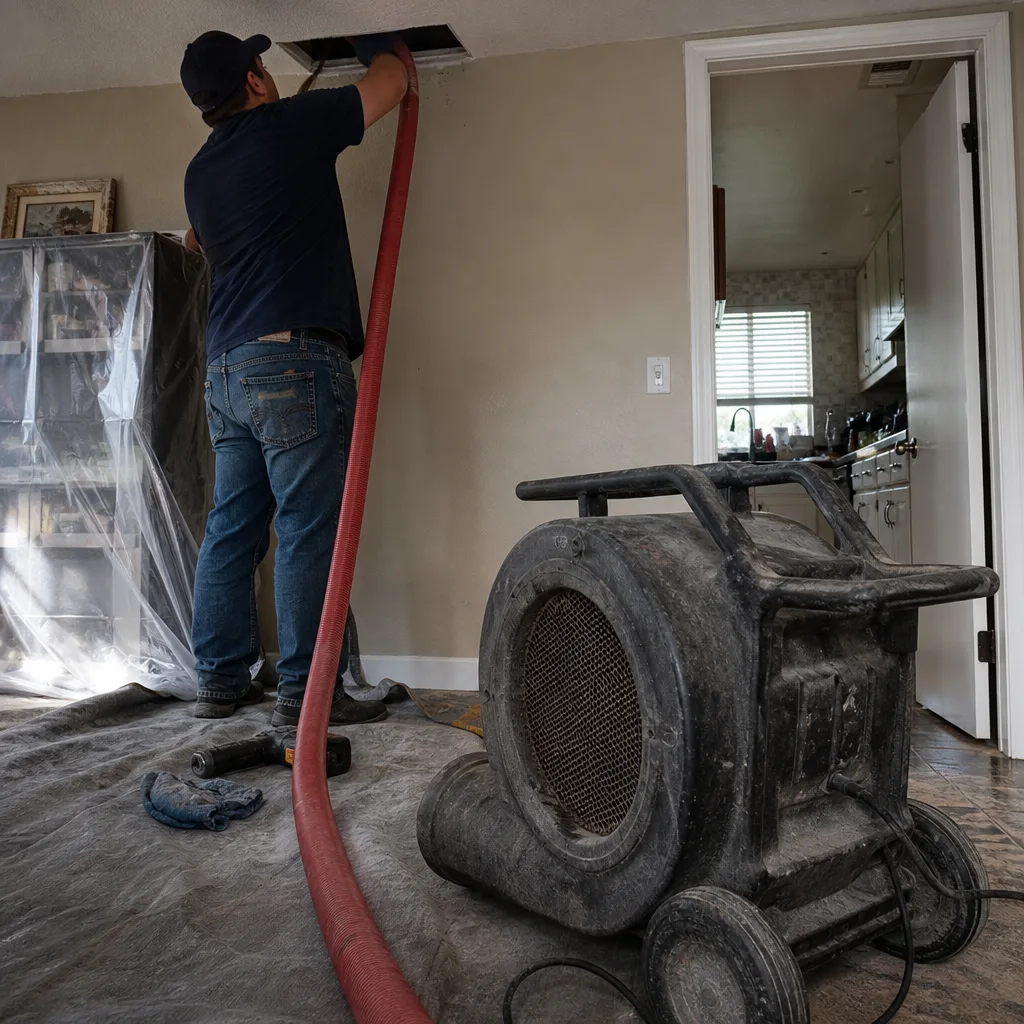
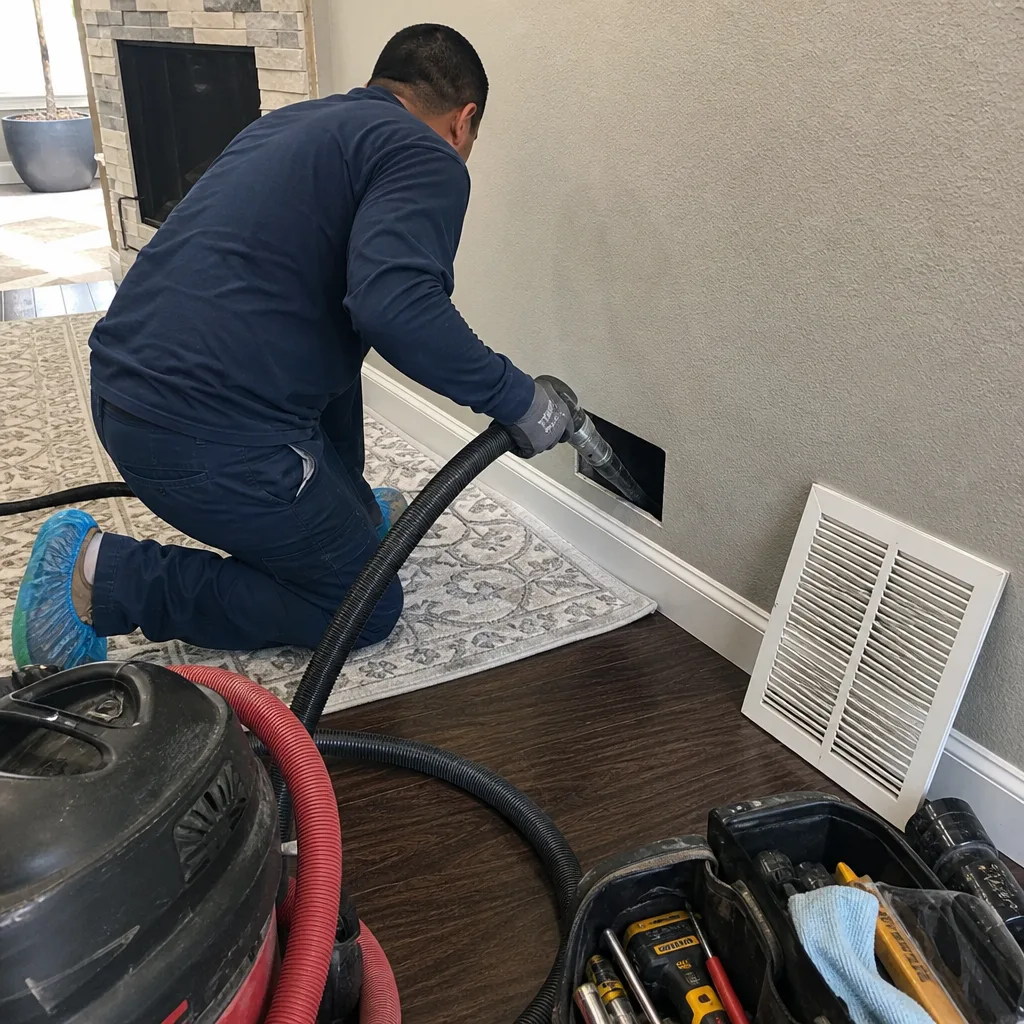
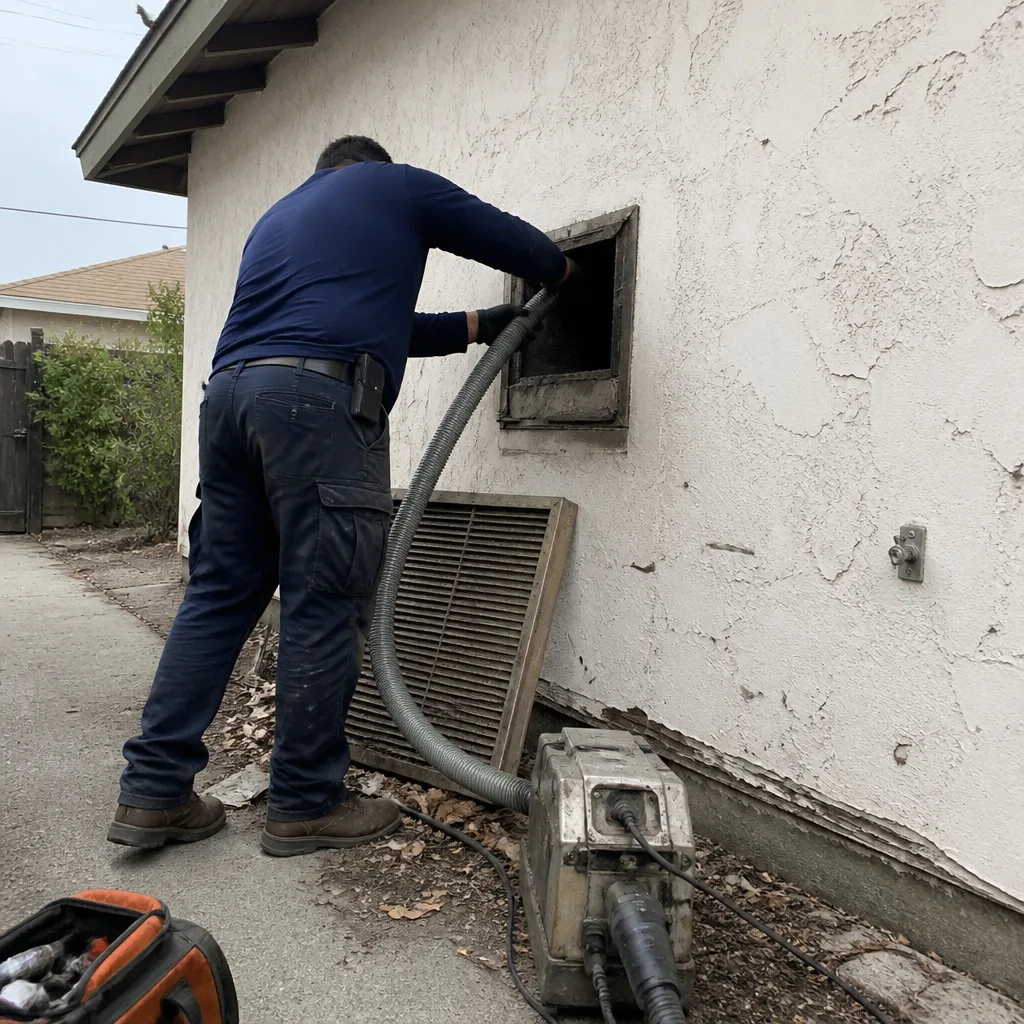
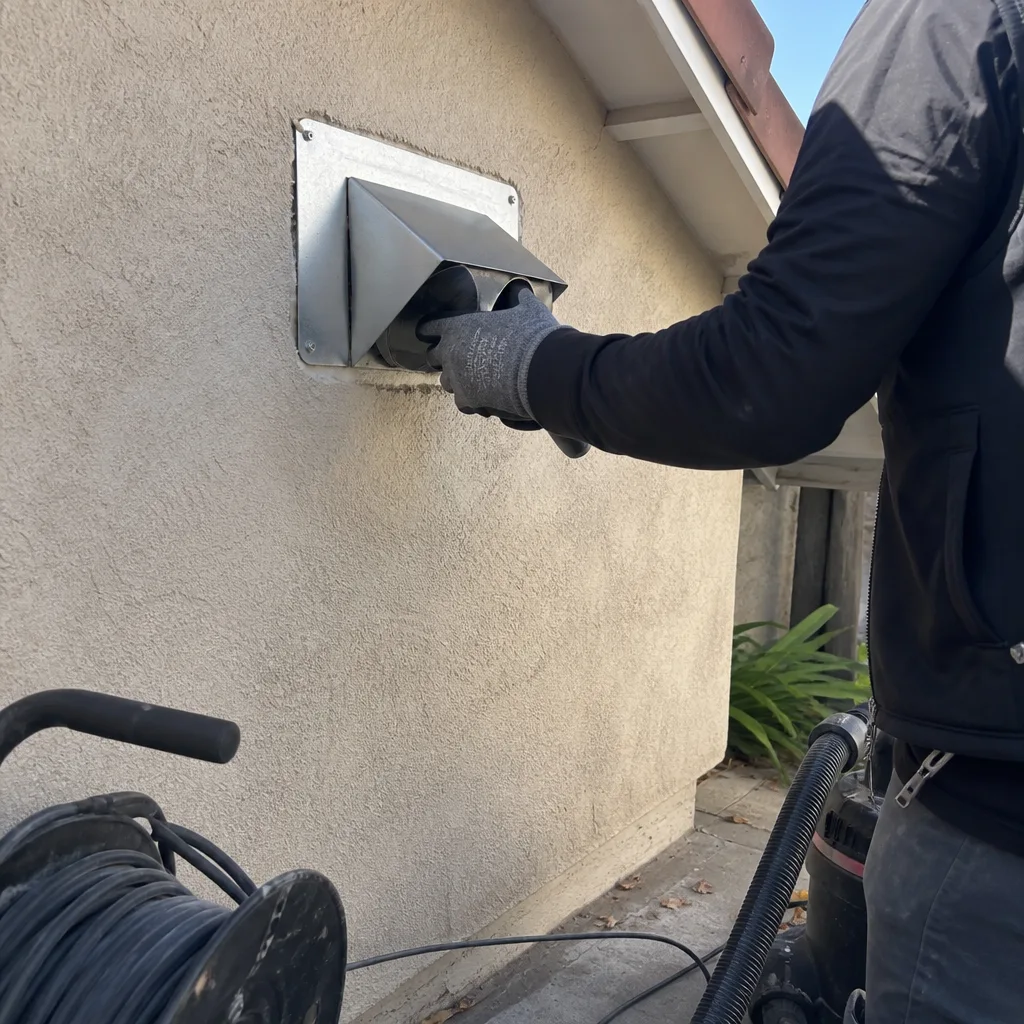
See the difference
 Before
 After
 Before
 After
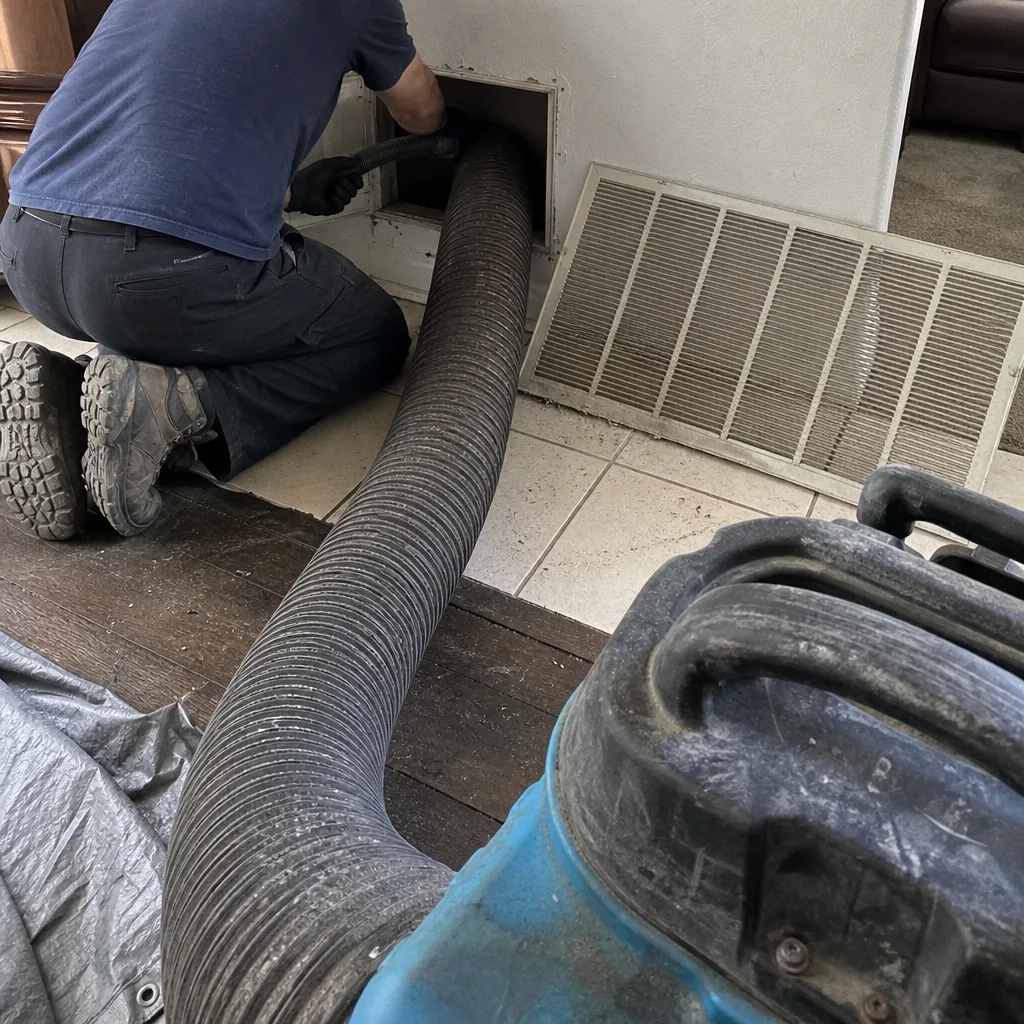 Before
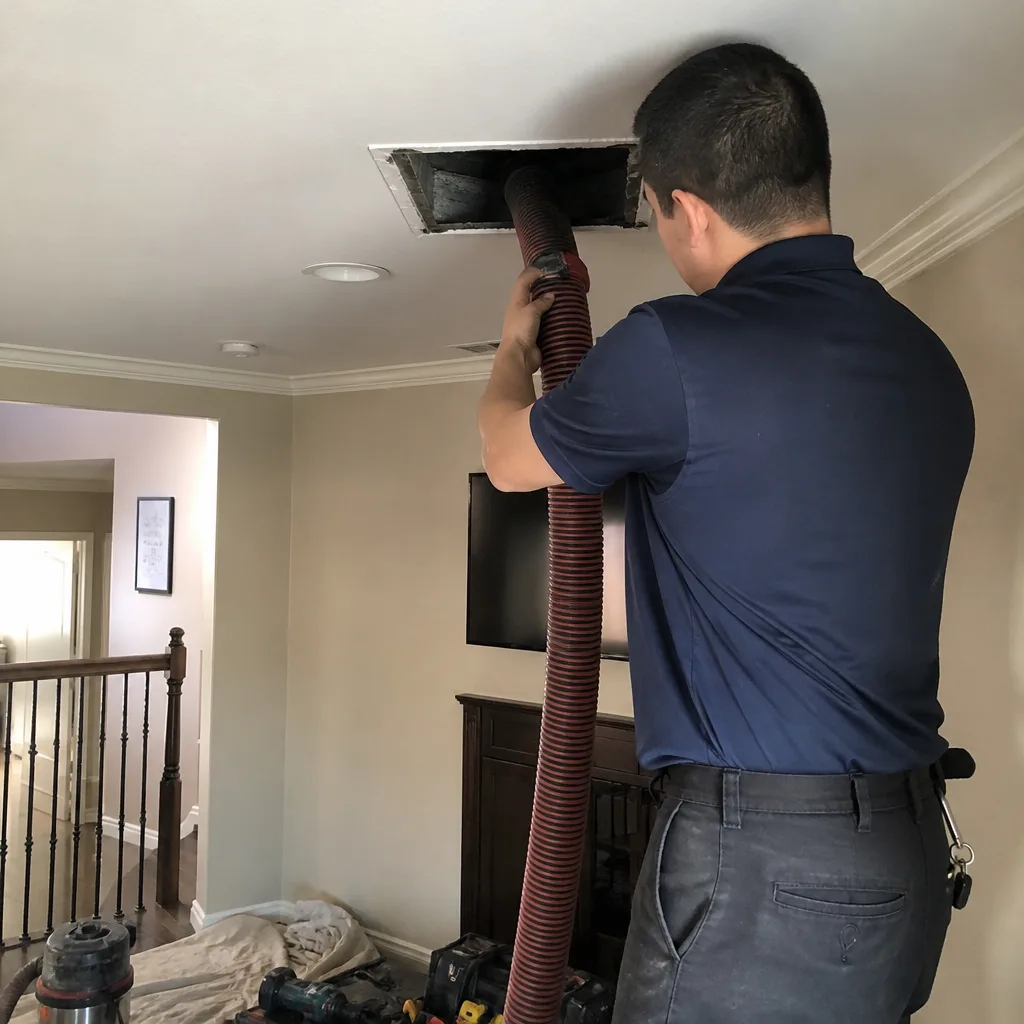 After
When to Call a Professional
If you’ve read this far and recognized your situation in the failure modes above, the next step is a diagnostic – not another cleaning from the same source. Call a professional when: odor persists beyond two weeks after a service; airflow is measurably weak in specific rooms despite recent cleaning; you see visible mold or pest evidence in the ducts; your system is 50+ years old and has never been properly inspected; or you’ve had renovation work and the dust never settled. The diagnostic comes first. Duct Cleaning Westminster offers free estimates in Westminster – call (877) 752-8412. We’ll inspect the system, show you photos of what’s actually inside, and tell you honestly whether cleaning, repair, or a different solution is the right call.
Frequently Asked Questions
Expect a legitimate whole-home duct cleaning in Westminster to run $500-$1,200, depending on home size, system configuration, and whether the coil is included. That’s not a teaser price; that’s the honest range for a service using commercial-grade equipment like Nikro HEPA vacuums and Rotobrush rotary brush systems on a typical 1,500-2,500 square foot home. Quotes below $300 should raise specific questions about equipment, time on site, and what sections are actually being cleaned. Call (877) 752-8412 for an exact quote – estimates are free.
The price difference almost always reflects equipment and labor time. A $99-$199 service uses portable vacuums with limited CFM and minimal time per section – typically 45-90 minutes on site. A proper service deploys truck-mounted or trailer-mounted vacuum equipment, spends two to four hours, and includes inspection, containment, and verification. The cheaper service isn’t the same service at a discount; it’s a different, less effective process. You’re not saving money – you’re buying a partial result.
Request before-and-after photos from inside the ducts, not just register face photos. A legitimate service photographs the interior with a borescope or inspection camera before starting and after finishing, and shares those images with you. You can also verify independently: the $15 anemometer airflow test at each register should show measurable improvement if significant debris was removed. No photos, no airflow data, and no verifiable before/after difference means the work can’t be confirmed.
In a typical Westminster home with a functioning filter and no unusual contamination sources, every 4-7 years is a reasonable interval. Homes with multiple pets, recent renovations, heavy pollen seasons, or smokers in the household may need cleaning more frequently – every 2-3 years. Homes with newer systems, aggressive filtration, and no pets may go longer. The honest answer: it depends on measurable conditions inside your ducts, not a calendar. That’s what inspection is for.
Persistent allergy symptoms after a duct cleaning usually point to a source the cleaning didn’t address: a contaminated coil, a drain pan with biological growth, leaking ducts pulling attic or crawlspace air, or an HVAC filter that isn’t doing its job. Duct cleaning removes debris from the ducts. It doesn’t remove allergens already settled in carpet, furniture, and bedding, and it doesn’t stop new allergens from entering through leaks and gaps. A proper diagnostic identifies what’s actually triggering symptoms.
It can, if done carelessly or with incorrect equipment. Overly aggressive agitation on aging flex duct can tear the liner. Excessive negative pressure on old or weakened sheet metal can cause separation at seams. A proper service knows the difference – matching brush diameter to duct size, adjusting pressure for system age and condition, and inspecting flex runs before and after agitation. That’s the advantage of working with a service that does repair as well as cleaning: if we find damage, we fix it rather than hiding it.
The Bottom Line
Air duct cleaning troubleshooting comes down to three questions: What was actually done during the last service? What’s entering the system now that wasn’t removed? And is the problem something cleaning can even fix? In Westminster, where coastal humidity meets 50-year-old ductwork and remodel-era flex, the answer is rarely as simple as “the ducts are dirty.” The bottom line: cheap cleaning is usually incomplete cleaning, and no cleaning fixes contamination that lives in the coil, the drain pan, or a degraded flex liner. Diagnose first, clean second, and use a service that brings commercial-grade equipment, verification standards, and repair capability to the job. That’s how you avoid paying twice for the same air quality problem.
Written by the team at Duct Cleaning Westminster, serving Westminster since 2017. Explore more guides & resources on our blog.