
Last updated November 2, 2026
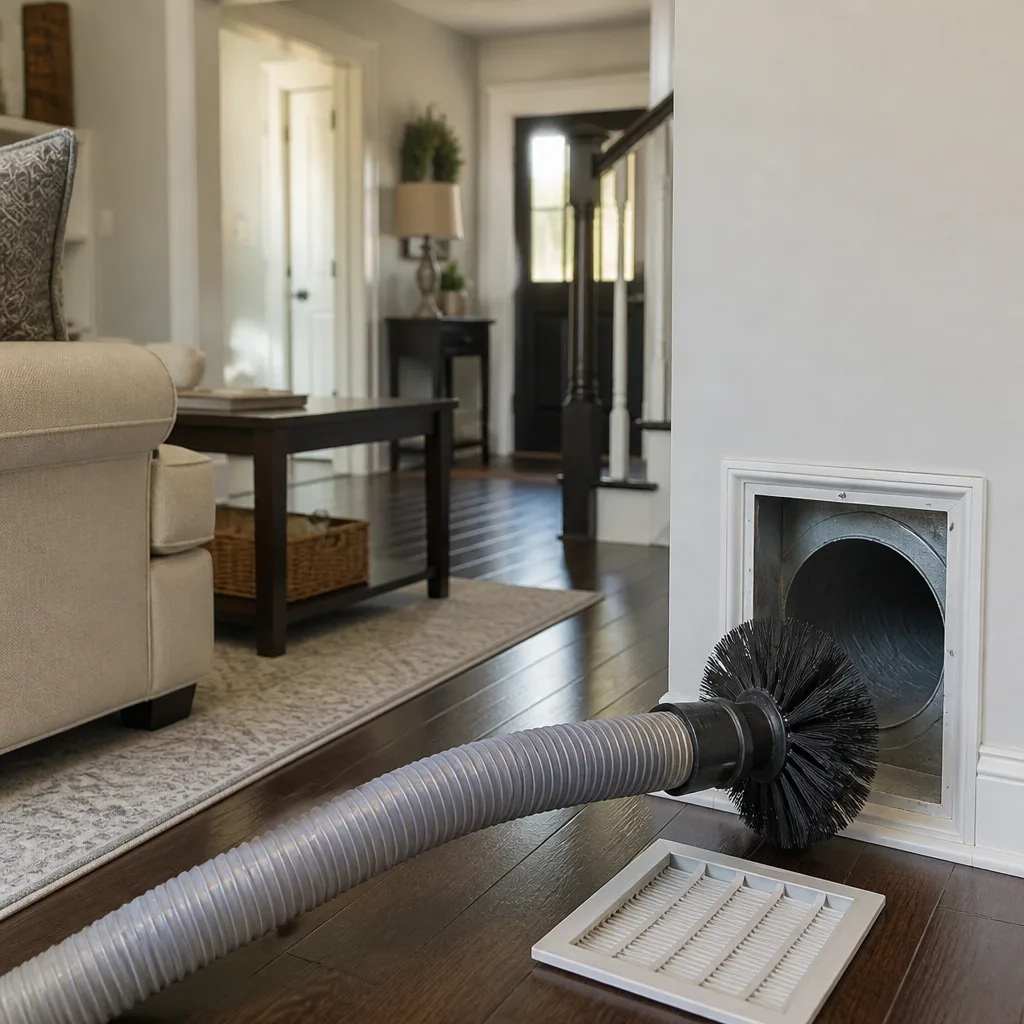 Whole-home duct cleaning
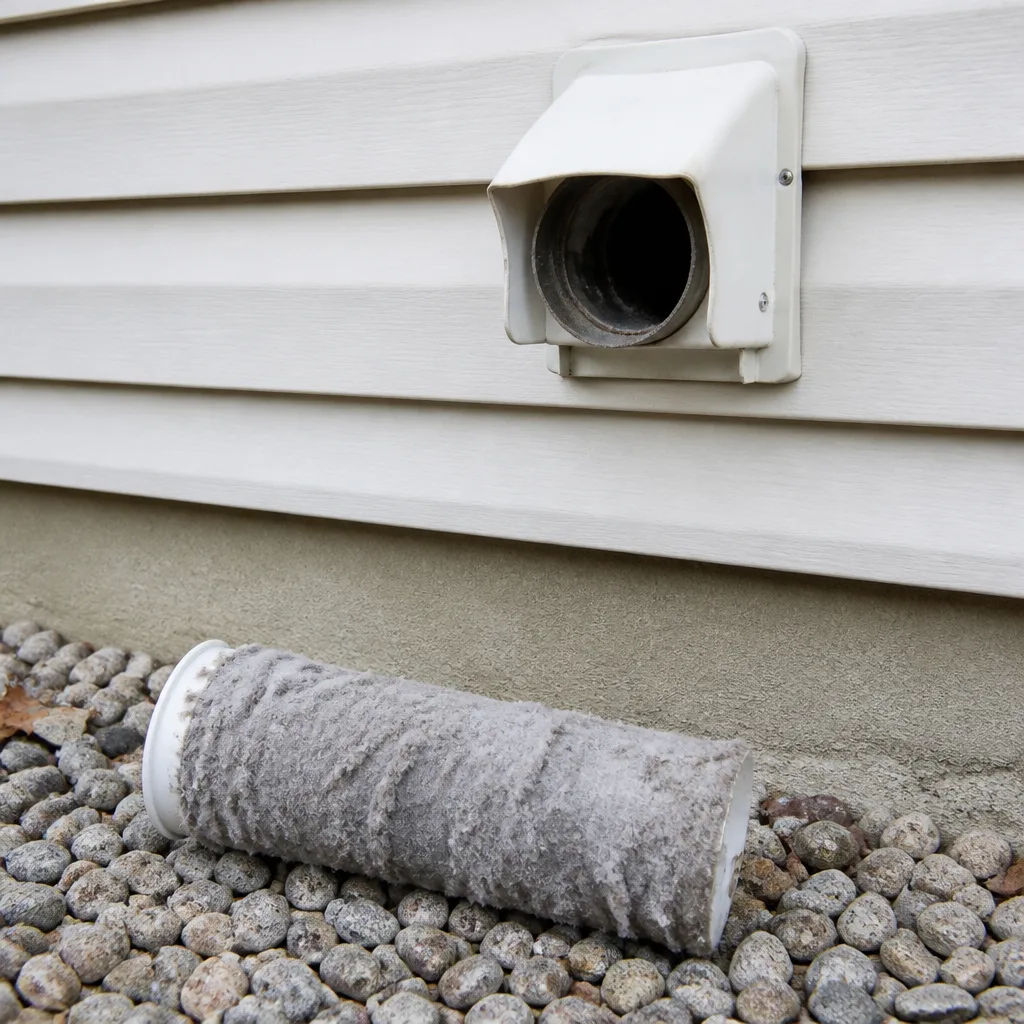 Dryer vent cleaning
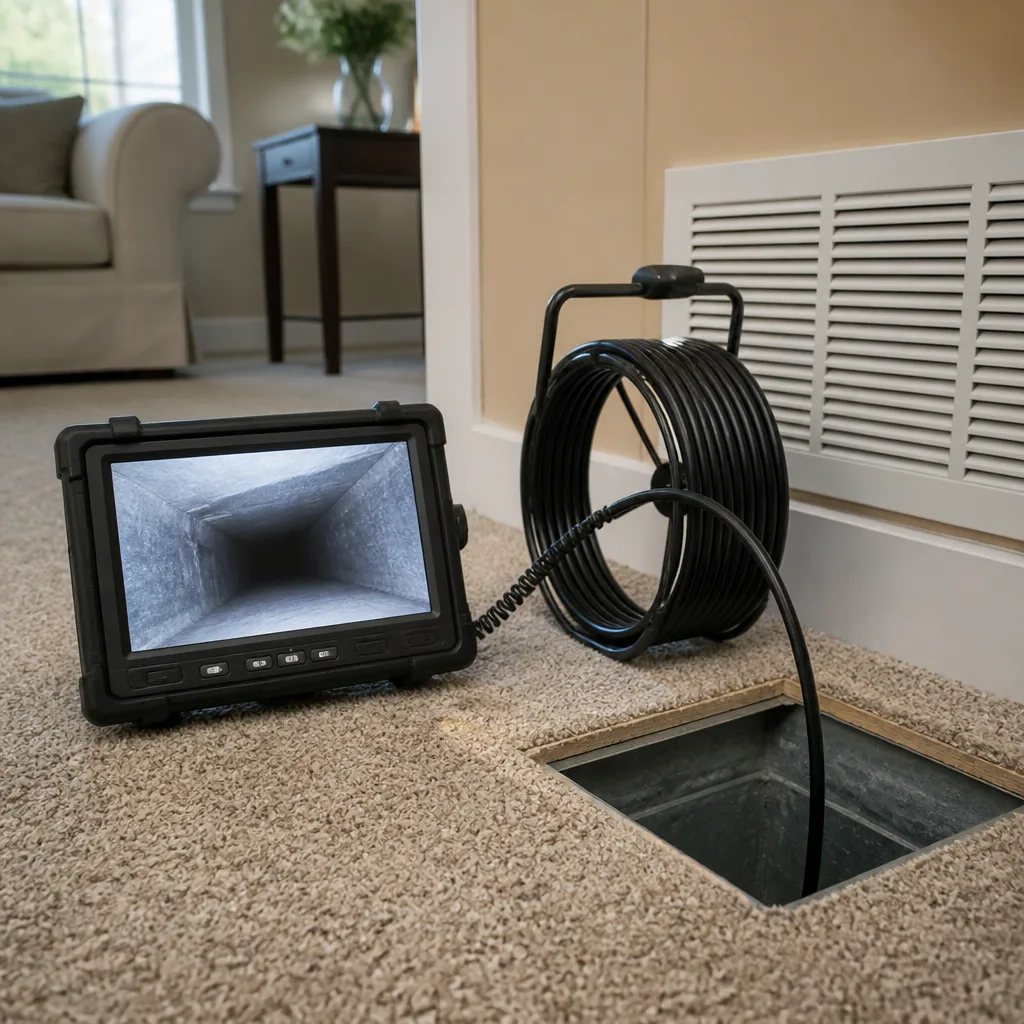 Camera inspection
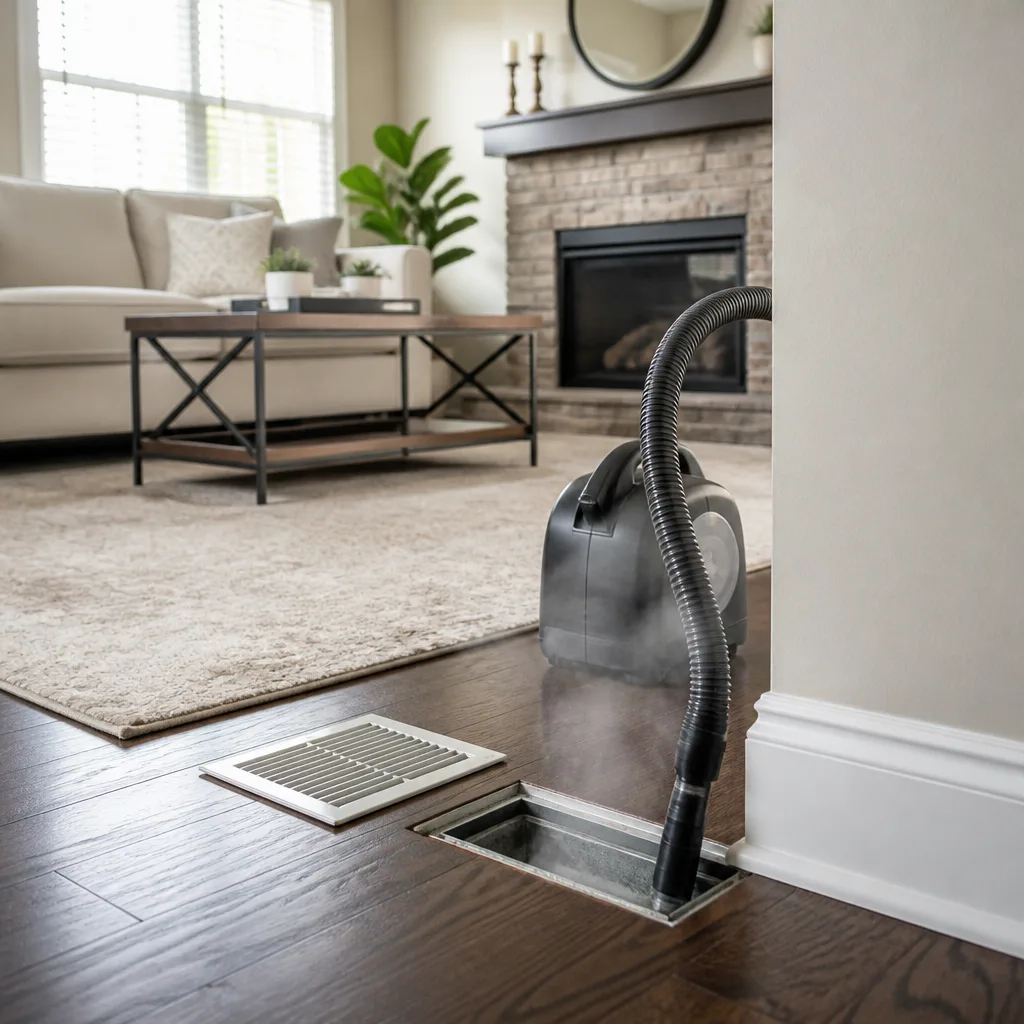 Sanitizing & deodorizing
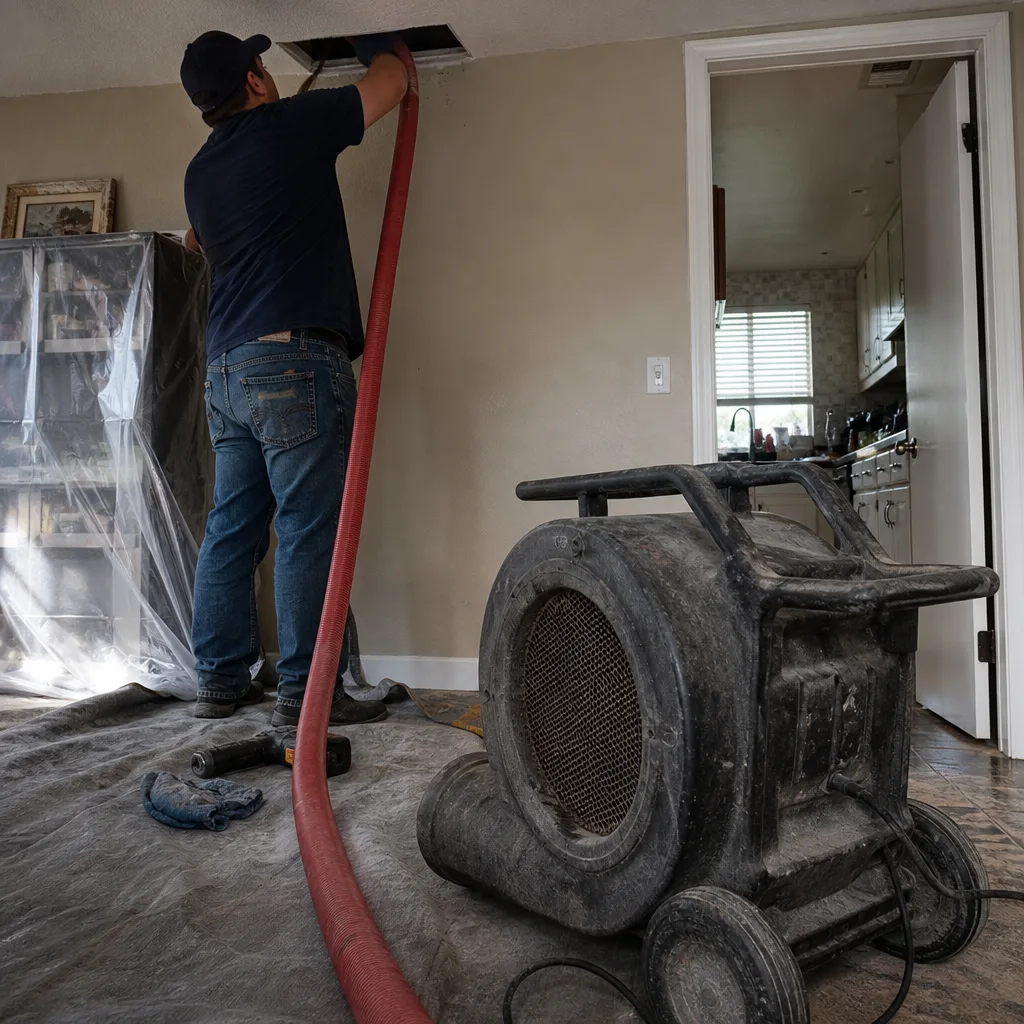
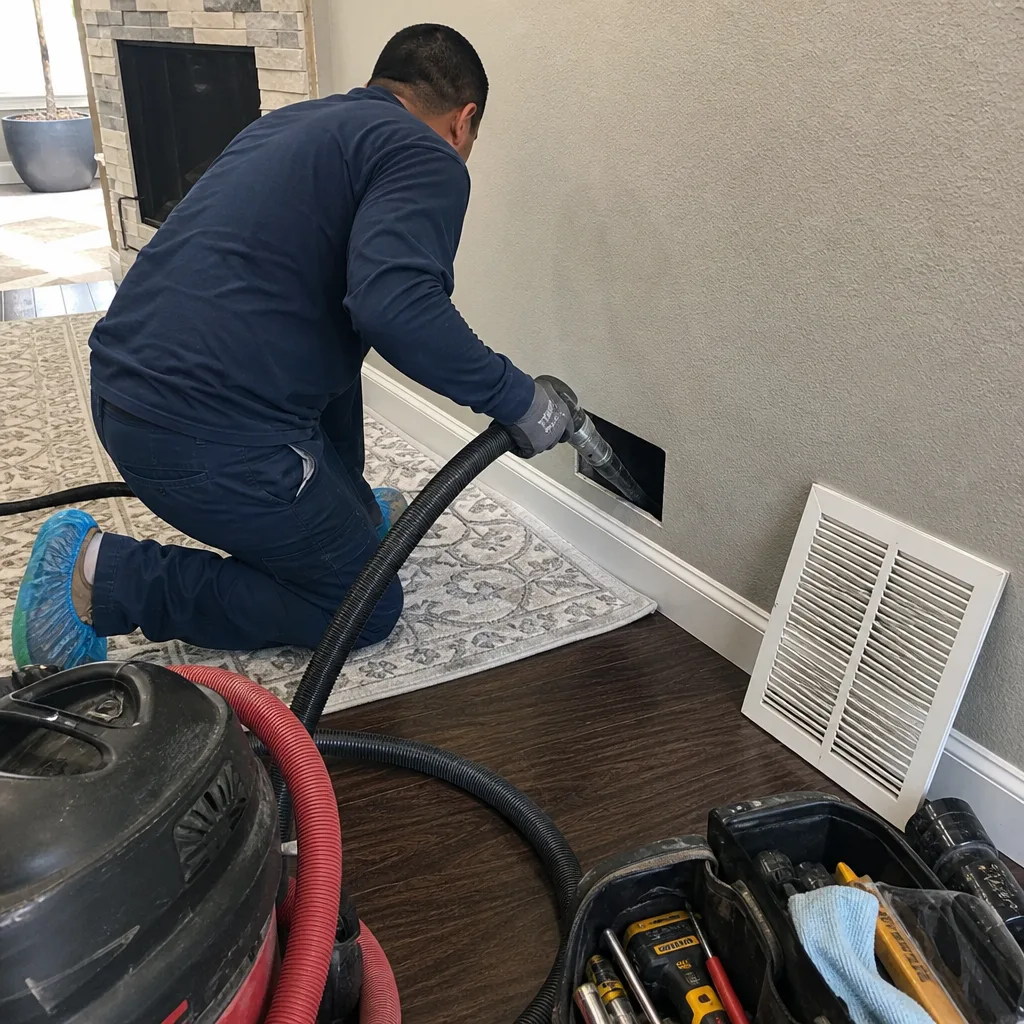
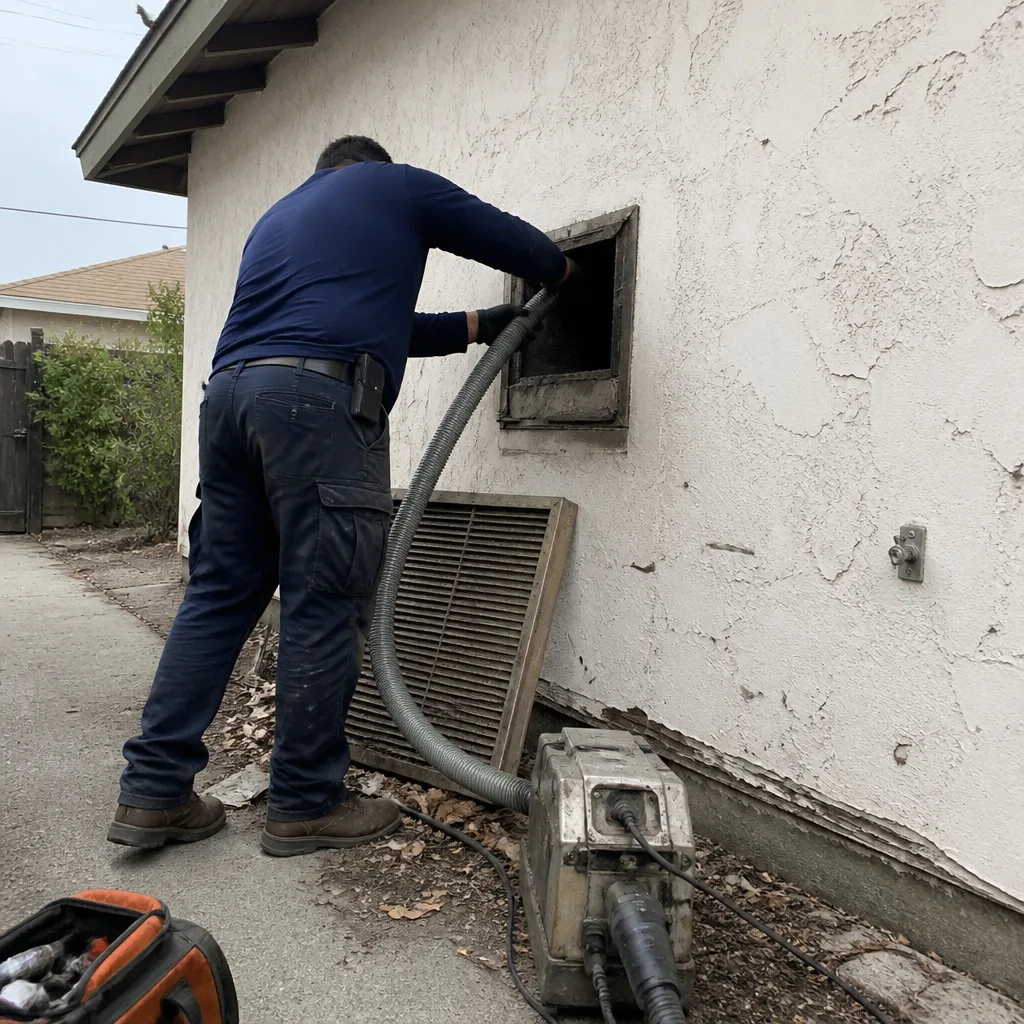
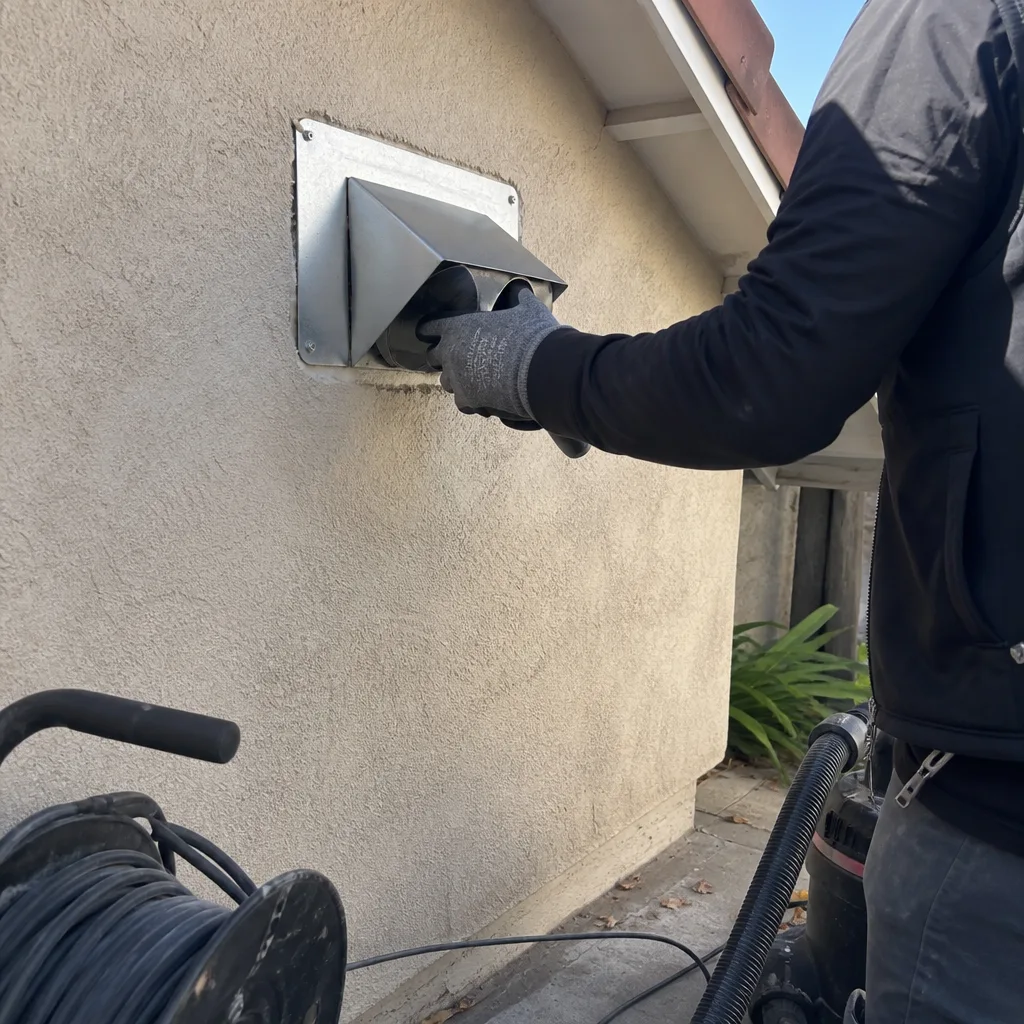
Whole-system duct and dryer vent check with before-and-after photos - you see exactly what came out of your vents
That "$99 whole-house special" is a bait ad - the real number appears once they are in your hallway, or the "clean" is a shop-vac at the register. We photograph the inside of your ducts before and after instead.
Air Duct Cleaning Warning Signs: A Westminster Homeowner’s Reference Guide
Here’s a fact most Westminster homeowners don’t realize until it’s too late: the duct system in your house moves more air per day than any other single component of the home. In a typical 1,800-square-foot house, that’s roughly 1,200 to 1,500 cubic feet of air per minute when the system runs. If the ducts are dirty, every one of those cubic feet carries whatever has accumulated inside back into the rooms where you eat, sleep, and watch TV. The warning signs we’ll cover in this guide aren’t vague indicators. They’re diagnostic data. A visible dust plume at a register when the blower kicks on isn’t just an annoyance; it’s a measurement of particulate concentration high enough to settle on surfaces within minutes, which puts it in the range you’re actively breathing. Our complete air duct cleaning guide for Westminster homeowners gives you a fact-based framework for reading those signs and deciding when the ductwork actually needs attention.
Styles & brands we work with
- Whole-home duct cleaning
- Dryer vent cleaning
- Camera inspection
- Sanitizing & deodorizing
Quick Answer
The most reliable air duct cleaning warning signs in Westminster homes are: visible dust discharge from supply registers during the first seconds of blower startup, a musty or burned odor that intensifies when the HVAC runs, rooms that consistently fail to reach the thermostat setpoint, unexplained allergy or respiratory symptoms that improve when you leave the house, and visible debris or bypass gaps around the filter during routine changes. Any three of these occurring together is a strong indicator that the duct system, not just the filter, needs professional Air Duct Cleaning attention.
Table of Contents
- How to Read Register Discharge: Color, Density, and Timing
- Odor Taxonomy: What Musty, Burned, and Chemical Smells Actually Mean
- Pressure and Airflow Imbalance: When Rooms Won’t Reach Setpoint
- Allergy and Respiratory Symptom Patterns: What Ducts Cause vs. What They Don’t
- Visual Red Flags During Filter Changes Most Homeowners Miss
- Westminster-Specific Factors: Climate, Construction, and Contamination
- The Repair Question: When Cleaning Isn’t Enough
- Common Mistakes to Avoid
- When to Call a Professional
- Frequently Asked Questions
- The Bottom Line
How to Read Register Discharge: Color, Density, and Timing
The single most useful diagnostic observation you can make happens in the first three seconds after your blower motor starts. Here’s why timing matters: when the system is off, dust settles inside the ductwork. The blast of air at startup kicks that settled material into suspension. If the duct interior is relatively clean, you’ll see almost nothing at the register. If there’s meaningful contamination, you’ll see a visible plume. This plume is a direct measurement, not a guess. It tells you material is present in the duct run feeding that register in concentrations high enough to become airborne.
What Color Tells You
- Gray or tan dust: This is the most common discharge in Westminster homes. It’s usually a mix of skin cells, fabric fibers, carpet shed, and outdoor particulate that entered through the return side. Some of this is normal. The question is volume, not presence.
- Dark gray or black particulate: This often indicates either soot from candles, cooking, or a gas appliance issue, or it can be darkened dust from long-term accumulation mixed with moisture. Black discharge that’s greasy to the touch points to kitchen exhaust or combustion byproducts being pulled into the return path.
- White or chalky particulate: In older Westminster homes with drywall work done over the years, this is frequently gypsum dust. If you’ve had any renovation work in the last decade and never had the ducts cleaned after, the dust from sanding and cutting has likely settled throughout the duct runs.
- Visible lint or fibrous material: This suggests the laundry area is pulling air into the return side, or a dryer vent is leaking into the wall cavity and being drawn into the HVAC system.
How to Test It Properly
- Turn the thermostat fan setting from “Auto” to “On” and let it run for 5 minutes. This clears already-suspended particles.
- Switch the fan back to “Auto” and let the system sit for 30 minutes.
- Stand next to a supply register and watch it as the system cycles on. Have a flashlight aimed across the register, not into it.
- Repeat at 2 or 3 registers, ideally one near the air handler and one farthest from it.
If you see a distinct plume at two or more registers, the contamination is distributed through the system, not localized to one run. That’s when a full Air Duct Cleaning in Westminster becomes the appropriate scope. A plume at a single register suggests a localized issue in that specific run, which is often a repair or disconnection problem worth investigating before cleaning alone.
One clarification here: you will always see some degree of dust particle movement at startup. The HVAC system moves air fast enough to suspend even tiny amounts of settled dust. What separates normal from diagnostic is density. If you see a faint shimmer in the flashlight beam, that’s likely normal. If you see a visible cloud that you can see without the flashlight, that’s a finding worth acting on.
Odor Taxonomy: What Musty, Burned, and Chemical Smells Actually Mean
Odors from your registers are chemical signals. Each category of smell corresponds to a specific type of contamination, and identifying the type tells you something concrete about what’s in the ducts and what remediation is needed.
Musty or “Damp Basement” Smell
In Westminster, where coastal humidity levels regularly sit between 60% and 70% during summer mornings, moisture condenses inside ductwork that runs through unconditioned space, which in many of the city’s older homes means attics. That moisture supports mold and mildew growth on the accumulated dust layer inside the ducts. When the blower runs, the volatile organic compounds from that growth get distributed through the house. If the musty smell is stronger when the system first starts and diminishes after a few minutes, the source is inside the ducts, not the rooms. If it’s constant regardless of HVAC operation, you may be dealing with a wall, ceiling, or flooring moisture issue instead.
Most homeowners in Westminster who call us about musty smells assume mold inside the ducts. Sometimes that’s accurate. But in our experience, more often it’s the accumulated dust and debris in the ducts absorbing and retaining moisture, creating the conditions for microbial growth in the material that shouldn’t be there. A professional cleaning with HEPA-filtration equipment, like the Nikro vacuums we run on every job, removes that contaminated material rather than just masking the smell.
Burned or “Hot Dust” Smell
This is the smell most Westminster homeowners encounter at the start of heating season, and it usually resolves within a day or two as the dust that settled on heat exchangers and elements burns off. That’s normal and typically doesn’t require cleaning by itself. However, if the burned smell persists beyond the first few heating cycles, or if it appears mid-season, you’re looking at a different scenario. Sustained burned odor can indicate debris that has fallen onto the heat exchanger, an overheating blower motor, or, in the worst case, an electrical issue at the air handler. This one merits a professional inspection sooner rather than later. Duct contamination alone rarely produces a true burned smell; the source is usually mechanical.
Chemical or “Fresh Paint” Smell
A chemical odor that appears only when the HVAC runs points to off-gassing from something in the system or the materials around it. In Westminster homes built during the 1950s through 1970s, this can be old duct sealants and adhesives that break down over time or off-gas more noticeably at higher temperatures. In newer homes or those that have had recent renovation, it’s often volatile organic compounds from building materials being circulated. The HVAC system turns the whole house into a distribution network for whatever compounds are present. If you can’t identify a recent source like new flooring, paint, or furniture, the duct interiors themselves are the remaining suspect.
Pressure and Airflow Imbalance: When Rooms Won’t Reach Setpoint
Here’s something most Homeowner guides skip: airflow imbalance is structural data about your duct system. It tells you more about what’s going on inside the ducts than almost any other observation you can make. When one room consistently trails the rest of the house by 4 degrees or more, or when a register that used to blow strong now produces only a weak stream, something physical is interfering with air delivery.
The cause falls into one of three categories:
- Accumulated debris restricting the duct interior. Over years, the inside diameter of a duct run narrows as material builds up on the walls. A 12-inch round duct that’s accumulated a half-inch of caked material on all sides has effectively become an 11-inch duct, which is about a 16% airflow loss. This shows up first at the registers farthest from the air handler. Rooms at the end of long runs are the canary.
- A disconnected or separated duct joint. This is more common than most people think, especially in Westminster attics where summer temperatures above 130 degrees accelerate the breakdown of older tape and mastic-sealed connections. A separated joint dumps conditioned air into the attic instead of the room. The room never reaches temperature, the system runs longer, and every unused cubic foot of conditioned air is money spent.
- Crushed or collapsed flexible duct. If you’ve had pest activity, insulation work, or any attic access by tradespeople in the last few years, there’s a real possibility a flexible duct run has been compressed or kinked. A crushed duct can reduce airflow to a room by 50% or more.
Here’s how to test this yourself: close all exterior doors and windows, set the fan to “On” (not “Auto”), and walk the house holding a tissue or lightweight strip of paper near each register. Compare the deflection from room to room. A consistently weak register isn’t a cleaning issue by itself; it’s likely structural. That’s precisely why we consider inspection part of every cleaning job and why we built Air Duct Repair in Westminster into our core service rather than treating it as an add-on. A thorough cleaning gets the duct interiors clear. Repair restores the airflow path itself.
Allergy and Respiratory Symptom Patterns: What Ducts Cause vs. What They Don’t
We need to be direct with you here, because the industry is full of marketing that overstates the connection between dirty ducts and health symptoms. Dirty ducts can absolutely be a significant indoor air quality problem. But they’re not the cause of every runny nose or wheeze. Knowing the difference matters because it determines whether duct cleaning actually addresses the problem or whether you’ve spent money on a solution that won’t change your symptoms.
Symptom Patterns That Do Point to Duct Contamination
- Symptoms that improve when you’re away from home and return when you’re back, especially within the first hour. This temporal correlation is one of the strongest indicators that something inside the house, distributed by the HVAC system, is the trigger.
- Symptoms that worsen when the HVAC actually runs. If you notice more coughing, sneezing, or eye irritation during heating or cooling cycles than when the system is idle, airborne particulate from the ducts is the most logical vector.
- Symptoms concentrated in specific rooms. If you feel fine in the kitchen but congested in a particular bedroom, that room’s duct run may have localized contamination, often from a separated joint pulling in attic air.
- A thin layer of dust appearing on surfaces within 24 to 48 hours after cleaning. You clean the house thoroughly, and within two days there’s visible dust again. The HVAC system is re-depositing particulate faster than normal settling would produce. That’s a distribution system problem.
Symptom Patterns That Usually Point Elsewhere
- Symptoms that are constant regardless of HVAC operation, season, or time in the house. If you’re congested 24/7 whether the system runs or not, the trigger is more likely to be something passive: carpeting, upholstered furniture, bedding, or pet dander in the room environment itself.
- Symptoms tied to specific chemical sensitivities. If you react to candles, air fresheners, cleaning products, or fragrances in general, the issue may be MCS (multiple chemical sensitivity) rather than particulate contamination. Duct cleaning may help reduce the circulating load, but it won’t eliminate the source.
- Seasonal symptoms that track with outdoor pollen counts. If you’re symptomatic in the spring regardless of where you are, you’re reacting to Westminster’s seasonal pollen load, not your ducts. That said, pollen does get pulled into the return side and can accumulate in the system, so ducts can amplify seasonal allergies even when they’re not the primary cause.
When we clean ducts in Westminster homes where someone in the household has significant allergy or asthma concerns, we run Abatement Technologies containment equipment to ensure the material we remove stays contained and doesn’t get dispersed through living spaces during the cleaning process. That’s the difference between cleaning as an air-quality intervention and cleaning as an appearance improvement. The former requires containment discipline.
Visual Red Flags During Filter Changes Most Homeowners Miss
Your filter is the front door to the entire duct system. Every month or three, depending on your filter type and household conditions, you should be pulling it out and replacing it. But most people drop in the new filter without examining the filter’s face, the track it sits in, or the fit around the frame. Those three things tell you as much about your duct system as the filter’s dirt load.
Filter Bypass Gaps
Hold the filter up to a light after removing it. Look at the edges and corners. If you see a pattern where the center of the filter is heavily loaded but the edges are relatively clean, you’re looking at bypass: air is flowing around the filter instead of through it. This means the filter isn’t seated tightly in its track, the filter access door isn’t sealing, or the filter cabinet itself is oversized for the filter being used. A 1-inch filter in a slot built for a 2-inch filter creates exactly this condition. Unfiltered air bypassing the filter moves directly into the blower compartment and the supply side. Every contaminant that filter should be catching is instead being injected into the house. And over time, the blower motor and evaporator coil accumulate that bypassed material too.
Debris in the Filter Track
Before inserting the new filter, run your finger along the bottom of the filter track or slot. If you find accumulated debris, dust, or crumbled filter material in the track, that’s evidence of bypass and also a place where unfiltered air enters. Clean it out with a damp cloth, and check whether the new filter seats firmly. A wobbly fit means the cabinet or return grille needs adjustment, which is a small repair that pays real dividends.
Filter Face Color Gradients
Look at the used filter’s face carefully. As mentioned above, center-loading with clean edges means bypass. But there’s another pattern worth knowing: a diagonal or patchy load distribution across the filter face indicates air is channeling through the filter unevenly. This often means the return duct approaching the filter has an obstruction, a sharp bend right before the filter, or debris buildup on the return side. The filter is doing its job, but it’s not seeing the full return airflow. The result is reduced system efficiency and incomplete filtration of the air actually moving through it.
If your filter consistently shows any of these patterns, the issue is upstream of the filter. That’s often clarified by a Duct Cleaning Westminster home inspection, where we assess the return side, the filter installation, and the duct runs feeding it.
Westminster-Specific Factors: Climate, Construction, and Contamination
Westminster’s environment shapes what accumulates in duct systems in ways that differ from, say, a desert climate or a heavily wooded one. Here’s what we see repeatedly in homes across the city.
Coastal Humidity and Condensation
Westminster sits roughly six miles from the Pacific. Morning marine layer and cool overnight temperatures keep ambient humidity high for much of the year. When that moist air gets pulled into return ducts that run through hot attic spaces, the temperature differential can produce condensation inside the ducts. Condensation turns dry dust into caked, adhered material. It also creates the conditions for microbial growth we discussed in the odor section. A duct system that runs through an uninsulated or poorly insulated attic space is especially vulnerable. This is one reason we emphasize not just cleaning but inspecting duct insulation and seals during every job. A clean duct system that still condenses moisture will just get dirty again within a couple of years.
Older Housing Stock and Duct Age
Significant portions of Westminster’s housing inventory date from the 1950s through the 1970s. In those homes, the original ductwork is often metal, still functional, but now 50 to 70 years old. Over that kind of lifespan, internal corrosion, failed seam seals, and accumulated debris layers are common. It’s not unusual in these homes to find duct interiors with decades of particulate embedded in the surface. A standard cleaning is insufficient when the duct interiors have degraded. In those cases, our Air Duct Repair in Westminster capability becomes essential: we can seal compromised seams, repair or replace damaged sections, and bring an old system back to acceptable performance without full duct replacement.
Renovation Dust in a Hot Market
Westminster’s real estate activity means houses change hands frequently, and many new buyers remodel before or shortly after moving in. Remodeling produces enormous amounts of fine dust: drywall compound, flooring underlayment particles, sawdust, sanding dust. Most contractors don’t seal off supply and return registers during construction, and even when they cover them, the material gets pulled into the duct system whenever the HVAC is run for climate control during the project. If a home has been remodeled since the ducts were last cleaned, especially if that cleaning hasn’t happened in a decade or more, the system is carrying construction material through the living space. New-home buyers reading this guide are the people most likely to see immediate benefit from a professional cleaning.
The Repair Question: When Cleaning Isn’t Enough
Most residential duct cleaning companies in the market can run a brush through your ducts and vacuum the debris out. That’s a subset of what actually needs to happen in many Westminster homes. Cleaning addresses accumulated contaminants. It doesn’t address separated joints, crushed flex runs, inadequately sealed plenums, or damaged sections that are actively pulling attic air into the conditioned space. In those cases, cleaning alone is like washing a car with a flat tire: the visible surface improves, but the underlying problem remains.
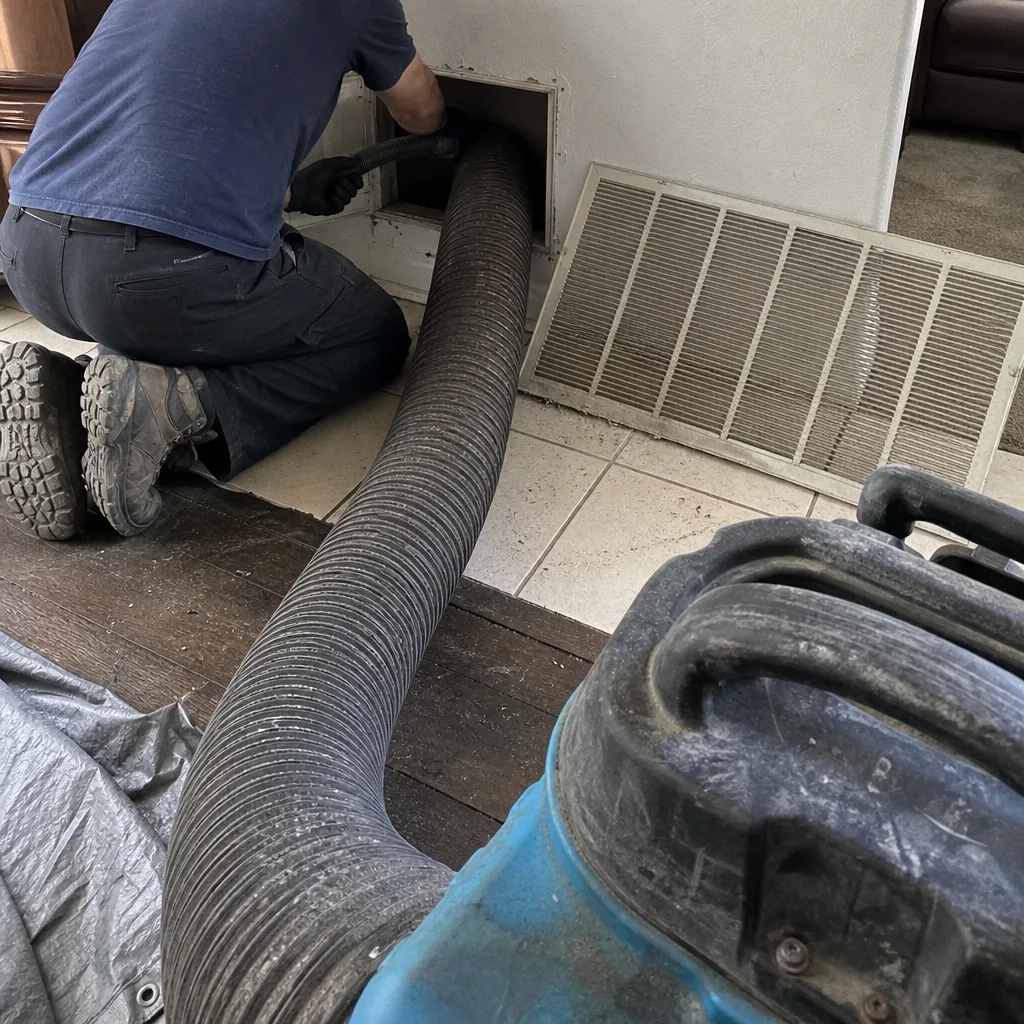
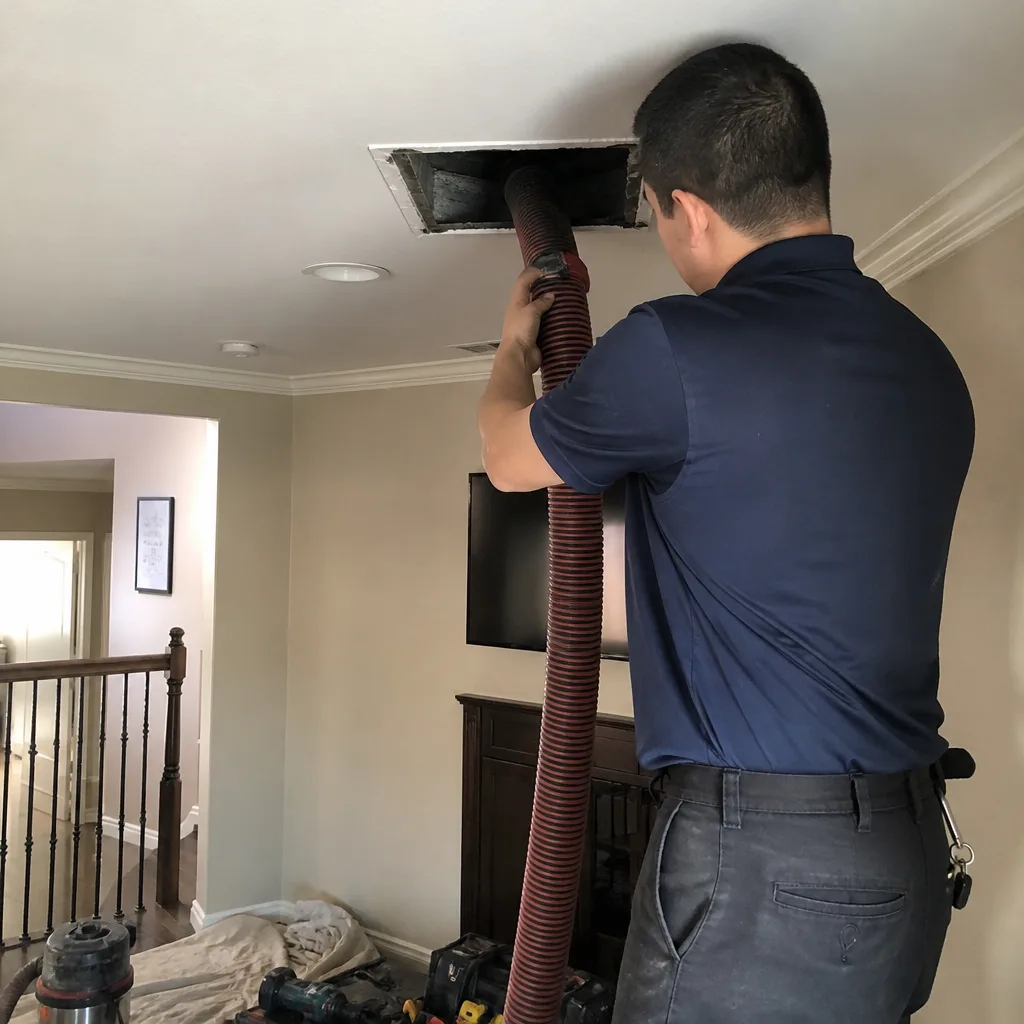
This is why we built repair into our service model from the beginning. Our Rotobrush rotary brush systems and Nikro HEPA-filtration vacuums handle the cleaning side with commercial-grade effectiveness. But alongside that we identify and address disconnected joints, seal access panels, repair crushed runs, and correct filter bypass issues. If we find a structural problem during a cleaning, we tell you about it on the spot, and we have the capability to fix it in the same visit in most cases. Most cleaning-only companies can’t do that. They can show you a problem and then leave, requiring you to find a separate contractor for the repair.
In our experience across Westminster, roughly a third of homes with visible discharge, airflow imbalance, or musty-odor symptoms have at least one structural duct deficiency that cleaning alone won’t fix. If you have any of the airflow indicators described above, particularly rooms that won’t reach temperature or individual weak registers, prepare for the possibility that the solution involves repair, not just cleaning.
Common Mistakes to Avoid
- Mistaking a clean filter for a clean system. A clean filter means the filter is doing its job. It says nothing about the 20 to 50 feet of duct runs downstream. Dust that’s already in the ducts will still be distributed when the system runs. Replace filters on schedule, but don’t confuse filter maintenance with duct maintenance.
- Assuming new construction or recent renovation means the ducts are clean. The opposite is usually true. Renovation and construction produce more particulate contamination in duct systems than years of normal living. In Westminster’s active remodeling market, a home with a fresh kitchen or bathroom is more likely to need duct cleaning, not less.
- Accepting a low-ball quote without asking what equipment will be used. There’s a meaningful difference between a shop-vac-based cleaning and a Rotobrush and Nikro HEPA system. The former can’t thoroughly agitate caked material from duct walls or properly contain what it removes. The price difference exists for a reason.
- Ignoring musty odor because it “comes and goes.” Musty odor that appears only when the HVAC runs and is stronger at startup doesn’t go away on its own. It indicates moisture-related contamination inside the duct system, and the conditions that created it will continue to exist.
- Assuming weak airflow is just dust buildup. Airflow problems are structural more often than homeowners expect. Dust buildup can restrict flow, but disconnected or crushed ducts do so far more dramatically. If a room has always struggled or recently got worse, ask a professional to inspect the run, not just clean it.
- Judging the success of a cleaning by visible register dust alone. When our Rotobrush system runs in Westminster homes, the before-and-after difference at the register is usually dramatic. But the most important improvements happen where you can’t see: inside the duct runs, at the coil, and in the blower compartment. Ask for documentation of what was removed, not just a narrative summary.
- Neglecting dryer vents because the dryer “seems to work fine.” A dryer that takes longer to finish a load or a vent flap that doesn’t open fully is telling you lint is accumulating in the vent line. Lint is combustible. Dryer Vent Cleaning in Westminster is a fire-safety service, not an accessory. The fact that clothes still eventually get dry doesn’t mean the vent isn’t restricted enough to be a hazard.
When to Call a Professional
Call a professional when your observations match the diagnostic patterns described in this guide: visible dust plumes at two or more registers on startup, persistent musty odor tied to HVAC operation, rooms that consistently underperform by 4 degrees or more, filter bypass gaps or debris in the filter track, allergy symptoms that improve away from home and worsen with HVAC cycles, or any renovation work that happened since the ducts were last cleaned. Duct Cleaning Westminster offers free estimates in Westminster and the surrounding area. Call (877) 752-8412 to schedule an inspection, or explore more guides & resources. We’ll assess the system and give you a straight answer about what’s needed, whether that’s cleaning, repair, or both. No obligation, no pressure.
Frequently Asked Questions
The most reliable indicators are visible dust discharge from supply registers at blower startup, a musty odor that intensifies when the HVAC runs, rooms that won’t reach setpoint, and allergy symptoms that improve when you leave the house. Any combination of these three or more warrants an inspection. A single weak indicator, like a slightly dusty filter, usually just means you need normal filter replacement.
Professional whole-home duct cleaning in Westminster typically ranges from $350 to $750 depending on system size, number of supply runs, accessibility, and contamination level. Homes with significant debris accumulation, multiple systems, or structural issues requiring repair will be higher. Call (877) 752-8412 for a free estimate specific to your home. We provide one flat price per system before work begins, and that’s the price you pay.
Most single-system homes in Westminster take between 3 and 5 hours from initial inspection to final walkthrough. Larger homes, dual-system homes, or systems with heavy contamination can take longer. The job includes setup of containment, agitation and brush work with Rotobrush equipment, HEPA vacuum extraction with Nikro equipment, and sealing of access points. A proper cleaning is a half-day to full-day commitment, not a 90-minute service call.
If your symptoms are correlated with HVAC operation and improve when you’re away from home, duct cleaning is likely to provide meaningful relief. If your symptoms are constant, seasonal, or tied to specific chemical exposures, duct cleaning may help marginally but won’t solve the underlying issue. During our Westminster cleanings, we use Abatement Technologies containment so the material we dislodge doesn’t end up back in your living space during the work.
Yes. Construction and remodeling work generates fine particulate that infiltrates the return side and accumulates inside duct runs. Even if contractors sealed registers during the work, HVAC run during the project pulls dust into the system. In Westminster’s active remodeling market, a post-renovation cleaning is one of the most common services we provide. It’s the single most effective way to eliminate the construction dust that keeps appearing on surfaces for months after a project.
Cleaning removes accumulated particulate, debris, and microbial growth from the duct interiors. Repair addresses structural problems: disconnected joints, crushed runs, failed seals, filter bypass, and damaged sections that undermine the system’s performance regardless of how clean it is. We provide both because in our experience many Westminster homes need both to actually solve their airflow and air quality problems. Call (877) 752-8412 and we’ll assess your system honestly.
The Bottom Line
Most duct contamination in Westminster homes announces itself before indoor air quality becomes a serious problem. Visible discharge at startup, persistent odor patterns, airflow imbalance between rooms, and the filter red flags described above are measurable signs you can observe yourself without special equipment. The key is treating them as data points rather than vague concerns. When the data points accumulate, the decision is clear: the system needs professional attention, and that attention should address both the contamination inside the ducts and any structural issues that allowed it to accumulate or that compromise airflow. Early action is cheaper and more effective than waiting for symptoms to become impossible to ignore. If you’re seeing what this guide describes, call (877) 752-8412 for a free estimate in Westminster. We’ll tell you exactly what’s in your system, what it’s doing, and what it will take to correct it.
Written by the team at Duct Cleaning Westminster, serving Westminster since 2017.
See the difference
 Before
 After
 Before
 After
 Before
 After