
Last updated November 2, 2026
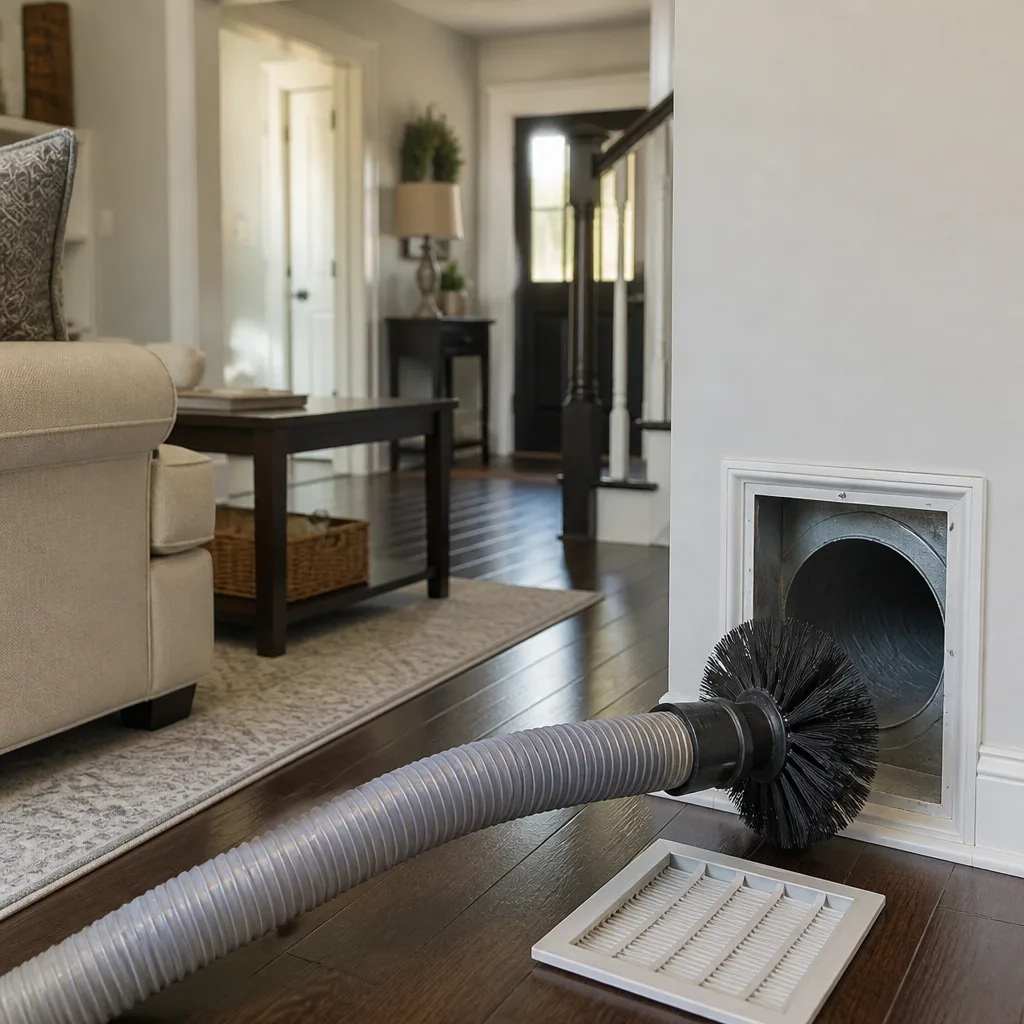 Whole-home duct cleaning
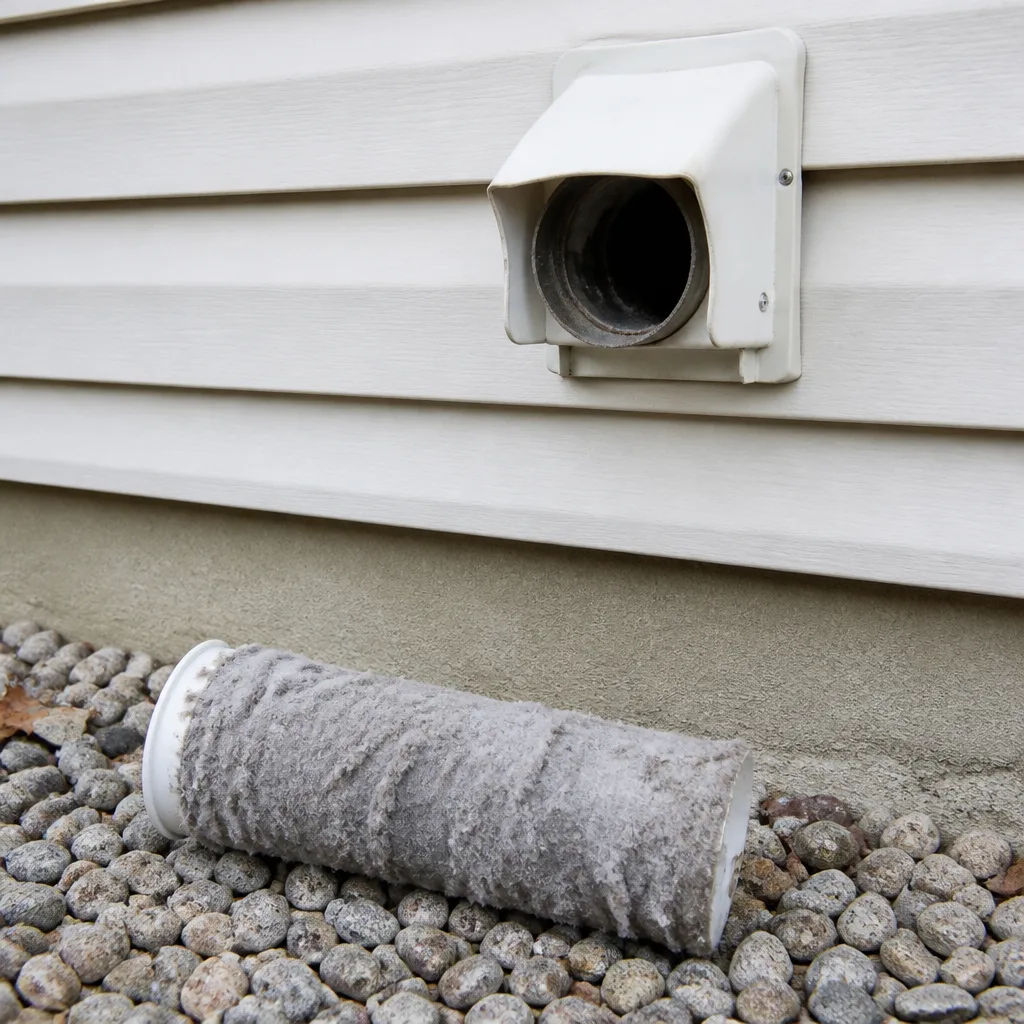 Dryer vent cleaning
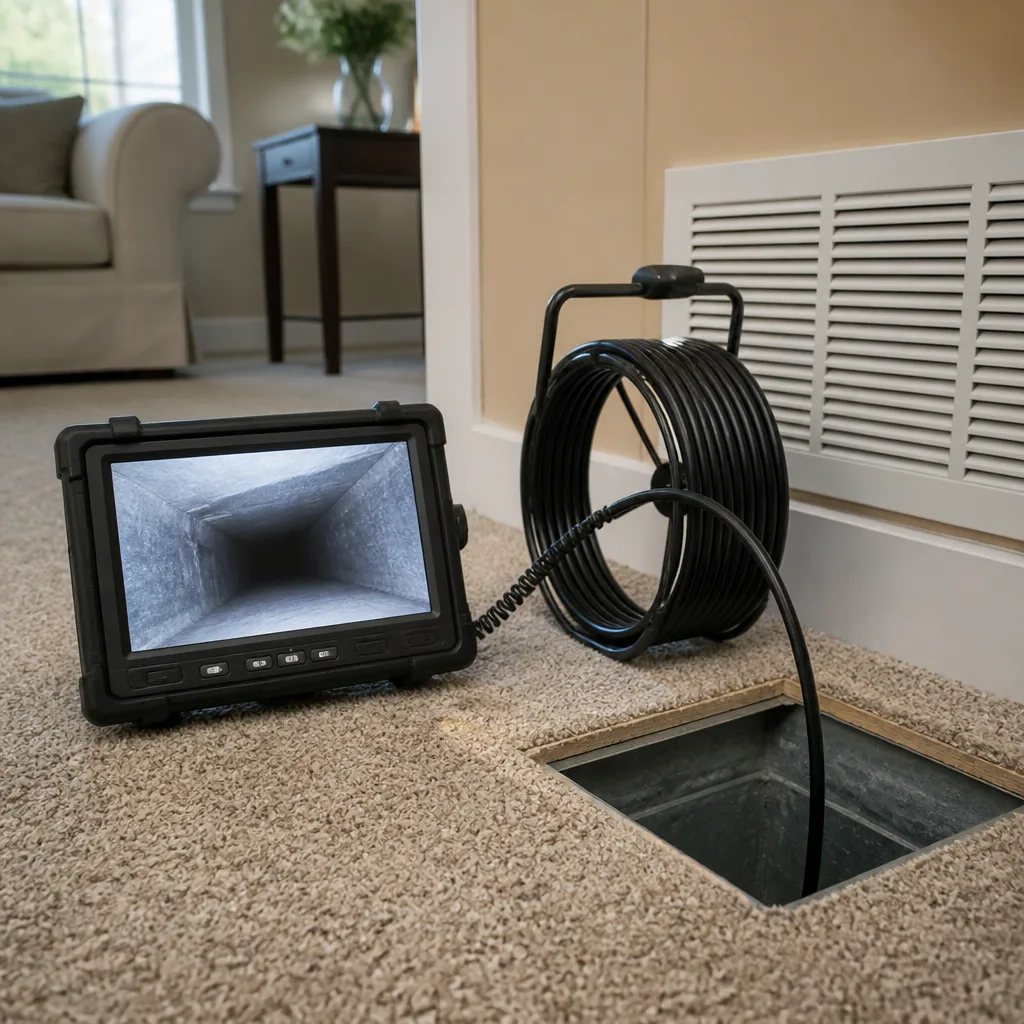 Camera inspection
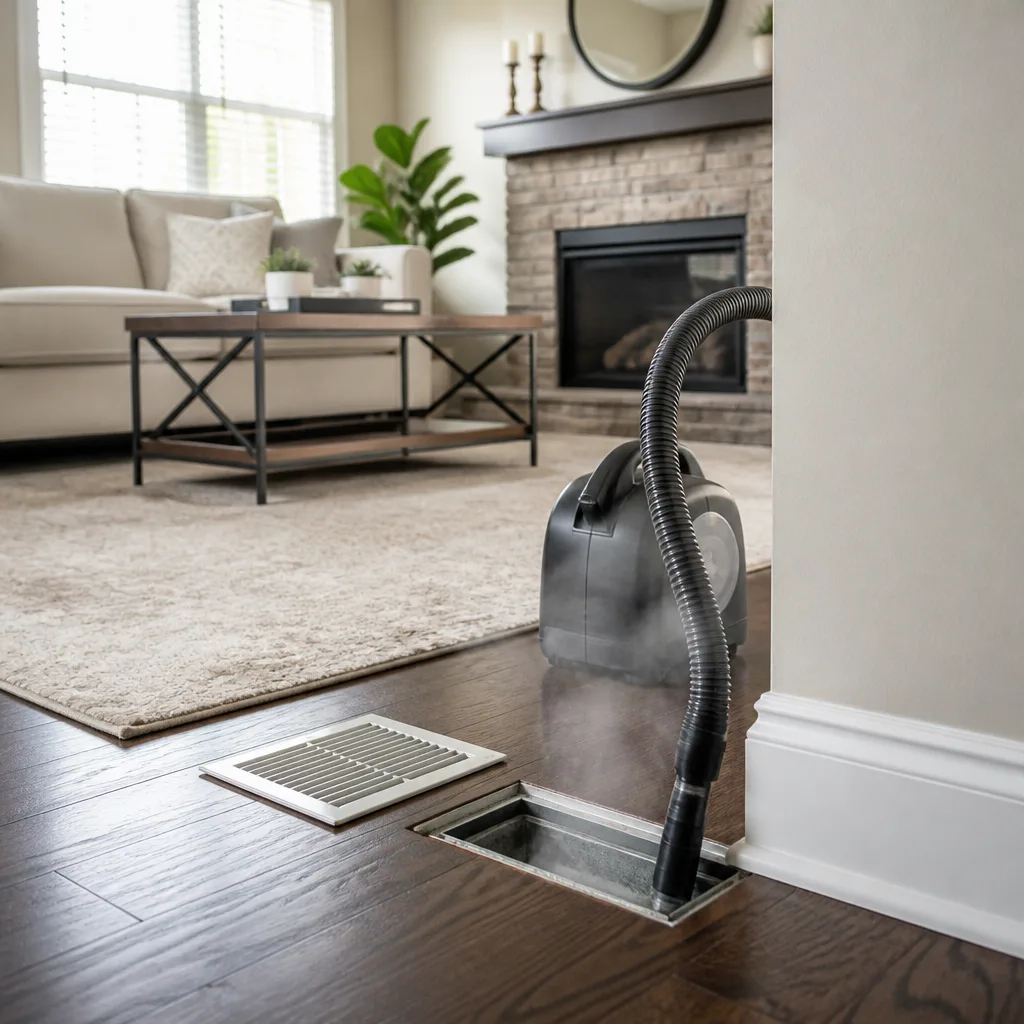 Sanitizing & deodorizing
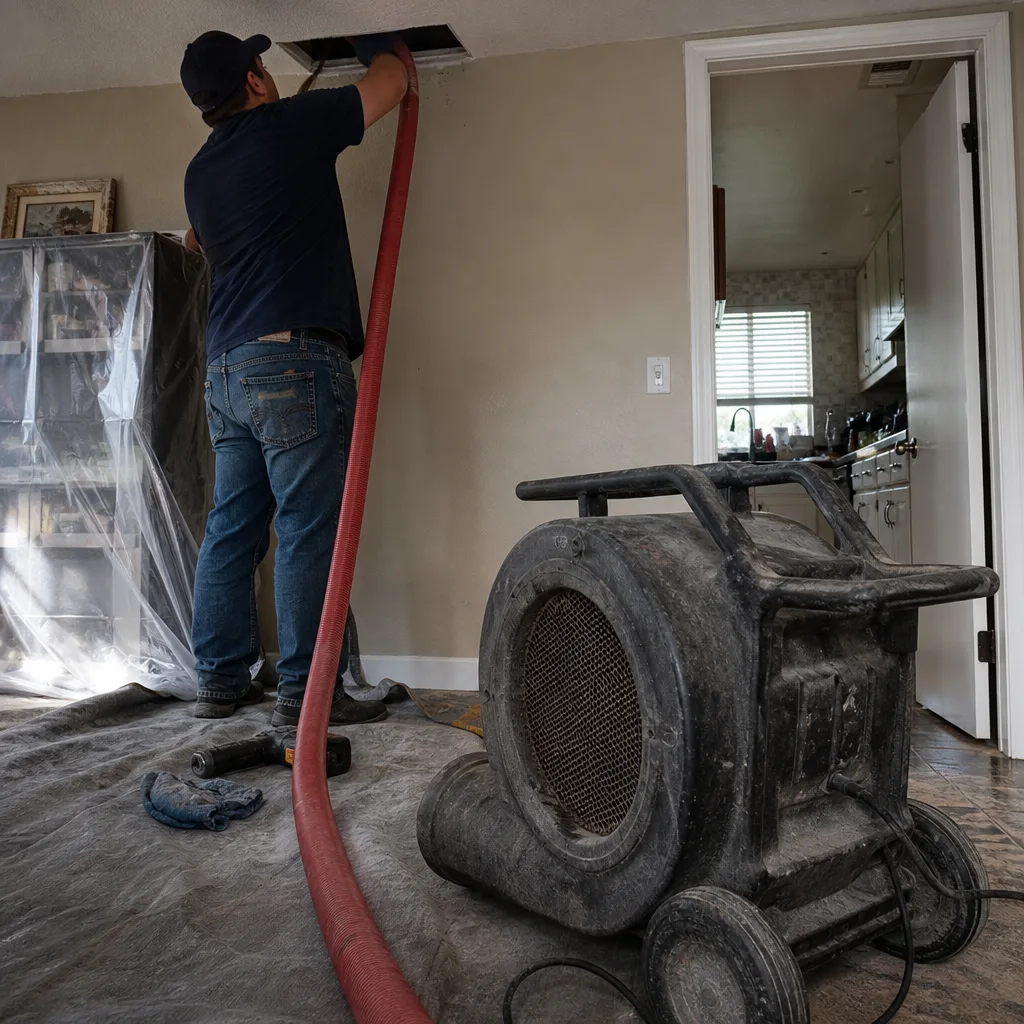
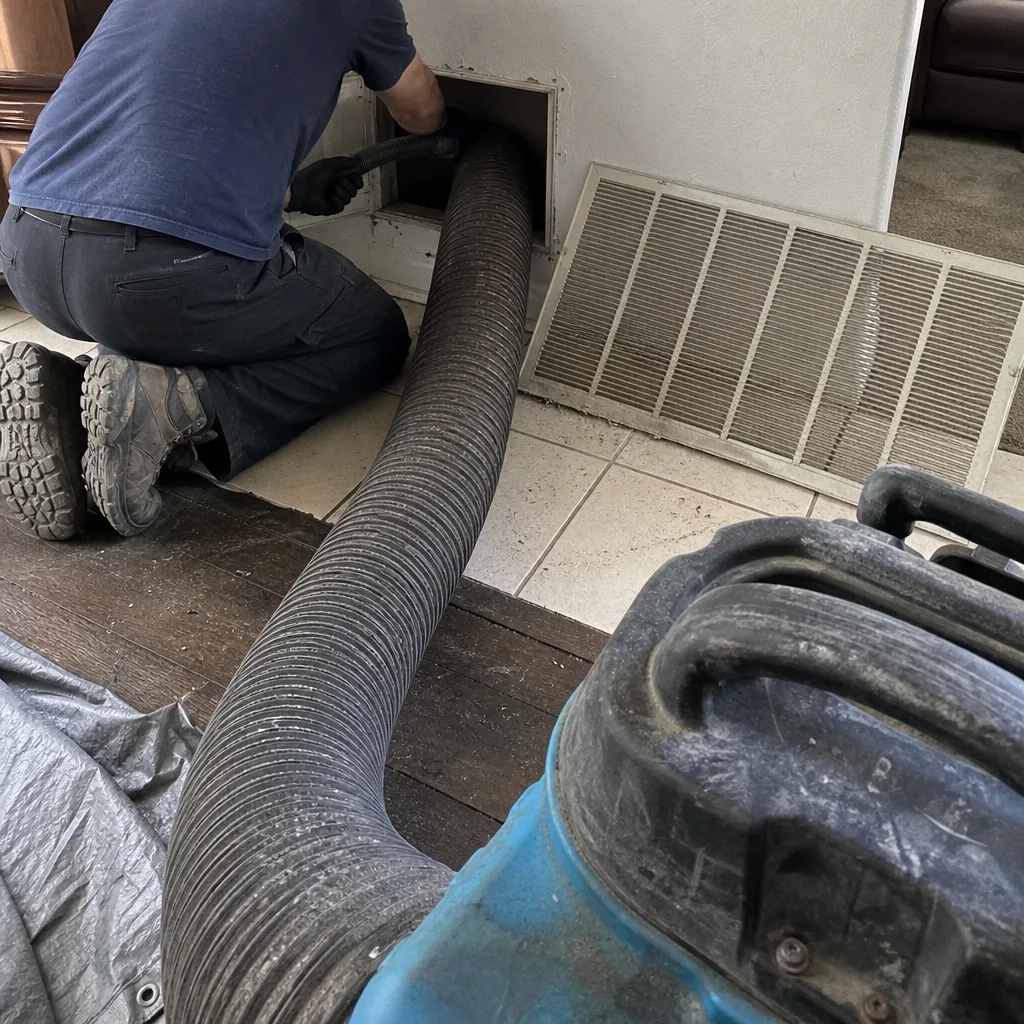
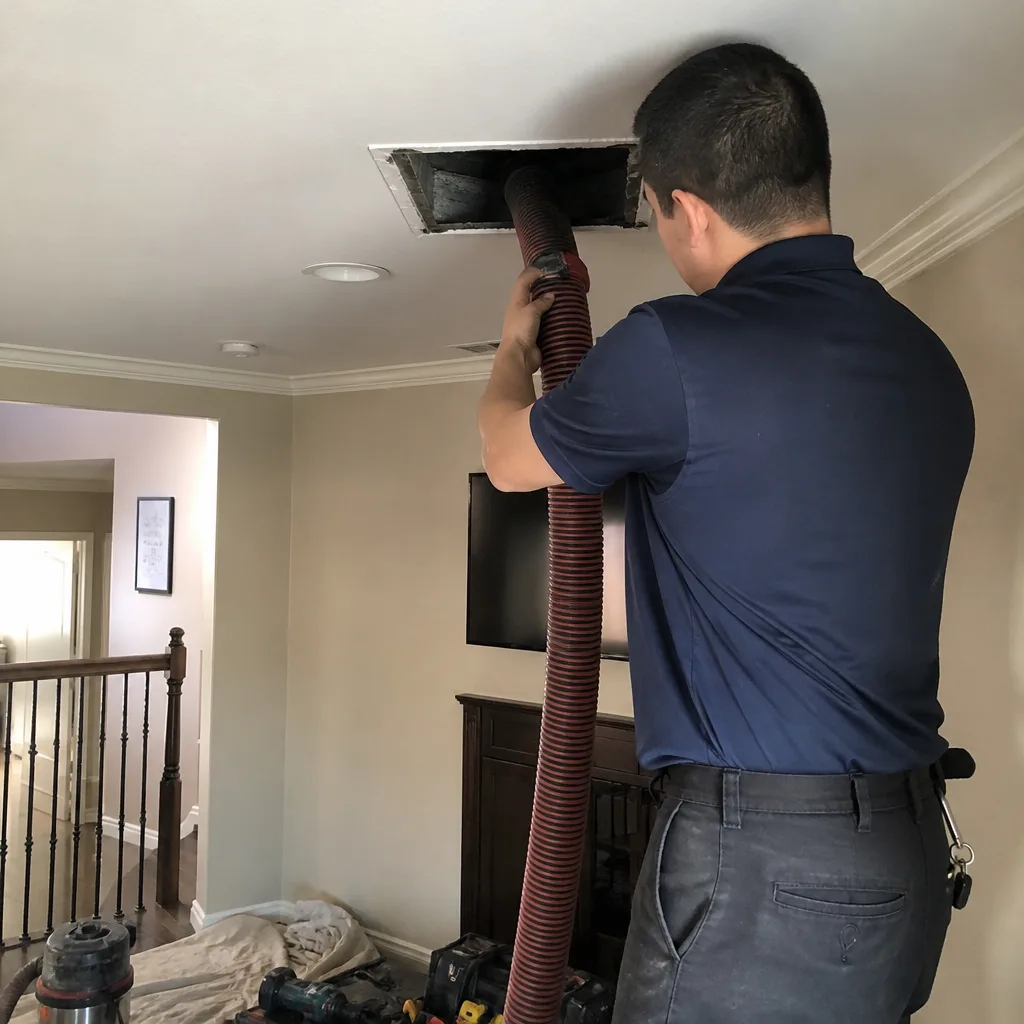
Whole-system duct and dryer vent check with before-and-after photos - you see exactly what came out of your vents
That "$99 whole-house special" is a bait ad - the real number appears once they are in your hallway, or the "clean" is a shop-vac at the register. We photograph the inside of your ducts before and after instead.
Air Duct Cleaning Maintenance Checklist for Westminster Homeowners
The single most skipped item on any Westminster homeowner’s HVAC maintenance list isn’t the filter. It’s the return air grille cavity. That’s the recessed space between your wall grille and the duct trunk behind it, and because it sits on the wrong side of the filter, every particle that gets pulled in settles there first. In Westminster, where palm fiber, eucalyptus bark, and fine coastal dust move through the air constantly, that cavity can accumulate a visible mat of packed debris within 18 months – long before your filter looks dirty. This guide gives you a maintenance checklist built around the actual failure points we find in Duct Cleaning Westminster home systems: high-humidity return air, landscape debris near intakes, and aging flex duct that collapses rather than clogs.
Quick Answer
The essentials of an air duct maintenance checklist for Westminster homeowners are: replace filters every 60 – 90 days, vacuum return grilles monthly during Santa Ana season, inspect flex duct for visible sag or collapse twice a year, check register edges for condensation each spring, and schedule a professional cleaning with HEPA-filtration equipment every 3 – 5 years. The most overlooked item is the return air grille cavity, which bypasses the filter entirely and packs debris directly into the duct trunk.
Styles & brands we work with
- Whole-home duct cleaning
- Dryer vent cleaning
- Camera inspection
- Sanitizing & deodorizing
Table of Contents
- A Seasonal Maintenance Schedule Built for Westminster
- Visual Checkpoints You Can Inspect Yourself
- The Filter Upgrade Decision Matrix
- What a Homeowner Can Handle vs. What Needs a Professional
- How to Keep a Maintenance Log That Matters
- Common Mistakes to Avoid
- When to Call a Professional
- Frequently Asked Questions
A Seasonal Maintenance Schedule Built for Westminster
Generic quarterly checklists fail in Westminster because our climate doesn’t behave in clean three-month blocks. We have two dominant weather patterns that stress duct systems in specific ways: Santa Ana wind events from September through November, and a marine layer that hangs over the city from May through July. Each creates a different kind of debris load and a different kind of moisture problem.
Here’s the month-by-month schedule we recommend for Westminster homeowners, based on what we consistently find when we open up ducts in this city:
September through November: Santa Ana Response Mode
- First week of September: Replace your return air filter, even if it’s not due. Santa Ana winds will push fine dust, ash, and dry leaf debris through every exterior gap. Starting with a clean filter gives the system its best chance.
- After each Santa Ana event: Vacuum your return air grille faces. You’ll see visible accumulation within days, not weeks. Use the brush attachment on your household vacuum; no need to remove the grille yet.
- Late November: Pull off the return air grille covers (they’re typically held by two screws or spring clips) and vacuum the cavity behind them. This is when the bypass debris has built up. You’ll likely be surprised by what’s collected in 12 weeks.
- Throughout the season: Walk your home’s exterior perimeter. If any intake vents sit level with or below nearby palm trees or eucalyptus, mark those for extra attention. Debris loads on those runs are consistently higher.
December through February: Winter Cycling
- Monthly: Check the filter. If your household runs the heater regularly, you may see accelerated loading even with a fresh September filter. Sixty days is the maximum interval we recommend in Westminster during heating season.
- January: Inspect visible flex duct in the attic, if accessible. Cold snaps cause the duct material to stiffen. Any existing sag gets worse in cooler temperatures. Look for sections that dip more than 4 – 6 inches between support straps.
- February: Turn the system off and run a visual check of supply register faces. Look for uneven dust patterns. A register that’s visibly darker than its neighbors usually signals a disconnected or leaking duct upstream – not just normal accumulation.
March through April: Marine Layer Moisture Monitoring
- Early March: Begin checking supply register edges for condensation or faint water staining. The marine layer’s humidity spike starts around this time, and condensation at register edges is the first visible sign of insufficient insulation or air leakage.
- April: Inspect the ductwork visible in the attic or crawlspace for any dark staining, pinching, or flattened sections. Moisture plus debris is exactly what turns into microbial growth inside ducts. Early detection here prevents an expensive cleanup later.
- Every two weeks during heavy marine layer periods: If anyone in the household has allergies or asthma, run the fan in “On” mode for 15 – 20 minutes daily during peak humidity. This keeps air moving through the system and prevents stagnant moisture pockets.
May through August: Cooling Season Load
- May: Replace the filter again. Transitioning into cooling season with a clean filter is the single best thing you can do for system efficiency during Westminster’s warmest months.
- June: Check the condensate drain line. If it’s accessible from your indoor unit, look for standing water or slow drainage. Excess moisture inside the air handler contributes directly to duct contamination.
- July through August: Listen. Ducts that whistle, rattle, or pop during cooling cycles are telling you something. Popping is usually thermal expansion; rattling can signal a loose connection or failing strap; whistling means an air leak somewhere.
- August: Assess whether it’s time for professional cleaning. If you’ve followed this schedule and still see dust returning to surfaces within days of cleaning, the duct system itself is holding debris and redistributing it.
Visual Checkpoints You Can Inspect Yourself
You don’t need specialized equipment to spot most duct problems early. You need to know where to look and what “normal” looks like. These are the five visual checks we walk Westminster homeowners through, and each one catches a specific failure pattern before it becomes expensive.
1. Grille Color Change
Compare each supply register to the others in the same room and adjacent rooms. A register that’s significantly darker, yellowed, or filmed with residue while others stay clean is almost always downstream of a duct problem. That particular run is either disconnected, leaking, or pulling from a contaminated section. One dirty register isn’t a filter issue; it’s a duct issue.
2. Flex Duct Sag
In attics and crawlspaces, flex duct should run with a gentle, supported line between connections. Any section that visibly droops more than a few inches between support straps is accumulating debris at the bottom of the sag. Over time, that debris absorbs moisture and compacts into a partial blockage. If you can access the attic safely, take a look twice a year. This is one of the most common findings in Air Duct Repair work in Westminster: years of accumulated sag that finally restricted airflow enough to notice.
3. Condensation at Register Edges
During marine layer months – typically March through July in Westminster – check the painted surface around your supply registers. Faint water rings, bubbling paint, or visible moisture beads mean the duct behind that register isn’t insulated properly or is leaking conditioned air into an unconditioned space. Left unaddressed, this creates the damp environment where mold and bacteria proliferate. It also stains ceilings and walls, which no one wants to explain to a buyer.
4. Filter Frame Fit
Your filter only works if air is forced through it. Any gap between the filter frame and its housing allows unfiltered air to bypass. When you replace your filter, take a close look at the frame. If you can see daylight around the edges, or if the filter drops in loosely, you’re filtering maybe 70% of the air that moves through the system. The other 30% is loading your ducts with everything from household dust to pollen from Westminster’s spring bloom.
5. Debris Accumulation at the Return Grille Face
If you see visible fuzz, hair, and dust building up on the outside of your return grille within two weeks of vacuuming it, that’s normal. If you see it within two days, that’s a signal. It means the system is pulling harder than it should, usually because of a restriction downstream – a collapsed duct section, a heavily loaded coil, or a filter that’s been left too long. The grille face becomes a magnet because air velocity through it has increased. High velocity at the return face is a symptom, not a cause.
The Filter Upgrade Decision Matrix
Filter discussions generate more confusion than any other topic in residential HVAC. The advice “just buy the highest MERV rating you can find” is actively harmful in many Westminster homes. Higher MERV ratings create more resistance, and more resistance means more static pressure, which your blower has to work harder to overcome. In older systems with already-marginal duct design, a MERV-13 filter can reduce airflow enough to shorten equipment life and increase energy costs.
Here’s the decision matrix we use, based on what works in Westminster’s actual air quality conditions:
MERV-8: Acceptable Baseline – With a Caveat
MERV-8 filters capture pollen, dust mites, and larger mold spores. For a Westminster home with no respiratory issues, no pets, and a standard 1-inch filter slot, MERV-8 is adequate. Change it every 60 days, not the 90 days printed on the package. Westminster’s particulate load during Santa Ana season is higher than most national averages, and 90 days is a Midwestern number.
MERV-11: The Westminster Sweet Spot for Most Homes
MERV-11 captures finer particles, including pet dander and a broader range of mold spores. We recommend MERV-11 for any Westminster household with pets, allergy sufferers, or homes near busy roads, which in this city is a lot of homes. The pressure drop is still manageable for most residential blowers. This is the balance point between filtration quality and system performance.
MERV-13 or Higher: Only Under Specific Conditions
Move to MERV-13 if a household member has asthma, severe allergies, or a respiratory condition, or if you live adjacent to a pollution source like a major freeway or industrial zone. Before installing MERV-13, verify that your system can handle it. Signs your system is struggling include: reduced airflow from registers, increased runtime with the same temperature settings, or a noticeable hum from the blower compartment. If you see any of these, drop back to MERV-11.
What About Washable Filters?
Washable filters have terrible capture efficiency and require fastidious cleaning to maintain even that. We don’t recommend them for Westminster homes. The fine coastal dust that’s characteristic of this area passes right through the standard washable mesh. For the same effort, a disposable MERV-8 or MERV-11 does far more.
Filter Slots and Depth
If you have a 4-inch or 5-inch media filter slot, you have more flexibility. These deeper filters have more surface area, which means lower pressure drop for the same MERV rating. A 4-inch MERV-11 is actually less restrictive than a 1-inch MERV-8 in many systems. If you’re in the position of replacing an HVAC system or upgrading your filter housing, consider a 4-inch media cabinet. It’s one of the most cost-effective indoor air quality upgrades available.
What a Homeowner Can Handle vs. What Needs a Professional
There’s a clear line between maintenance and cleaning. Maintenance keeps debris from entering the system and catches problems early. Cleaning removes debris that’s already inside the ductwork, and that requires equipment a homeowner doesn’t have. Here’s the practical division.
What You Can Legitimately Handle with a Shop Vac
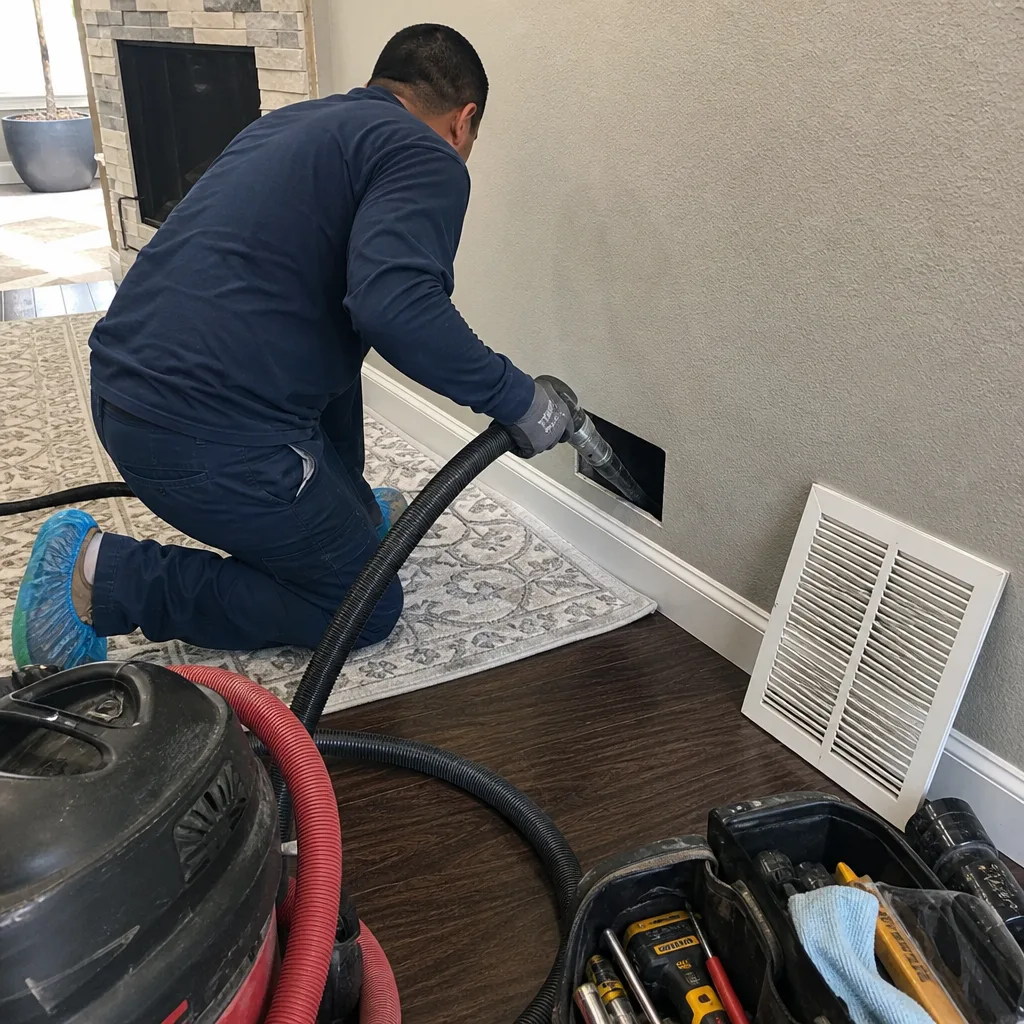
- Return grille faces and cavities: Remove the grille, vacuum the face and the accessible cavity behind it. This is the highest-value DIY action on this entire checklist.
- Supply register faces: Vacuum the visible surface. If the register is removable, clean the back side of the grille face too. Do not insert anything into the duct opening beyond the register throat.
- Exposed duct exterior surfaces: Wipe down visible ductwork in the attic or crawlspace if you’re already up there. This removes surface dust that can be drawn in through small gaps.
- Condensate line inspection: Look for standing water, algae growth, or slow drainage. A homeowner can clear a simple clog with a wet-dry vac applied to the line’s exit point outside. If the clog is downstream of the air handler, call a professional.
What Needs Professional-Grade Equipment
- The interior of duct runs beyond arm’s reach: A shop vac hose reaches maybe three feet into a duct from the register opening. The average residential duct run is 10 – 40 feet. You’re cleaning the first 10% and calling it done, which can actually loosen debris and redistribute it deeper.
- The return air trunk interior: This is where years of bypass debris settles. Access requires either removing a section of duct or using specialized rotary brush equipment like Rotobrush systems that mechanically agitate the duct walls while a HEPA-filtration vacuum captures what’s dislodged. This isn’t consumer equipment.
- The air handler and evaporator coil: These components sit inside the equipment cabinet. Cleaning them properly requires removing access panels, which most homeowners shouldn’t do. A dirty coil massively reduces system efficiency and provides a moisture-rich environment for biological growth.
- Flex duct replacement or repair: Collapsed or sagging flex duct isn’t fixable with cleaning. It needs to be replaced or re-supported. This is structural work, not surface cleaning, and it’s the exact problem that separates an Air Duct Cleaning in Westminster contractor with repair capability from a cleaning-only operator.
- Containment during cleaning: Professional cleaning should involve containment equipment like Abatement Technologies negative air machines to prevent cross-contamination of your living space during the work. Cutting a hole in a dirty duct and agitating it without containment fills your house with exactly what you’re trying to remove.
How to Keep a Maintenance Log That Matters
A maintenance log isn’t just for your own reference. It becomes a meaningful document when you sell your home or file an insurance claim. Buyers in Westminster increasingly ask about HVAC maintenance history; post-fire and post-flood insurance adjusters absolutely ask. Here’s how to keep it in a format that holds up.
What to Record
- Date and action: Every filter change, grille cleaning, inspection, and professional service. Be specific: “Replaced 1-inch MERV-11 filter, Honeywell brand” is useful. “Changed filter” is not.
- Observations: Note anything unusual you saw, even if you didn’t act on it. “Noticed condensation at master bedroom register, will monitor” creates a timeline that’s valuable if the problem worsens.
- Professional service details: If you have professional cleaning or repair work done, record the company, the date, what was performed, and the equipment used. We provide before-and-after documentation for exactly this reason. A written summary with photos is worth far more than a receipt.
- Filter type and size: Log the exact filter dimensions and MERV rating each time. This sounds trivial until you’re standing in the filter aisle eight months later trying to remember if you need 16x25x1 or 20x25x1.
Format That Survives a Home Sale
Keep the log in a simple document or spreadsheet, and back it up somewhere accessible. A printed copy inside a folder attached to the air handler is fine. Cloud storage is better. If you sell your Westminster home, you can hand the buyer a three-year maintenance history that demonstrates the system was properly maintained. That’s a real selling point in this market, where buyers are increasingly aware of indoor air quality.
For Insurance Claims
After water damage, fire, or smoke events, your maintenance log establishes a baseline. It shows the system’s condition before the event, which matters when an adjuster is evaluating what was pre-existing versus what was caused by the incident. The distinction between “the ducts were already contaminated” and “the ducts became contaminated as a result of this claim” can be worth thousands of dollars. Your log is the evidence that resolves that question in your favor.
Common Mistakes to Avoid
- Assuming the filter is the entire air cleaning strategy. The filter catches particles that reach it. Everything that enters the return grille cavity bypasses the filter completely. In Westminster, with our landscape debris and Santa Ana dust, that bypass load is substantial.
- Running the fan constantly during marine layer months. “On” fan mode keeps air moving, which sounds good, but it also pulls humid coastal air through the system continuously. If your ducts have any internal debris, that moisture becomes a growth environment. Use fan-on mode selectively, not as a permanent setting.
- Using duct tape on actual ductwork. Despite the name, duct tape fails on duct systems within a few years – it dries out, loses adhesion, and falls off. If you’re attempting a temporary seal, use foil tape or mastic sealant, which are designed for HVAC temperatures and air pressure. Better yet, call someone who repairs ducts properly.
- Ignoring one dirty register because “the rest are fine.” A single visibly dirty register is not random. It’s a diagnostic signal pointing to a specific problem on that duct run. Ignoring it means the problem continues worsening while you’ve convinced yourself it’s minor.
- Waiting until visible dust becomes unbearable before scheduling cleaning. By the time you can write your name in the dust on a coffee table three days after wiping it, your duct system has been redepositing contaminants for months. Maintenance should be proactive, not reactive.
- Purchasing the highest MERV filter available without checking system compatibility. A MERV-13 filter in a system designed for MERV-8 can restrict airflow to the point of freezing coils during summer and tripping limit switches during winter. This is one of the most common self-inflicted HVAC problems we encounter.
- Vacuuming visible dust from register faces and assuming the interior is clean. What you can see from the register opening is maybe three percent of the duct system’s total interior surface. What you can’t see is where the problems live.
When to Call a Professional
You’re at the professional cleaning threshold if any of these conditions exist: visible dust returning to surfaces within days of cleaning; a musty or stale odor from registers when the system runs; one or more registers that blow noticeably less air than others; condensation or staining at register edges that doesn’t resolve; or visible sag in flex duct that you’ve confirmed in the attic. These are not DIY situations – they’re symptoms of a contaminated or damaged duct system that needs professional-grade equipment and repair capability. Duct Cleaning Westminster offers free estimates in Westminster – call (877) 752-8412 to discuss what you’re seeing. Our technicians use Rotobrush rotary brush systems and Nikro HEPA-filtration vacuums on every job, the same equipment used in commercial restoration work, brought to residential jobs. We don’t just clean – we inspect and repair, which means we can address the structural issues your checklist turned up, not just the surface dust.
Frequently Asked Questions
Every 3 – 5 years for most Westminster homes, with a shorter interval if you have pets, allergy or asthma sufferers in the household, or if you’ve completed a home renovation or fire-damage repair. Homes near major roads or freeways may also need more frequent service. The best indicator is what you observe: if dust returns to surfaces within days of cleaning and your filter is being replaced on schedule, the ducts are the source and professional cleaning is warranted. Call (877) 752-8412 and we’ll help you evaluate honestly, without upselling you into service you don’t need.
Westminster’s climate and landscape create an unusually aggressive debris load. Palm trees shed fine fiber that becomes airborne easily. Eucalyptus trees drop bark, oils, and fine leaf particulate. Santa Ana winds from September through November push this material into every opening in your home’s envelope. Add the marine layer’s humidity spikes from March through July, which cause that dry debris to absorb moisture and adhere to duct walls, and you have a system that loads faster than national averages would predict.
No, not effectively. A shop vac’s hose reaches a few feet into the duct from any register opening, which covers only a tiny fraction of the system’s total interior. The agitation and negative air pressure required to clean the full duct run, the trunk lines, and the air handler require professional equipment like Rotobrush rotary brush systems and Nikro HEPA-filtration vacuums. Attempting to clean deeper with consumer equipment can actually loosen debris and push it further into the system. For a real answer to this question, read the Air Duct Cleaning in Westminster guide we’ve published here – it walks through what professional equipment accomplishes and why the difference matters.
Duct cleaning removes accumulated debris from the interior surfaces of the duct system using rotary brushes and HEPA-filtered negative air. Duct repair addresses structural problems: disconnected sections, collapsed flex duct, leaking joints, crushed trunks, or poorly supported runs. Many companies only clean; if they find a structural problem, they can’t fix it. That means you call a second contractor, schedule a second visit, and pay a second invoice. We handle both – Air Duct Repair in Westminster is a core part of our service, and we find the structural issues during the cleaning process. Your duct system, fully serviced.
Request before-and-after photos of the duct interior. A reputable contractor using professional equipment should be able to document what the duct walls looked like before cleaning and after. We provide this documentation automatically on every job, because it’s the only honest way to show the work was completed. You should also expect a written summary of what was found, what was cleaned, and any structural issues that were identified. And if the contractor can’t show you the inside of your ducts, that’s a warning sign.
For a typical single-family home in Westminster, professional air duct cleaning with HEPA-filtration equipment typically runs $450 – $900 depending on system size, number of returns, and accessibility. Condos and smaller homes come in below that range; large two-story homes with multiple systems run higher. Any quote significantly below this range should be examined carefully for what’s excluded – per-vent pricing with low advertised starting rates is a common pattern in this industry, and the final invoice rarely matches the coupon. We quote one flat price per system, agreed before work starts. Call (877) 752-8412 for an exact quote on your home – estimates are free.
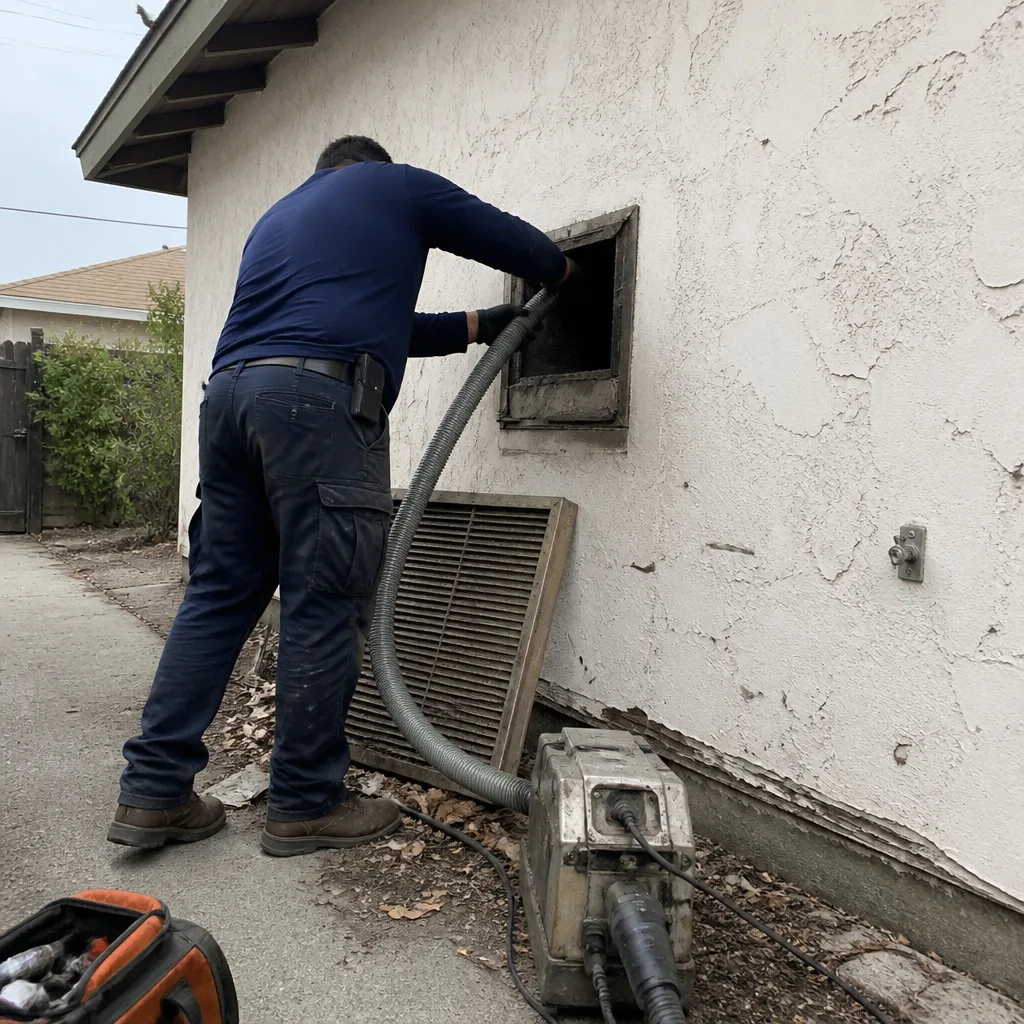
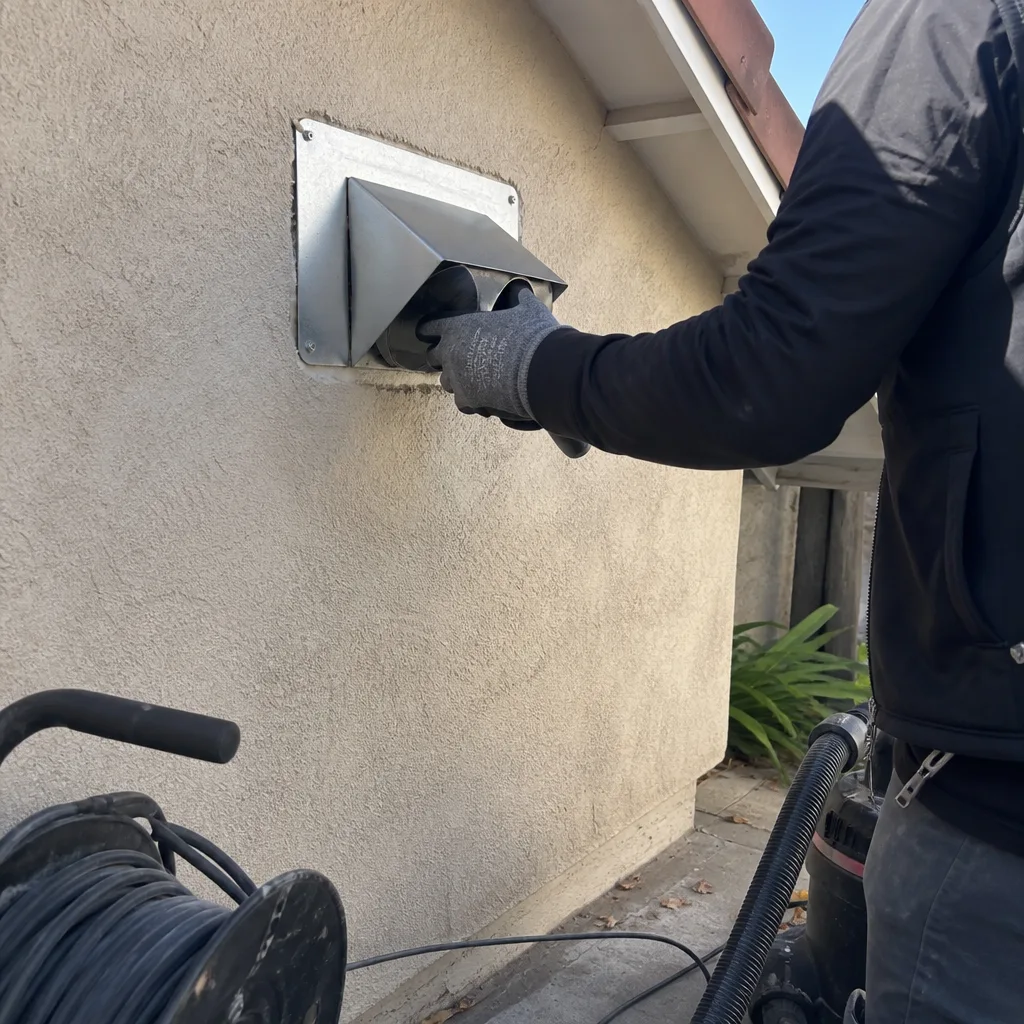
No. Dryer vent cleaning is a separate service that addresses the exhaust duct from your clothes dryer to the exterior of your home. It requires different equipment and serves a different purpose: fire safety. Lint accumulation in dryer vents is a leading cause of house fires, and Westminster’s dry climate during Santa Ana season only increases that risk. We offer Dryer Vent Cleaning in Westminster as a dedicated, standalone service with equipment built for the purpose – not as an upsell afterthought. If you haven’t had your dryer vent cleaned in more than a year, schedule it independently of any duct cleaning decision.
The Bottom Line
Duct maintenance in Westminster succeeds or fails based on consistency, not intensity. The homeowner who follows this seasonal schedule, checks the visual indicators twice a year, keeps an honest maintenance log, and calls a professional when the symptoms cross the DIY line will have a system that runs cleaner, lasts longer, and costs less to operate than the homeowner who waits for problems to announce themselves. Start with the return grille cavity – it’s the most neglected point in your entire HVAC system, and in Westminster, it’s working harder than you think.
Written by the team at Duct Cleaning Westminster, serving Westminster since 2017.
See the difference
 Before
 After
 Before
 After
 Before
 After