
Last updated November 2, 2026
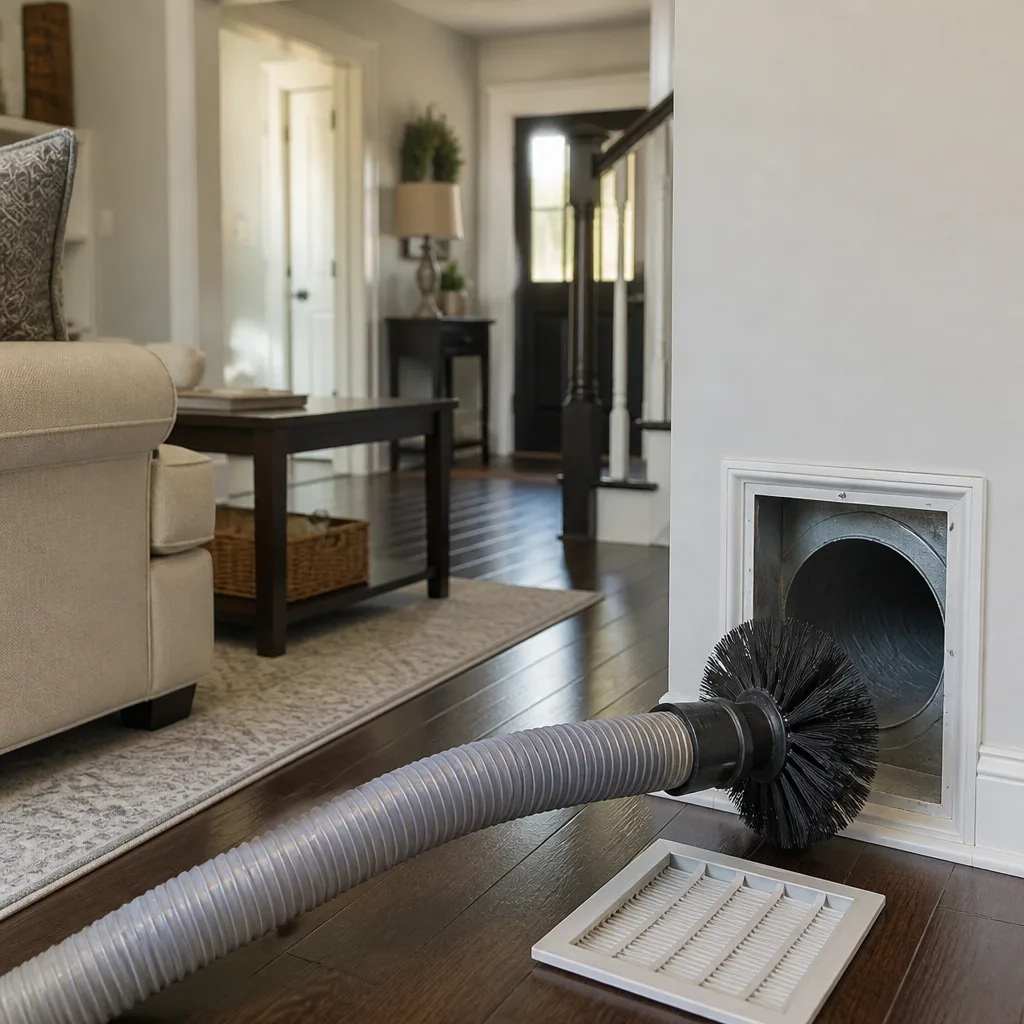 Whole-home duct cleaning
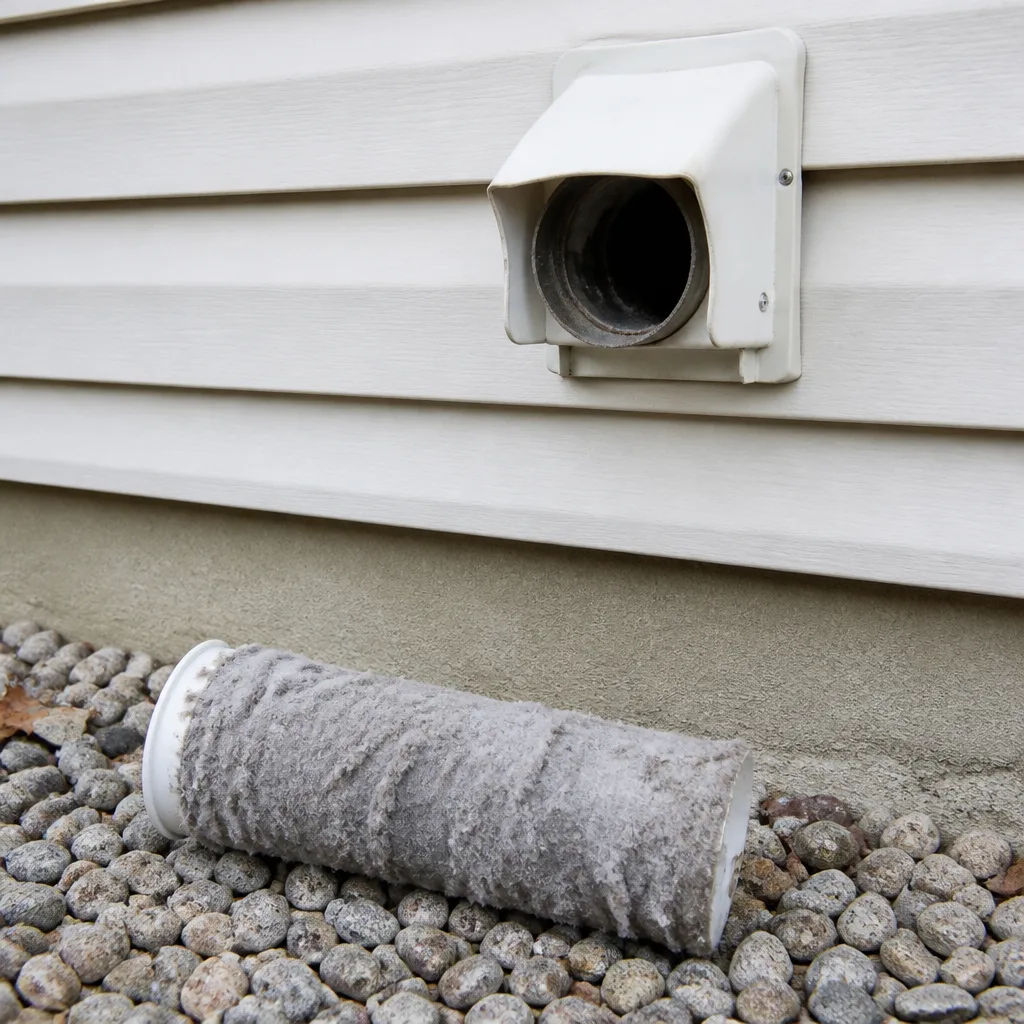 Dryer vent cleaning
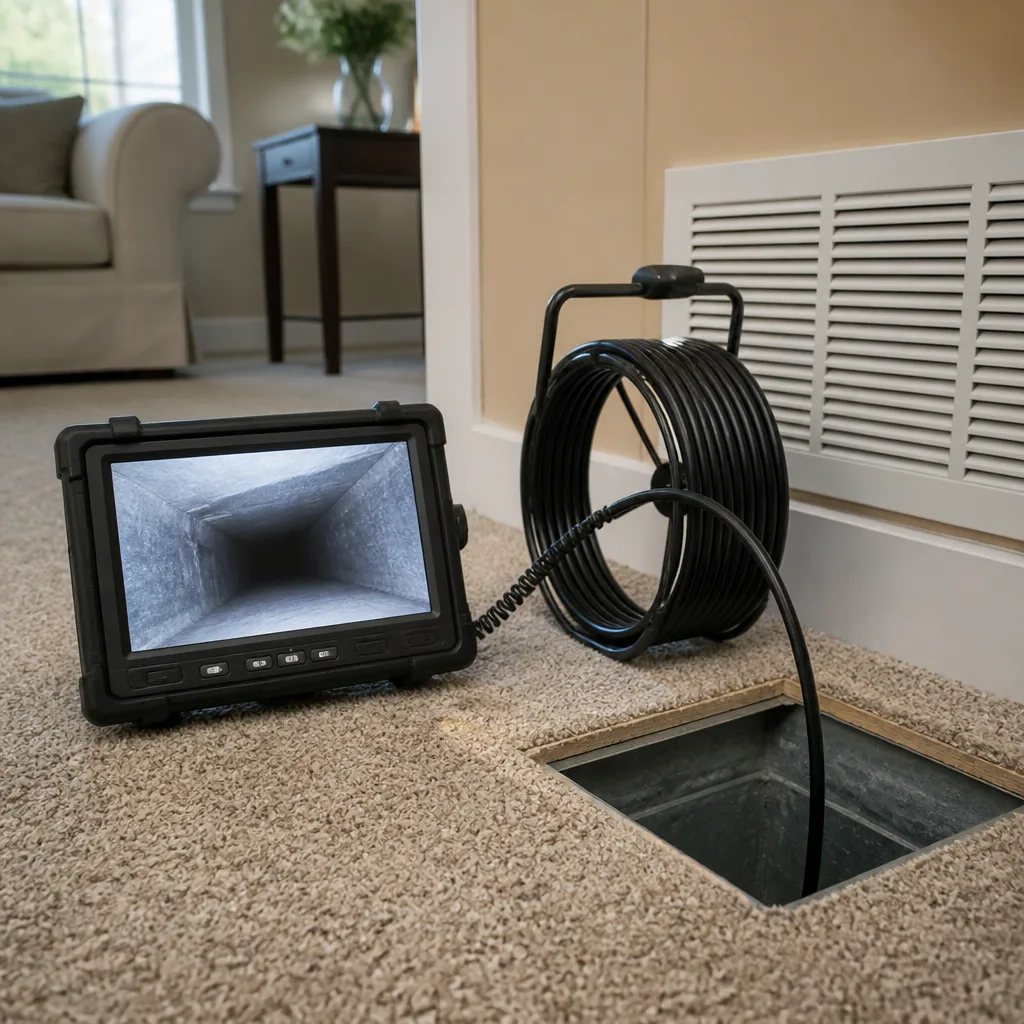 Camera inspection
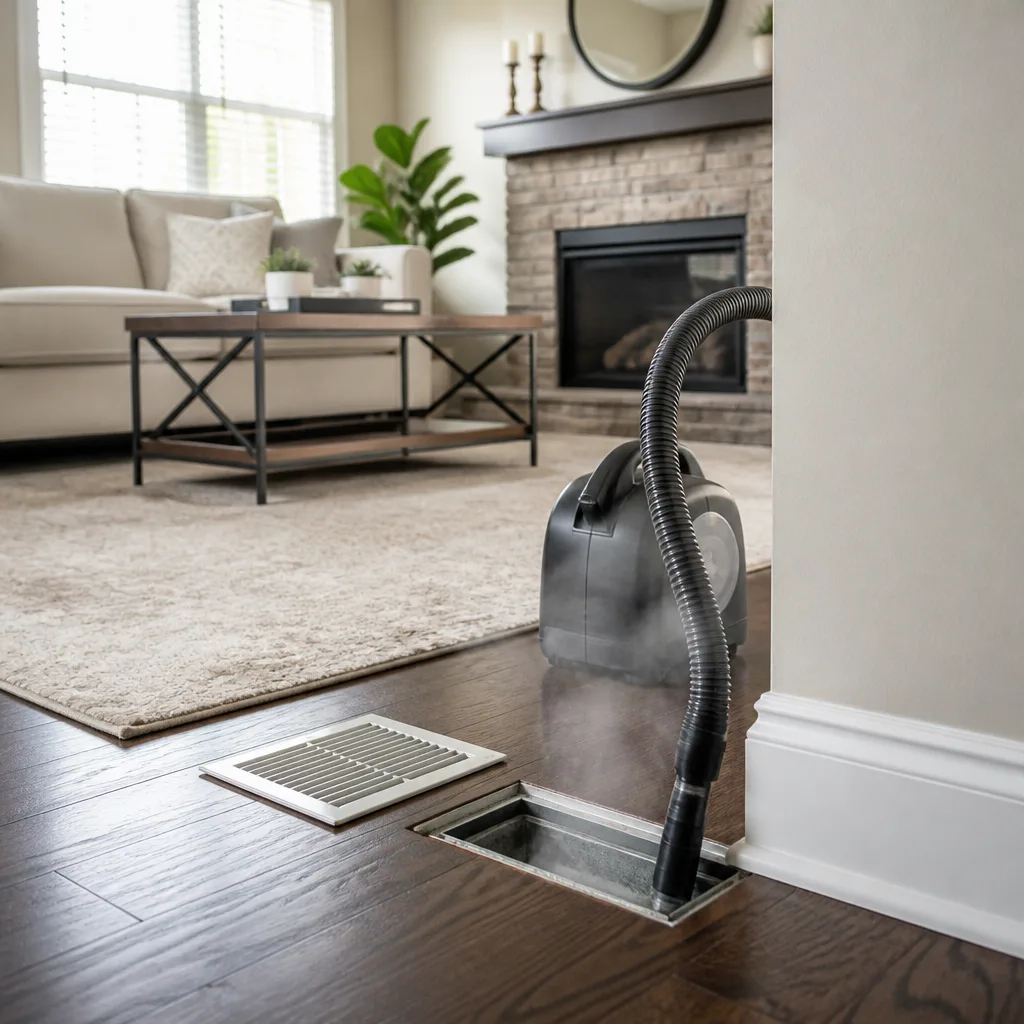 Sanitizing & deodorizing
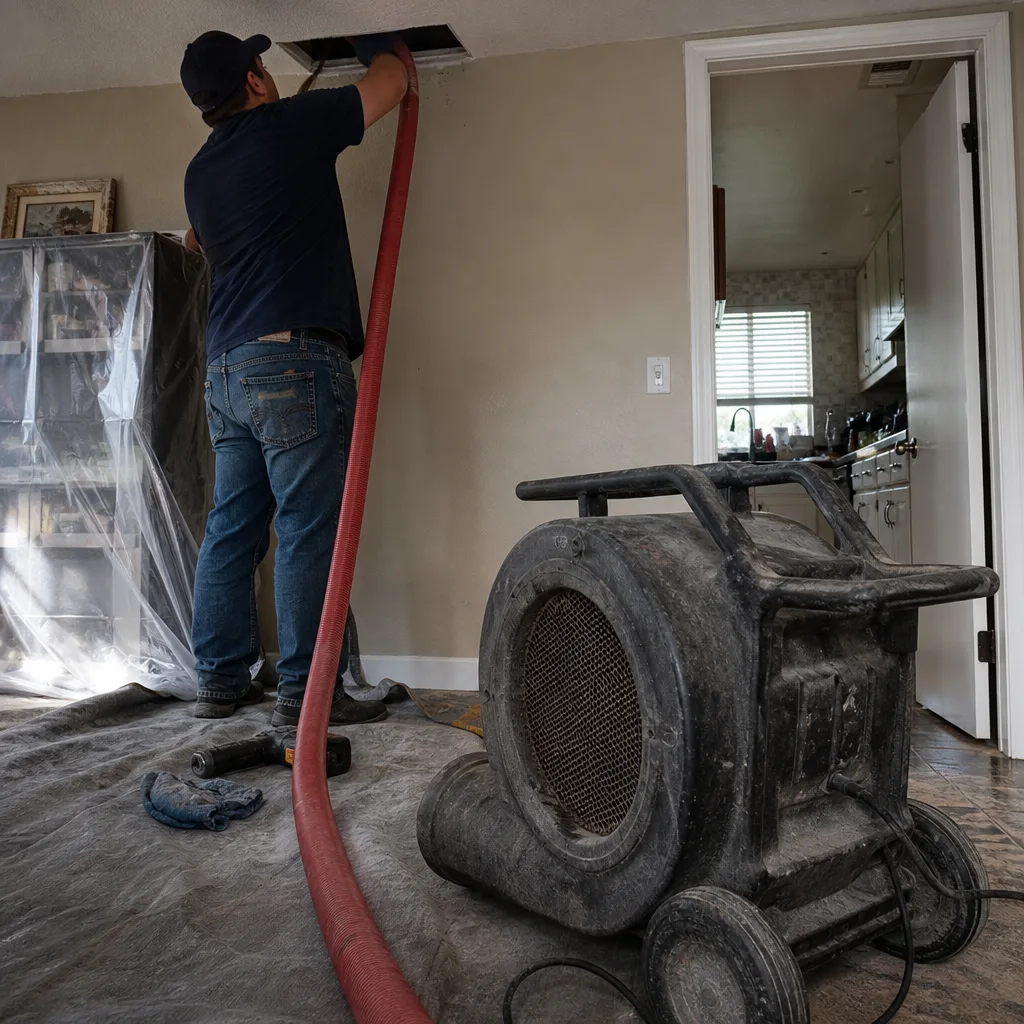
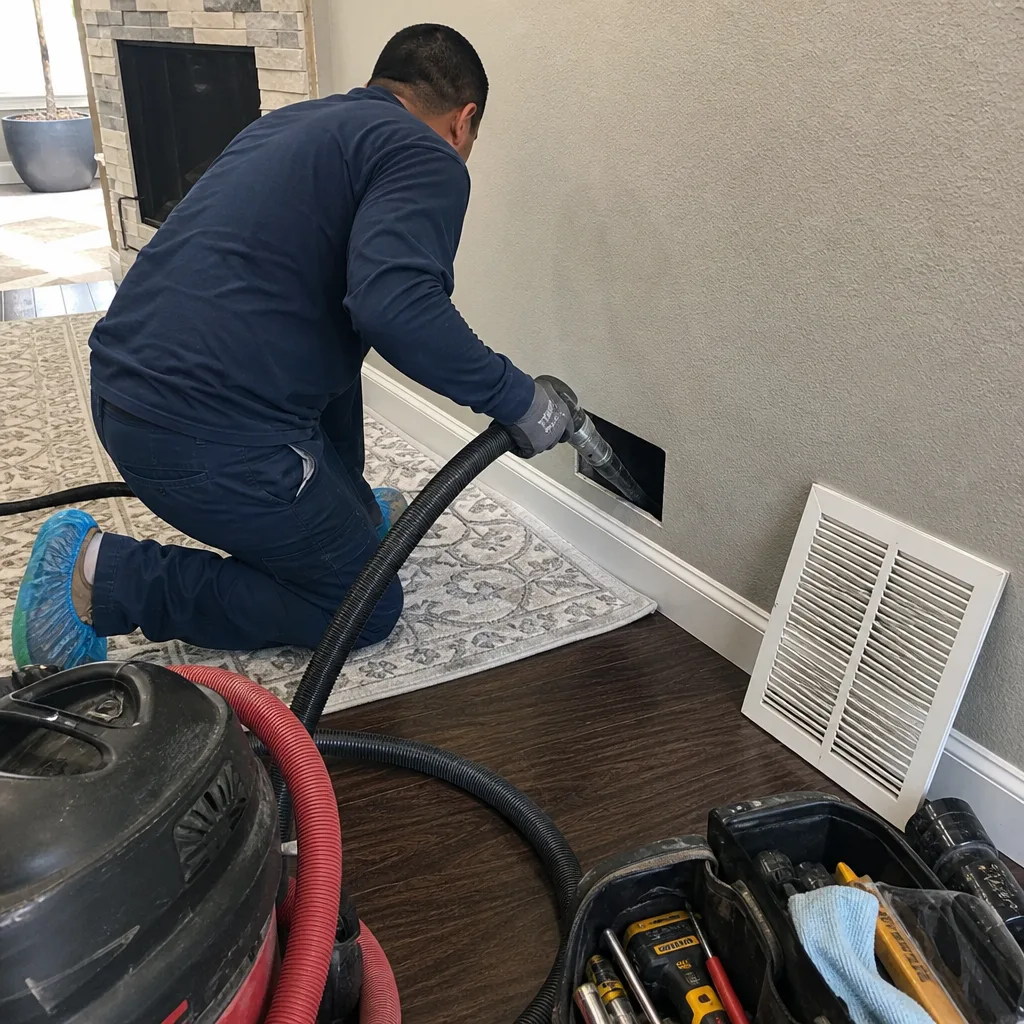
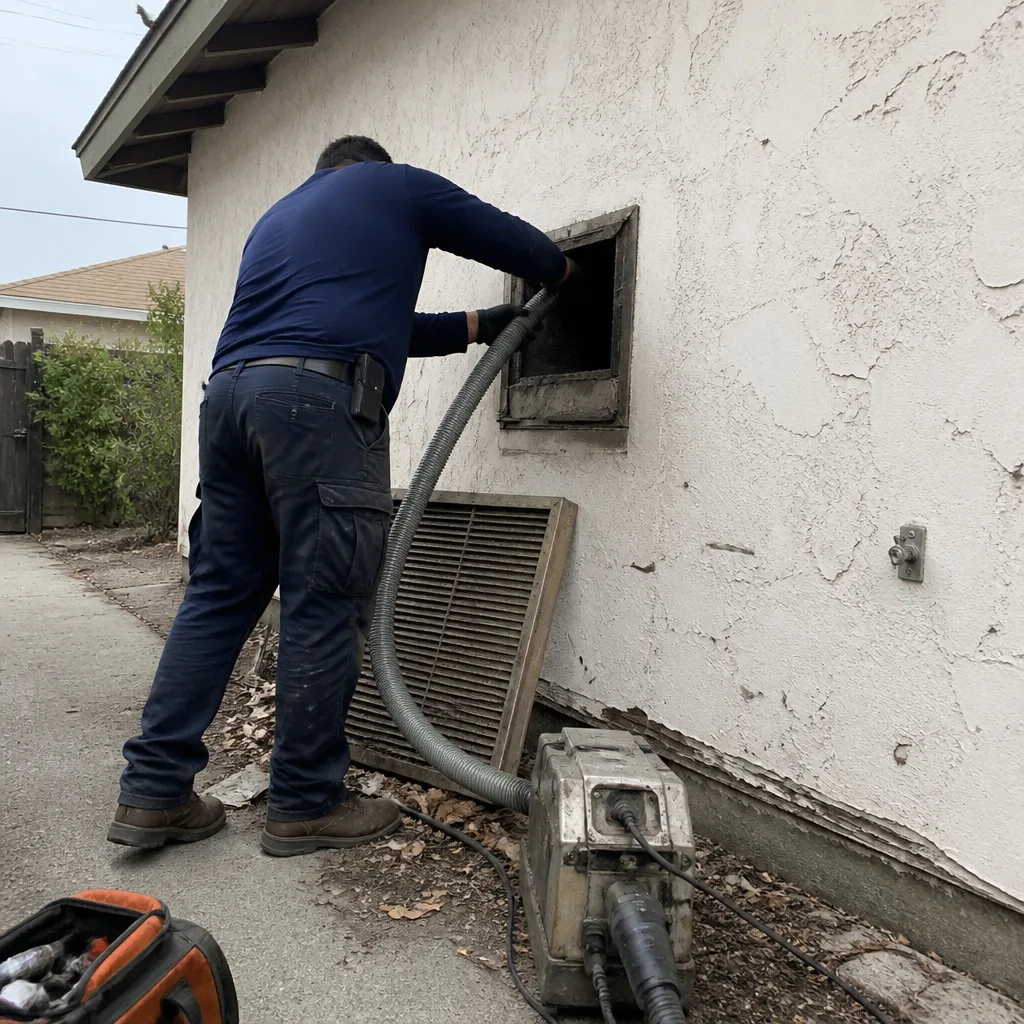
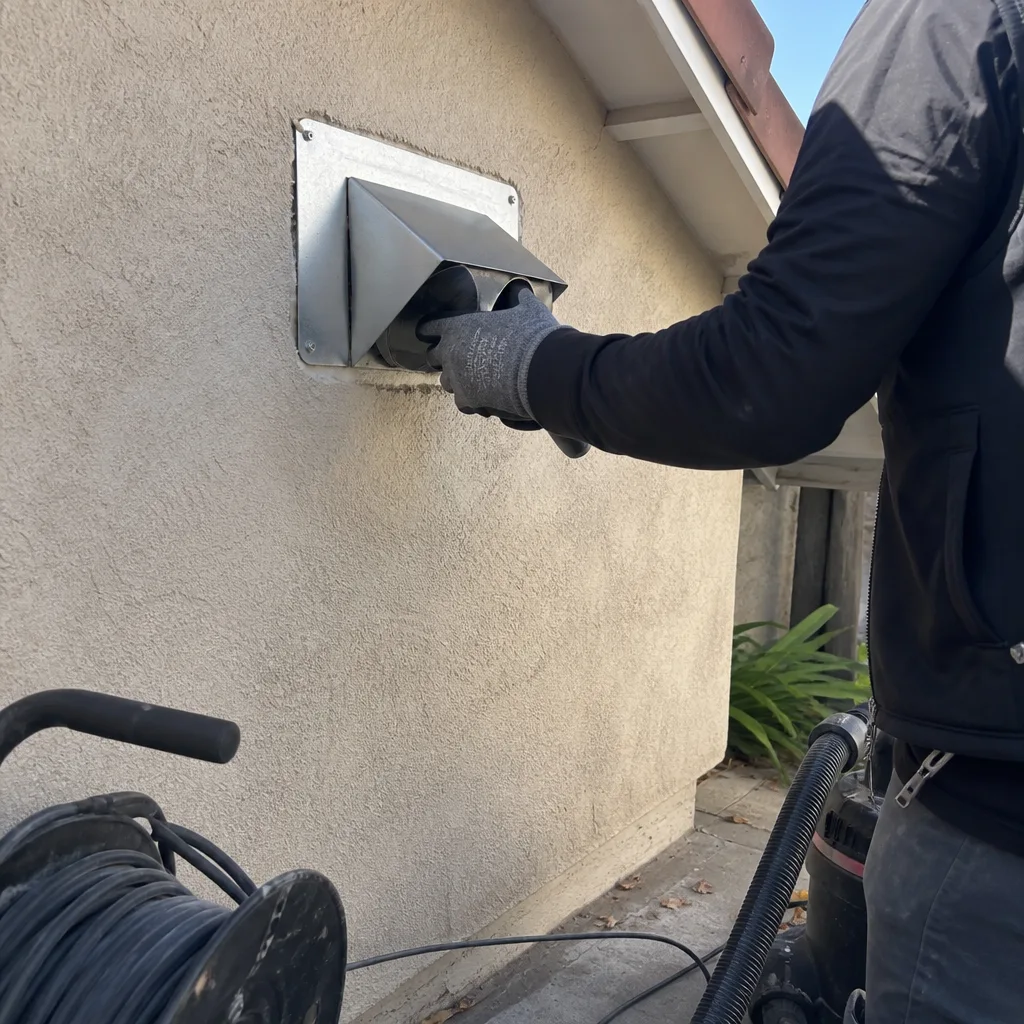
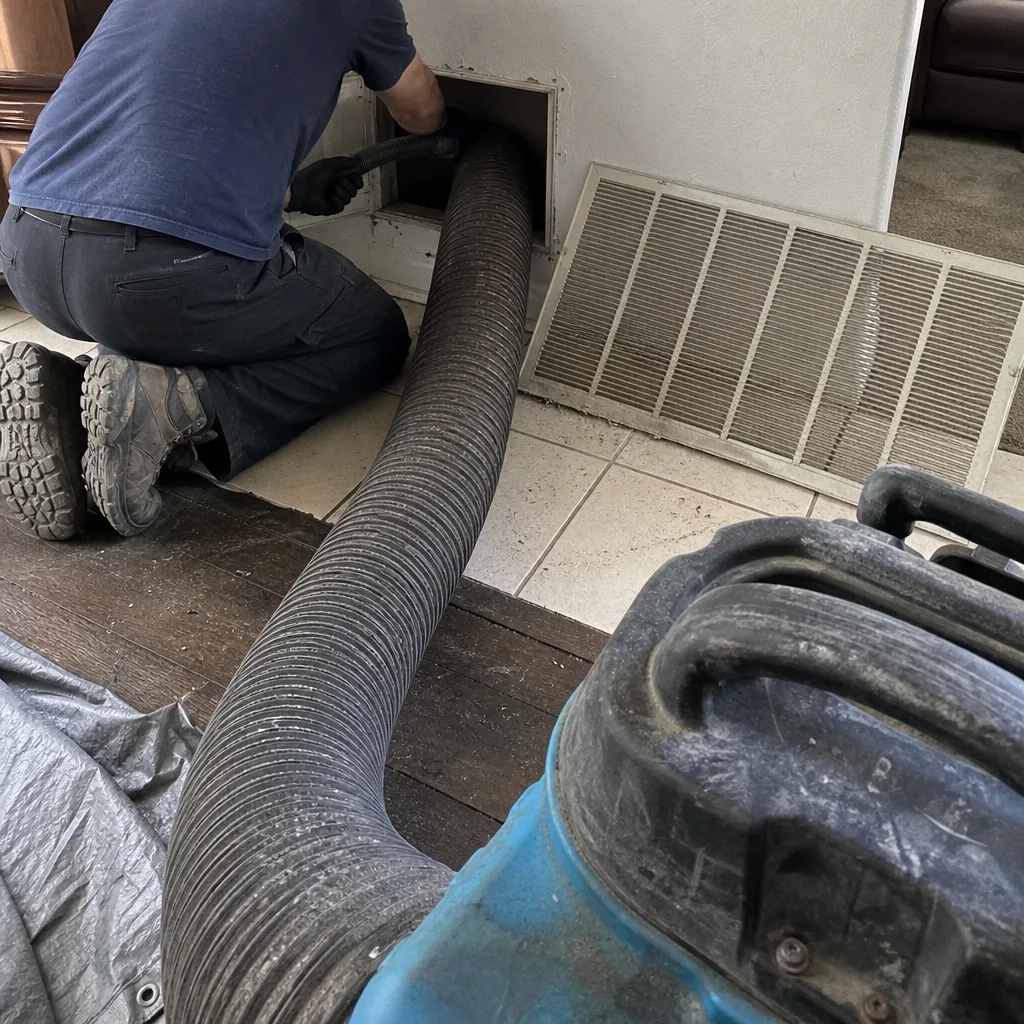
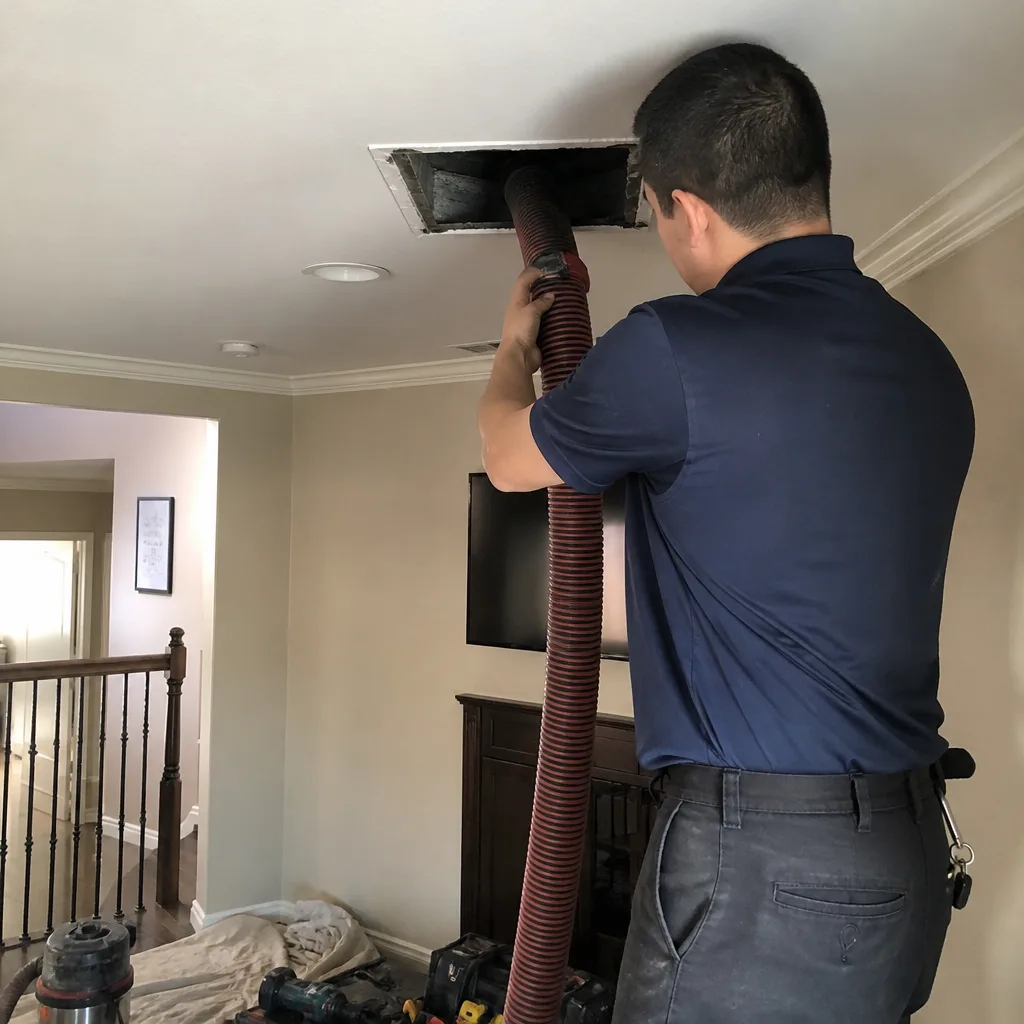
Whole-system duct and dryer vent check with before-and-after photos - you see exactly what came out of your vents
That "$99 whole-house special" is a bait ad - the real number appears once they are in your hallway, or the "clean" is a shop-vac at the register. We photograph the inside of your ducts before and after instead.
Air Duct Cleaning Emergency Preparedness Guide for Westminster Homes
A structure fire in an adjacent unit. A wildfire smoke plume rolling through Orange County. A flash flood that sends water into a crawlspace. In Westminster, these events are not hypothetical – they happen, and when they do, your HVAC system becomes a distribution network for whatever is in the air or water. Here’s the part most homeowners miss: a running system during a smoke event can pull contaminated air through the duct system and deposit soot and carcinogens on every surface downstream within minutes. Shut the system off, and the ducts stay relatively clean. Leave it running, and you’ve turned a localized event into a whole-house contamination problem. This guide walks through Westminster’s three most likely duct contamination emergencies – wildfire smoke, water intrusion, and post-earthquake damage – and gives you the exact response protocols we use when inspecting systems after each one.
Styles & brands we work with
- Whole-home duct cleaning
- Dryer vent cleaning
- Camera inspection
- Sanitizing & deodorizing
Quick Answer
Westminster homes face three distinct duct contamination emergencies: wildfire smoke that deposits soot throughout a running system, flood water or roof leaks that create mold in ductwork within 48 – 72 hours, and seismic activity that disconnects or damages flex duct connections. For each, the first step is shutting down the HVAC system, followed by a documented inspection, and – when contamination is confirmed – professional cleaning or repair using HEPA-filtration equipment. A baseline duct inspection conducted before an emergency makes the post-event assessment faster, more credible for insurance claims, and more likely to be approved.
Table of Contents
- Wildfire Smoke Events: The Exact Shutdown and Response Protocol
- Water Intrusion and Duct Mold: The 48 – 72 Hour Window
- Post-Earthquake Duct Inspection: What Seismic Activity Does to Flex Ducts
- How to Document Duct Contamination for Insurance Claims
- Pre-Emergency Preparation: The Baseline Scope Inspection Advantage
- When Cleaning Isn’t Enough: Duct Repair After Contamination Events
- Dryer Vent Fire Safety During Westminster’s Dry Season
- Common Mistakes to Avoid
- When to Call a Professional
- Frequently Asked Questions
- The Bottom Line
Wildfire Smoke Events: The Exact Shutdown and Response Protocol
Westminster sits close enough to the Santa Ana wind corridors that wildfire smoke from the Cleveland National Forest, the San Gabriel Mountains, or even Riverside County fires can reach the city within hours. That smoke is not just an outdoor nuisance. It contains particulate matter as fine as 2.5 microns – small enough to pass through a standard fiberglass filter, travel through your return duct, and settle on the interior surfaces of your supply ducts, evaporator coil, and blower assembly.
Here is the sequence we recommend for any Westminster homeowner during a significant smoke event:
- Turn the HVAC system to OFF at the thermostat. Not “fan only” – fully off. Running the fan, even without heating or cooling, pulls outdoor smoke into the return and circulates it. This is the single highest-impact action you can take.
- Close all windows and doors, including interior doors to rooms with return registers. Seal obvious gaps at door thresholds with a rolled towel if smoke is heavy.
- If you have a media cabinet or pleated filter, upgrade temporarily. A MERV 13 filter (compatible with most Honeywell and Aprilaire whole-home media cabinets) captures substantially more fine particulate than a MERV 8. But know your system’s limits: if the filter is too restrictive for your blower, you’ll stress the motor. When in doubt, run it during the event only, then replace it.
- Resist the urge to open the system back up the moment the sky looks clearer. Smoke particles remain airborne for days after visible haze dissipates.
What a Post-Smoke Duct Inspection Should Look For
After the smoke event passes, a professional duct inspection should examine four specific zones:
- Return duct interior surfaces: Smoke is drawn into the return first. Look for a visible gray or brown film, especially on the bottom of horizontal return runs where particulates settle.
- Supply register interiors and nearby walls: Soot staining around supply registers is a strong indicator that smoke particles were distributed throughout the home.
- Evaporator coil and blower assembly: These components get coated first during a smoke event because they are the first surfaces air passes through after the filter. A coil inspection often reveals contamination even when ducts look clean.
- Plenum and air handler cabinet: Any standing soot in the cabinet signals that the entire distribution system needs attention.
In our experience with Westminster homes after significant smoke exposure, the duct system is rarely the only affected component. The coil, blower wheel, and filter housing typically need cleaning as well. A cleaning service that only runs a brush through the ducts and ignores the air handler is doing half the job. Air Duct Cleaning in Westminster that includes air handler and coil cleaning is the standard you should insist on.
Water Intrusion and Duct Mold: The 48 – 72 Hour Window
Westminster’s flat topography and aging storm drain infrastructure make localized flooding a recurring problem, particularly in neighborhoods north of Westminster Boulevard and around the Bolsa Chica channel. When flood water, a slab leak, or a roof leak contacts ductwork – especially insulated flex duct in a crawlspace or attic – two things happen in sequence. First, the fiberglass insulation lining or wrapping absorbs water like a sponge. Second, that damp, dark environment becomes a mold incubation chamber. The mycological timeline is consistent: mold spores present in ordinary household dust will germinate and establish visible colonization within 48 to 72 hours when given standing moisture and a food source.
This is why the 48 – 72 hour window matters. If water intrusion is discovered and addressed within two days, the remediation path is typically straightforward: dry the affected area, inspect the duct for moisture, replace any saturated insulation, and clean the interior. If water sits for a week or more, the scope expands dramatically: possible duct replacement, insulation removal and disposal, and secondary mold growth in adjacent cavities.
What to Do If Water Contacts Ductwork
- Shut down the HVAC system immediately. Do not run the fan to “dry things out.” Moving air through a wet duct can aerosolize mold spores and distribute them throughout the home.
- Identify the water source and stop it if possible. Roof leak, slab leak, exterior flooding – the source determines whether this is a one-time event or an ongoing problem.
- Document everything before anything is moved or cleaned. Photographs of standing water, visible water lines on duct insulation, and any visible mold staining. These photos are your insurance documentation baseline.
- Call a professional to assess the duct system. A visual inspection from the register side will not reveal what’s happening inside the duct. The interior surfaces must be inspected, typically with a camera, to determine whether moisture reached the duct interior or only the exterior insulation.
One clarification that confuses many Westminster homeowners: there is a difference between water in the duct and water on the duct. A puddle next to a flex duct in a crawlspace may not have entered the duct interior. But the exterior insulation may still be saturated, and that insulation is now a mold risk that will eventually affect the air you breathe. A proper post-flood assessment examines both the interior and exterior of the ductwork. Our Air Duct Repair capability matters here because saturated duct insulation and disconnected sections after flooding are structural problems that cleaning alone cannot resolve.
Post-Earthquake Duct Inspection: What Seismic Activity Does to Flex Ducts
Westminster sits within the Los Angeles Basin seismic zone. The Whittier Fault, the Newport-Inglewood Fault, and the Elsinore Fault all have the potential to produce shaking that, even at moderate intensity, can damage duct systems in ways that are invisible and silent.
Here is what we know from inspecting systems after seismic events: flex ducts – the insulated, wire-reinforced tubes most commonly used in attic and crawlspace installations in Orange County homes – are the most vulnerable component. The wire helix gives them shape, and the connection points at plenums, collars, and register boots are typically held by zip ties or clamps. When a structure shakes, these connections can work loose. The result is a duct that looks intact from the outside but is actually disconnected or partially pulled away from its collar.
Why does this matter? A disconnected flex duct in an attic does not make a noticeable sound from inside the living space. The system sounds normal. The air handler pushes conditioned air into the attic or wall cavity instead of into the bedroom or hallway it’s supposed to serve. You lose heating and cooling efficiency, but more importantly, you create a pressure imbalance that can draw attic air – insulation fibers, dust, rodent waste – directly into the return side of the system through the gap. That contaminated attic air then circulates through every room.
What a Post-Earthquake Duct Inspection Should Cover
- Every accessible connection point: plenum connections, branch takeoffs, register boots, and any splice points where two flex duct sections are joined.
- Flex duct sag: Shaking can break or displace the support straps that hold flex duct runs in place. Sagging ducts create low points where condensation collects, leading to mold growth in Westminster’s humid summer months.
- Duct exterior damage: Sharp debris or shifting framing members can tear the outer vapor barrier and insulation jacket, exposing the inner liner and reducing the duct’s insulating performance.
- Pressure testing or airflow verification: After a significant seismic event, a professional should verify that airflow at each register matches the expected output for that room. A room that used to heat up in ten minutes and now takes thirty is a red flag.
- Before-and-after context: Photograph the register or return opening as it appears in the room first, including surrounding walls and flooring to establish location. Then photograph the interior of the duct.
- Close-up with scale: Use a ruler, coin, or other common object next to visible contamination – soot staining, mold spots, water marks. This gives the adjuster a sense of severity.
- Timestamps: Most phone cameras embed date and time in metadata. Preserve that metadata; do not screenshot or strip it. If you are photographing water intrusion, take photos immediately at discovery and again 24 and 48 hours later to document progression.
- Date and time of inspection, plus the name and credentials of the inspector.
- Photographs or video from inside the duct system, including register locations and the specific rooms served.
- Measurement or objective description of contamination: surface area affected, thickness of soot layer, visible mold growth, moisture readings.
- A clear statement of cause: which event (wildfire smoke, flood, earthquake) led to the observed contamination, with supporting evidence.
- Recommended scope of work: cleaning, repair, or replacement, with a rationale for each recommendation.
- Causation link: The contamination must be traceable to the covered event. “The ducts are dirty” is not an insurance claim. “The ducts show smoke residue consistent with the October wildfire event” is.
- Professional assessment: Most insurers will not accept a homeowner’s visual observation alone. A documented inspection by a professional carries significantly more weight.
- Reasonable scope: Insurers may push back on full-system replacement when cleaning and targeted repair would resolve the issue. Be prepared to explain why the recommended scope is necessary.
- Mitigation efforts: Insurers expect homeowners to take reasonable steps to prevent further damage. If you left the HVAC running during the smoke event and then filed a claim two weeks later, expect questions.
- Camera inspection of supply and return ducts, including branch lines and the main trunk.
- Photographs of connection points at plenums, collars, and register boots – these are the reference points for post-earthquake damage assessment.
- Moisture readings from duct interiors and adjacent materials to establish a dry baseline.
- Air filter condition and type, noted for future reference when selecting temporary filtration upgrades during smoke events.
- A written report with photos, dated, that the homeowner retains for insurance purposes.
- Saturated fiberglass insulation on flex duct exterior or interior liner after flooding. This material cannot be effectively dried. It must be removed and replaced.
- Disconnected or partially separated flex duct at any connection point after seismic activity. The duct must be reconnected and secured, not just cleaned.
- Torn or punctured duct exteriors that expose the interior liner or allow unfiltered air to enter the system. These require repair or section replacement.
- Collapsed or crushed duct sections that restrict airflow. Cleaning cannot restore the shape or function.
- Significant rust or deterioration on metal duct components after prolonged moisture exposure. Depending on severity, these sections may need replacement.
- Clothes take more than one cycle to dry completely.
- The dryer exterior becomes unusually hot to the touch during operation.
- A burning smell during or after a drying cycle.
- Lint visible at the exterior vent hood or accumulating around the dryer base.
- The dryer shuts off mid-cycle due to overheating.
- Running the HVAC fan during a smoke event. This is the most common mistake we see Westminster homeowners make. The fan pulls smoke into the system and distributes it. Turn the system off completely.
- Waiting to document water intrusion. Photographs taken three days after the water recedes are far less useful for insurance claims than photos taken at the moment of discovery. Document first, then act.
- Assuming a visible inspection from the register is sufficient. You cannot see what is happening inside a 20-foot flex duct run by looking through a register. Interior camera inspection is the only way to assess actual duct condition.
- Using a standard MERV 8 filter during wildfire smoke events. These filters capture larger particles but allow the fine particulate that causes the most health concern to pass through. A temporary upgrade to MERV 13 (where compatible) provides substantially better protection.
- Attempting to dry wet ductwork by running the system. This distributes mold spores and moisture throughout the home. The system should stay off until a professional assesses the situation.
- Choosing a cleaning-only company when repair is needed. If your post-earthquake inspection finds disconnected flex ducts or your post-flood inspection finds saturated insulation, cleaning alone will not resolve the problem. A contractor that offers both cleaning and repair – like Air Duct Repair in Westminster – addresses the full scope in one visit.
- Skipping the post-smoke inspection because the house “smells fine now.” Soot and smoke residue can remain in ducts for months or years after the odor dissipates. The only way to know is to look.
If you experienced noticeable shaking in Westminster – enough to knock pictures off walls or crack drywall – a duct inspection is a reasonable precaution even if your HVAC seems to be working. The cost of an inspection is modest compared to the cost of discovering six months later that one of your bedroom supply lines has been dumping conditioned air into the attic all winter.
How to Document Duct Contamination for Insurance Claims
Insurance companies are not in the business of paying for duct cleaning or repair without evidence. The burden of proof falls on the homeowner, and the quality of that proof often determines whether a claim is approved, partially approved, or denied. This section covers what insurers typically require for duct contamination claims in California and how to prepare documentation that gets results.
Photography Standards
What an Inspector’s Report Should Contain
If a professional inspects your duct system after a contamination event, the report should include:
What Insurers Typically Require for Duct Remediation Claims
Our team has worked with Westminster homeowners on post-event documentation, and the pattern is consistent: claims with professional inspection reports, timestamped photos, and a clear causation statement get processed faster and approved more often than claims based on a homeowner’s note saying “the ducts smell like smoke.” The documentation is not bureaucracy; it is the difference between reimbursement and denial.
Pre-Emergency Preparation: The Baseline Scope Inspection Advantage
Here is the single most valuable investment a Westminster homeowner can make before any emergency happens: a documented baseline scope inspection of the duct system. This is not a cleaning. It is a professional camera inspection of the duct interiors, connections, and air handler, producing a written record of the system’s condition on a specific date.
Why does this matter so much after an emergency? Because insurance adjusters and restoration professionals need to know what the system looked like before the event. Without a baseline, a homeowner who files a smoke contamination claim is in a weaker position. The insurer can reasonably ask: “How do we know this soot wasn’t there before the fire?” The homeowner has no answer because they never looked.
With a baseline scope, that same claim becomes straightforward. The pre-event documentation shows clean duct interiors. The post-event inspection shows soot deposition. The causal link is established.
What a Baseline Scope Inspection Includes
This service costs a fraction of a full cleaning and takes about an hour. In our experience, the Westminster homeowners who have a baseline scope on file are the ones whose post-emergency claims and remediation projects move fastest. They know what the system looked like before the event, and they can prove it. That is the difference between arguing with an adjuster and getting approval.
If you are starting from scratch, a Duct Cleaning Westminster home baseline scope is the logical first step. It establishes a record, identifies any existing problems worth addressing proactively, and prepares you for whatever the next fire season or wet winter brings.
When Cleaning Isn’t Enough: Duct Repair After Contamination Events
A cleaning-only approach has a structural blind spot. After flood water saturates duct insulation, after an earthquake disconnects a flex duct run, or after years of neglect have left ductwork crushed or torn, no amount of brushing or vacuuming will fix the problem. The duct itself is damaged. This is the distinction between cleaning and repair, and it is why Westminster homeowners facing post-emergency duct issues often need both.
Here are the situations where repair – not cleaning – is the correct intervention:
Most duct cleaning companies in Orange County do not offer repair. When their technicians find a disconnected flex duct in an attic, the company finishes the cleaning and tells the homeowner to call an HVAC contractor. That means two vendors, two appointments, two bills, and a gap in accountability. Our Air Duct Repair in Westminster capability is designed to close that gap. When we find damage during a cleaning or inspection, we fix it. One contractor, one point of accountability, one documented scope of work.
Dryer Vent Fire Safety During Westminster’s Dry Season
Dryer vent fires are not usually considered an “emergency preparedness” topic, but in Westminster’s dry season – which typically runs from May through October – they should be. The combination of low humidity, Santa Ana wind events, and homes built in the 1960s and 1970s with long or poorly routed dryer vent runs creates conditions where a clogged vent becomes a fire hazard.
Lint is the fuel. A typical household dryer produces several pounds of lint per year, and not all of it is captured by the lint screen. The finer particles pass through and accumulate in the vent pipe, especially at elbows, transitions, and the exterior termination point. Over time, this buildup restricts airflow. The dryer runs hotter. The lint – which is highly flammable – sits close to the heating element’s exhaust path. At a certain point, the combination of heat, restriction, and fuel creates ignition conditions.
According to data from the U.S. Fire Administration, clothes dryer fires account for roughly 2,900 residential fires annually, and the leading cause is failure to clean the vent. In Westminster, where many homes have laundry rooms located on interior walls, vent runs are longer and have more bends, which accelerates lint accumulation.
Dryer Vent Warning Signs
If you notice any of these signs, shut the dryer off and do not use it until the vent has been inspected. Dryer Vent Cleaning in Westminster is a dedicated service, not an afterthought, and it should be performed annually for most households, more frequently for large families or homes with long vent runs.
Common Mistakes to Avoid
When to Call a Professional
Some duct contamination events are genuinely urgent and require professional assessment: visible soot staining around supply registers after a wildfire smoke event, standing water or visible mold growth in or around ductwork, a significant earthquake that shook your home hard enough to cause visible structural damage, or a dryer that is running abnormally hot. In these situations, do not wait. The problem does not resolve itself, and every week of delay increases the remediation scope and the health exposure. Duct Cleaning Westminster offers free estimates in Westminster – call (877) 752-8412 to schedule an inspection. Our team uses Rotobrush rotary brush systems and Nikro HEPA-filtration vacuums on every job, and we document everything we find with photos and written reports designed to support insurance claims.
Frequently Asked Questions
Mold can establish visible colonization in ductwork within 48 to 72 hours when moisture and a food source (dust, debris, or fiberglass insulation) are present. This timeline is consistent across Westminster and the broader Southern California climate, and it is why immediate system shutdown and professional assessment are critical after any water event that contacts ductwork.
HVAC systems do not clean themselves. Soot and smoke particulates deposited on duct interiors, coils, and blower assemblies remain in place until they are physically removed. In fact, every time the system runs, small amounts of that residue can be re-entrained and recirculated through the home. A professional assessment with camera inspection is the only way to determine whether cleaning is needed and how extensive the contamination is.
Turn the system off completely at the thermostat – not “fan only” – and keep it off until the outdoor air quality returns to acceptable levels. If you have a media cabinet compatible with higher-efficiency filters (such as Honeywell or Aprilaire models), a temporary MERV 13 filter will provide better protection during the event. After the smoke clears, replace the filter and consider a professional duct inspection if the event was prolonged or severe.
Coverage depends on your specific policy and the nature of the event. Many policies do cover duct remediation when the contamination is directly traceable to a covered loss (such as flood damage, fire damage, or smoke intrusion). However, documentation is critical. Insurers typically want to see professional inspection reports, timestamped photographs, and a clear explanation of how the event caused the duct contamination. A baseline scope inspection conducted before the event strengthens the claim substantially.
The signs are often subtle: a room that takes much longer to heat or cool than it used to, reduced airflow from specific registers, higher utility bills with no change in usage, or visible sagging in flex duct runs visible from the attic access. A professional inspection that checks every connection point, measures airflow at each register, and compares against expected output is the most reliable way to identify earthquake-related duct damage.
For most Westminster households, once per year is appropriate. Larger families, homes with long or multi-elbow vent runs, and households that do multiple loads of laundry daily should consider cleaning every six months. The operational warning signs – clothes taking more than one cycle to dry, a hot dryer exterior, or a burning smell – indicate that cleaning is overdue and the dryer should not be used until the vent is inspected.
The Bottom Line
Westminster homes face real, recurring duct contamination risks: wildfire smoke from the surrounding mountains, flood water from the city’s aging drainage infrastructure, and seismic activity from the Los Angeles Basin fault system. Each of these events demands a specific response, and the window for effective action is often measured in hours or days, not weeks. The single most valuable preparation step is a documented baseline scope inspection – it establishes proof of pre-event condition, makes insurance claims smoother, and gives you a clear picture of your system’s vulnerabilities before something goes wrong. When an emergency does happen, shut the system down first, document everything second, and call a professional who can inspect, clean, and repair – because Westminster’s emergencies do not politely wait for a convenient appointment.
Written by the team at Duct Cleaning Westminster, serving Westminster since 2017.
See the difference
 Before
 After
 Before
 After
 Before
 After