
Last updated November 2, 2026
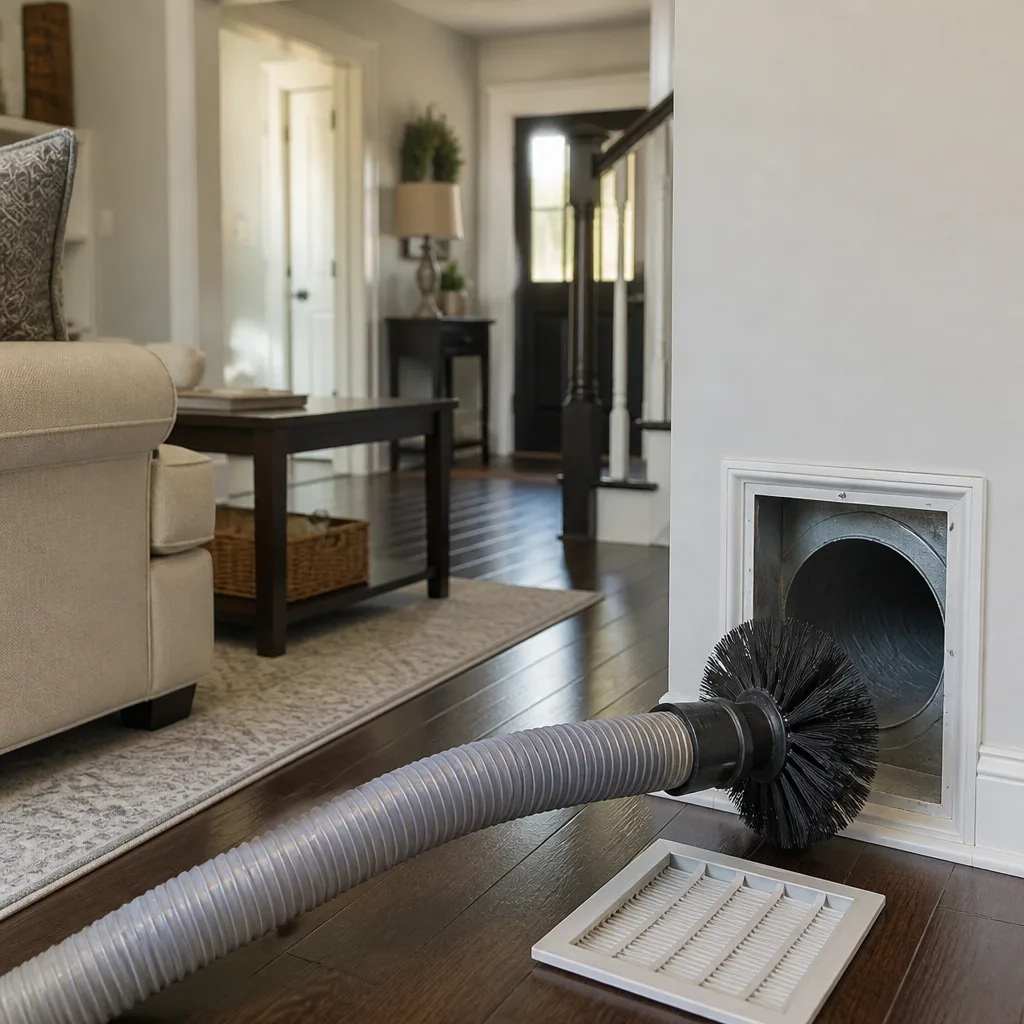 Whole-home duct cleaning
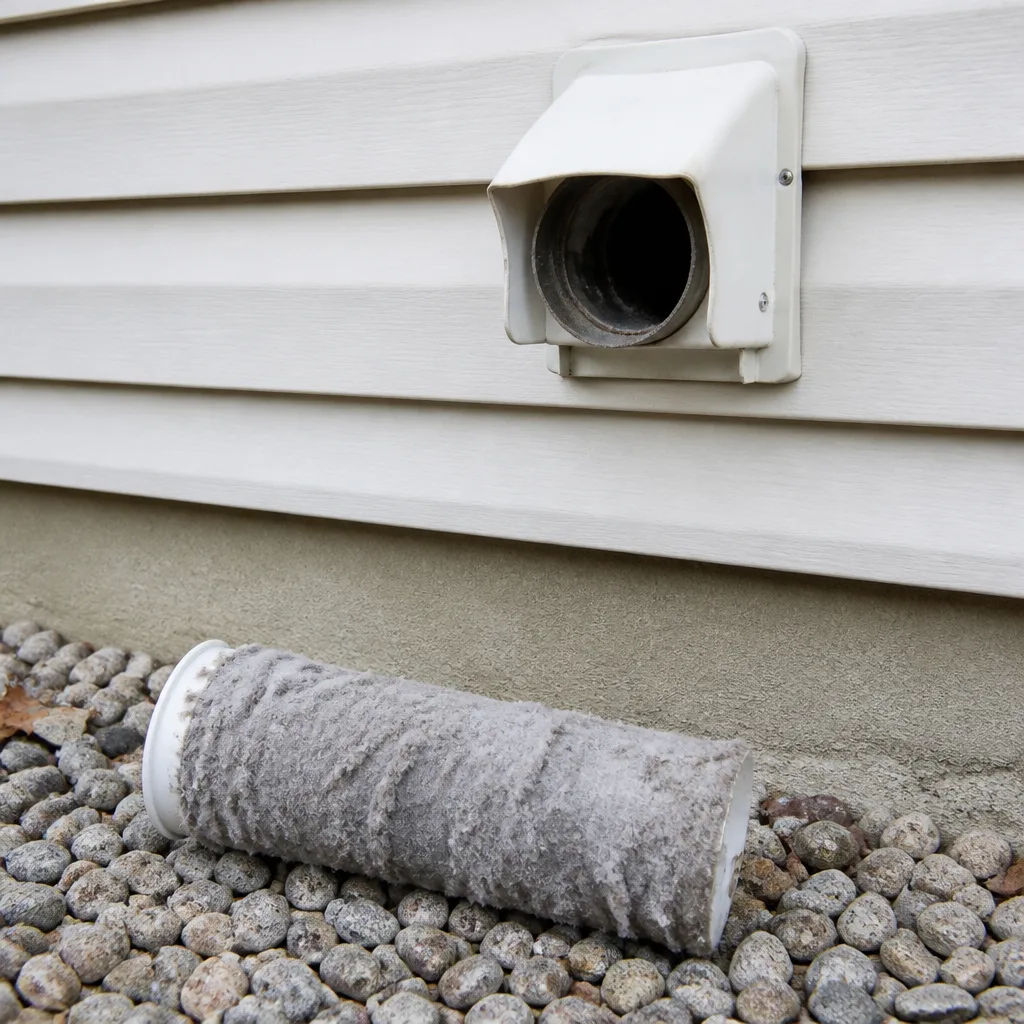 Dryer vent cleaning
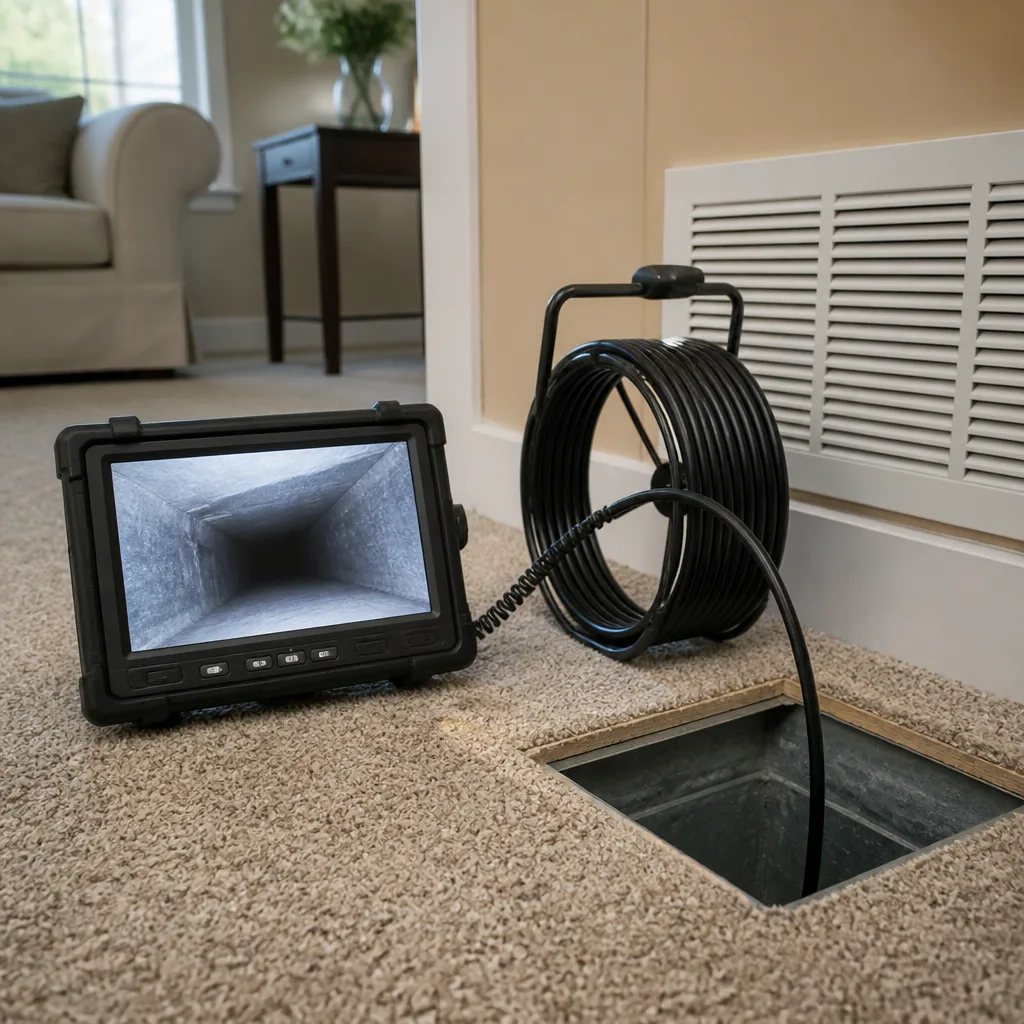 Camera inspection
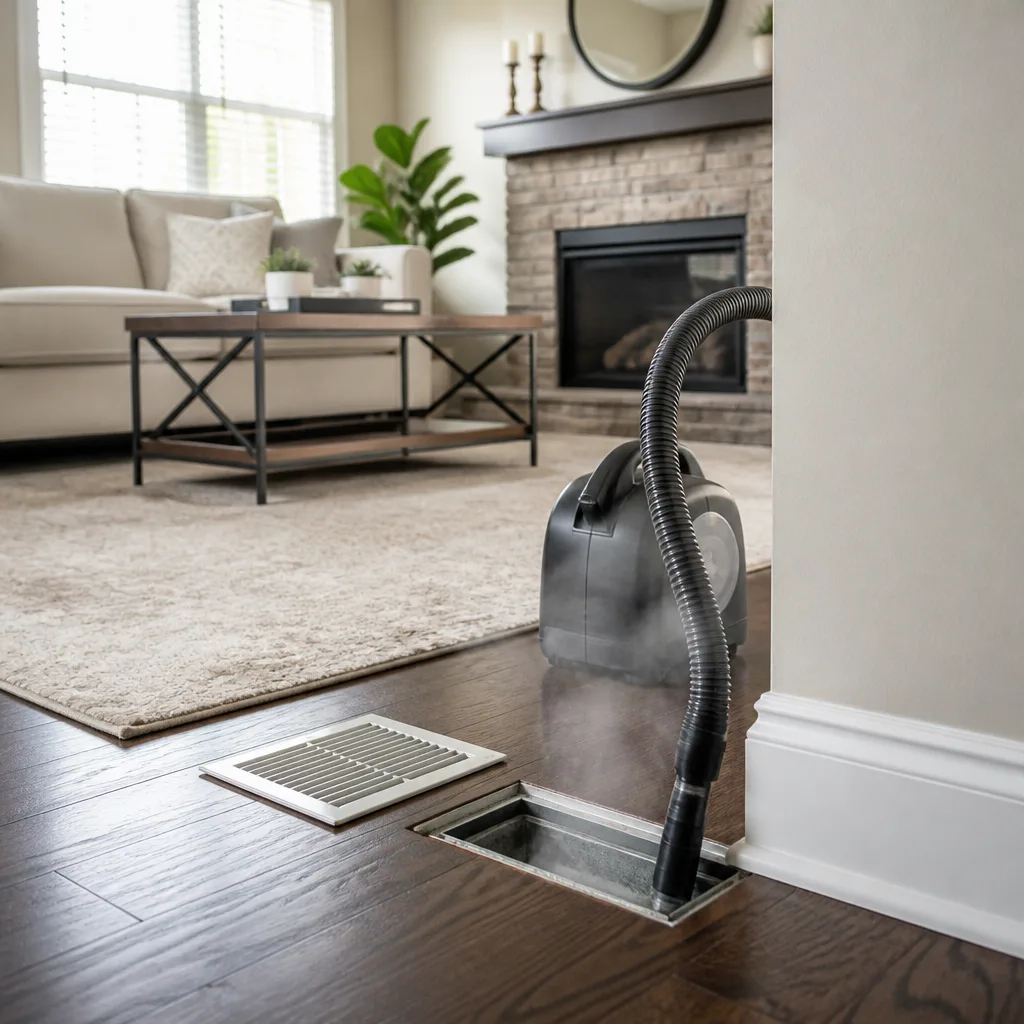 Sanitizing & deodorizing
Whole-system duct and dryer vent check with before-and-after photos - you see exactly what came out of your vents
That "$99 whole-house special" is a bait ad - the real number appears once they are in your hallway, or the "clean" is a shop-vac at the register. We photograph the inside of your ducts before and after instead.
DIY vs Professional Air Duct Cleaning: The Westminster Homeowner’s Decision Guide
A standard shop vac generates roughly 90 to 120 CFM of suction. The truck-mounted vacuum a professional contractor deploys generates 15,000 to 25,000 CFM. That’s not a marginal difference; it’s the difference between disturbing debris and extracting it. Most DIY duct cleaning guides gloss over this number because it makes the entire DIY proposition look weak. But the truth is more nuanced than just hiring a pro. Some DIY duct maintenance is genuinely useful. The question is where the useful part ends and the counterproductive part begins. This guide gives Westminster homeowners a precise, quantified answer to that question, so you can decide whether a Saturday morning with a shop vac is worth your time or whether you’re better off calling a contractor who arrives with Rotobrush rotary brush systems and Nikro HEPA-filtration vacuums.
Quick Answer
DIY duct cleaning in Westminster is effective for roughly the first 3 to 5 feet of duct run from each register, which represents about 10 to 15 percent of a typical home’s total duct surface area. The remaining 85 to 90 percent, including the main trunk lines, air handler cabinet, return plenum, and every bend and transition, requires professional source-removal equipment to actually clean rather than just disturb. If your goal is cosmetic register cleanliness, DIY works. If your goal is improved indoor air quality throughout the home, professional cleaning is the only method that achieves it.
Styles & brands we work with
- Whole-home duct cleaning
- Dryer vent cleaning
- Camera inspection
- Sanitizing & deodorizing
Table of Contents
- What DIY Can Actually Reach: The 10 to 15 Percent Reality
- What DIY Cannot Reach: The Inaccessible 85 Percent
- When DIY Duct Cleaning Makes Sense in Westminster
- When DIY Makes Things Worse: The Dislodging Problem
- What Professional Equipment Actually Does: A Component Breakdown
- Westminster Climate Factors That Affect Duct Contamination
- The Decision Framework: DIY vs Professional in Six Checks
- The Repair Dimension: What DIY Cleaning Cannot Address
What DIY Can Actually Reach: The 10 to 15 Percent Reality
The average Westminster home has somewhere between 15 and 25 linear feet of ductwork per register run, and most homes have eight to fourteen registers. That’s a lot of duct surface area. A consumer brush kit, the kind sold at hardware stores for $30 to $60, attaches to a drill and extends maybe 4 to 6 feet into a duct from the register opening. In practice, that means you can clean the visible portion of the duct immediately behind each register grille. You can loosen some dust in the first few feet of the branch run. You can vacuum out what falls back toward the opening.
Here’s the math. A typical Westminster home with 10 registers and an average branch run length of 18 feet has roughly 180 linear feet of branch ductwork, not counting the main trunk line. If your brush kit reaches 4 feet into each register, you’re covering 40 of those 180 feet, or about 22 percent of branch runs. But branch runs are only part of the system. Add in the main supply trunk, the return ductwork, the plenums, and the air handler cabinet, and the total duct surface area you can physically touch from a register opening drops to somewhere between 10 and 15 percent. That’s the structural ceiling on DIY duct cleaning. It’s not a question of effort or technique. It’s a question of reach.
For most Westminster homeowners doing this on a Saturday morning, the result is cleaner-looking registers and a modest reduction in dust immediately behind them. That’s real. It’s just not what most people picture when they think of having their air ducts cleaned.
What DIY Cannot Reach: The Inaccessible 85 Percent
The parts of your duct system that matter most for air quality are the parts a shop vac and brush kit cannot touch. Understanding what’s actually in those areas helps explain why professional equipment exists in the first place.
The main trunk line is the large central duct running through your attic, crawlspace, or basement slab. In many Westminster homes with slab foundations and attic-mounted HVAC systems, the trunk line runs through the attic where it’s exposed to seasonal temperature swings. Dust, construction debris from the home’s original build, and insulation particles accumulate there. You cannot access the trunk line from a register. It requires access cuts or removal of the end cap, followed by equipment designed to travel the full length of the duct.
Compacted debris at bends and transitions is another category entirely. Every 90-degree elbow in a duct system creates a turbulence point where particulate matter drops out of the airstream. Over years, this forms a compacted layer that a consumer brush cannot break loose. The brush simply slides over the top of it. A professional rotary brush system, such as the Rotobrush units some Westminster contractors deploy, uses powered agitation that actually scrubs this material free while simultaneous negative pressure captures it.
Biofilm on duct liner is a Westminster-specific concern. Duct liner is the fiberglass insulation material installed inside some ductwork for sound attenuation. In coastal-influenced humidity, which Westminster experiences during marine layer mornings, this liner can absorb moisture and develop thin biological films. A DIY brush cannot remove biofilm. In fact, aggressive DIY brushing of lined ducts can fray the liner and release fiberglass particles into the airstream, which is precisely what you don’t want circulating through your home.
The air handler cabinet is where the blower motor, evaporator coil, and condensate pan live. In our experience, this is routinely the dirtiest part of any HVAC system. It’s also completely sealed off from DIY access. Cleaning the air handler cabinet requires opening the unit, which most homeowners should not attempt, and using specialized tools to clean the coil without damaging the fins.
When DIY Duct Cleaning Makes Sense in Westminster
Despite the limitations above, we’re not here to tell you DIY is worthless. It isn’t. There are specific situations where a homeowner with a shop vac, a basic brush kit, and an hour of time can accomplish something genuinely useful.
- New home move-in surface cleaning. Westminster has a steady stream of home sales, and many buyers discover their new home’s registers are caked with visible dust and pet hair. Removing register grilles, washing them in the sink, and vacuuming the first few inches of visible duct gives you an immediate improvement in appearance and removes whatever loose material is sitting at the opening. This is legitimate, useful work.
- Post-remodel dust mitigation. If you’ve recently had drywall work, flooring replacement, or any remodeling that generated fine dust, that dust has settled into the first few feet of your ducts. A DIY pass with a shop vac can remove the loose material that’s accessible. What it won’t do is remove the dust that traveled deeper into the system and deposited in the trunk line and air handler, which is why we recommend a professional cleaning after major remodel work regardless.
- Between professional cleanings. The National Air Duct Cleaners Association suggests cleaning every 3 to 5 years for most homes. If you had a professional cleaning two years ago and you’re noticing light surface accumulation at the registers, a quick DIY touch-up is reasonable. You’re not trying to replace a professional service; you’re just extending the interval slightly.
- Rental property turn-over superficial cleaning. Property managers in Westminster sometimes use DIY register cleaning between tenants when a full professional cleaning isn’t in the budget for that specific unit. Again, this is appearance-level work, not air quality work.
What all of these scenarios share is that they address surface contamination at the register level. That’s the legitimate scope of DIY duct cleaning. The problem arises when homeowners believe this surface cleaning means the entire system is clean. It doesn’t. It means the first 10 to 15 percent is clean and the remaining 85 to 90 percent is exactly as it was before.
When DIY Makes Things Worse: The Dislodging Problem
There’s a specific set of circumstances where DIY duct cleaning isn’t just ineffective; it actively makes your indoor air quality worse. This is the part most guides don’t discuss.
The mechanism is simple. Your shop vac generates 90 to 120 CFM of suction at the hose. The professional truck-mounted units used by reputable Air Duct Cleaning in Westminster contractors generate 15,000 CFM or more. When you run a brush into a duct and agitate debris with 100 CFM of suction trying to capture it, you’re dislodging material that the vacuum cannot effectively contain. Much of that debris stays suspended in the duct airstream, and when your HVAC system kicks on, it gets distributed throughout your living space. You’ve effectively aerosolized what was previously sitting quietly in the duct.
Here’s when this is most dangerous:
- You have a history of water damage or high humidity. Ducts that have experienced moisture intrusion may contain mold or mildew. Disturbing it without proper containment and HEPA filtration sends spores throughout the home. This is the scenario where DIY cleaning is most likely to create a health problem that didn’t exist before.
- You have rodent or pest activity in the ductwork. If you’ve heard scratching in the attic or found droppings near registers, the ducts likely contain pest debris. Agitating this without proper respiratory protection and containment is a genuine health hazard. Call a professional.
- Someone in the home has a respiratory condition. Asthma, COPD, allergies, autoimmune conditions, or a recent surgery. Any of these make the dislodging problem more consequential. The dust you kick up takes days to settle back out of the air, and during that window, someone vulnerable is breathing it. Full article: Duct Cleaning Westminster home services include proper containment to prevent exactly this.
- Your ducts are older and potentially damaged. Westminster has a significant stock of homes built in the 1950s through 1970s. Ductwork from that era may have loose joints, separated seams, or deteriorating connectors. Aggressive DIY brushing can worsen existing damage, and leaks in ducts mean the debris you dislodge ends up in your attic or crawlspace rather than your vacuum.
What Professional Equipment Actually Does: A Component Breakdown
To understand why professional cleaning costs what it does, it helps to understand what each piece of equipment actually accomplishes. This isn’t about brand names for their own sake. It’s about function. And the function determines whether the cleaning is superficial or genuine.
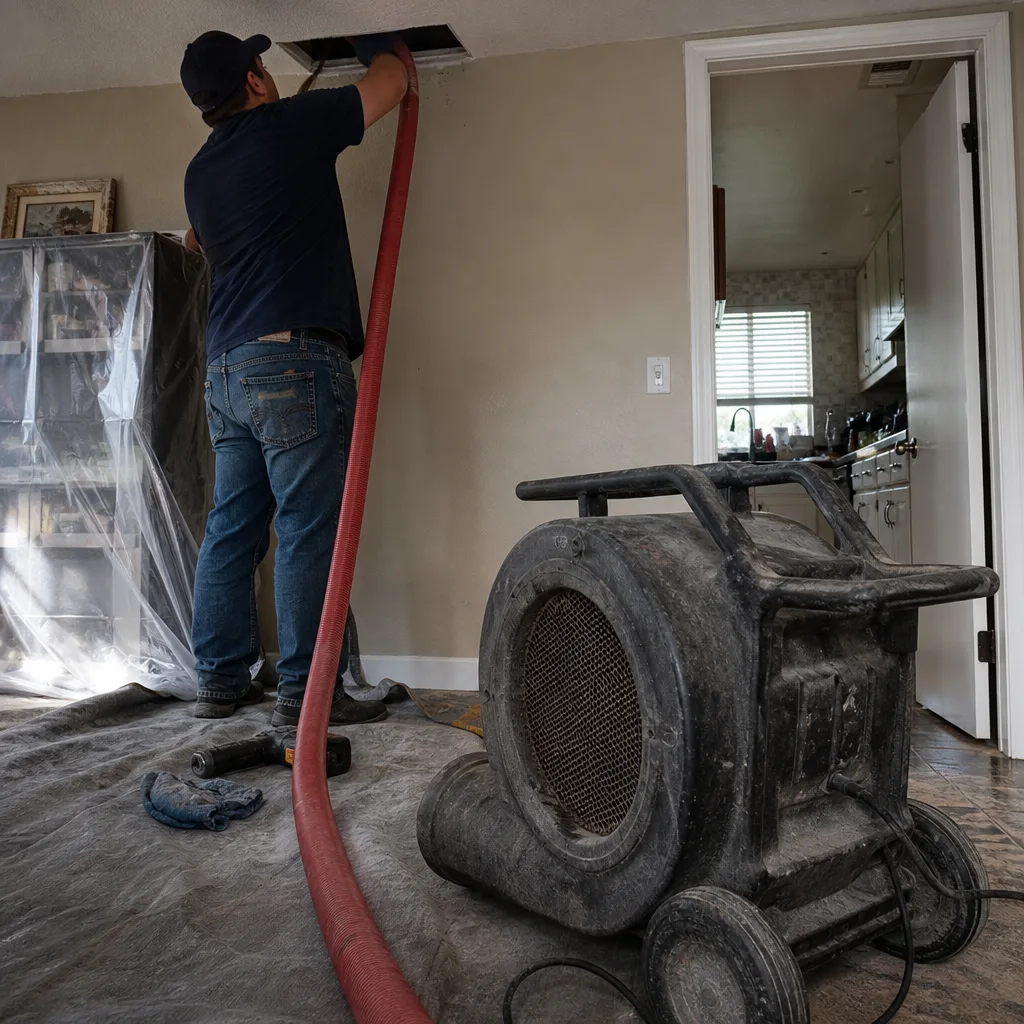
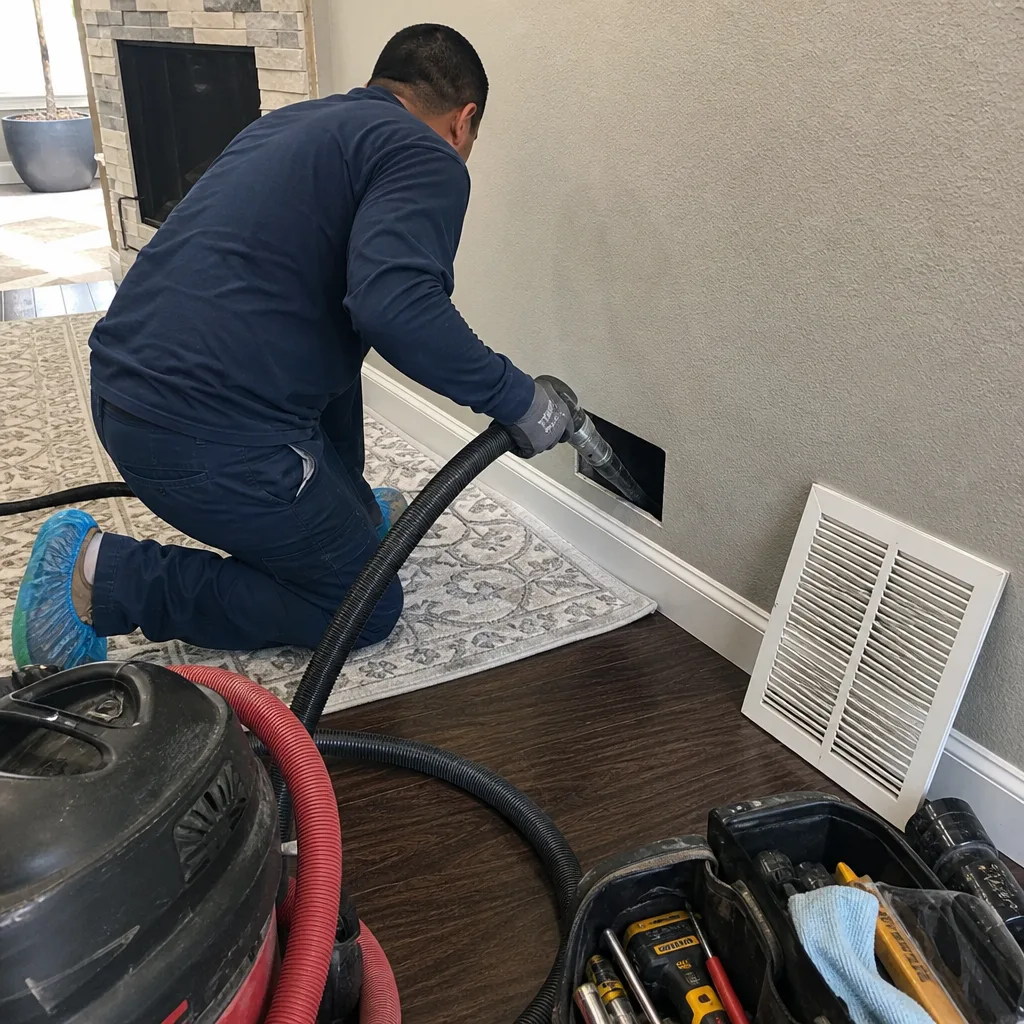
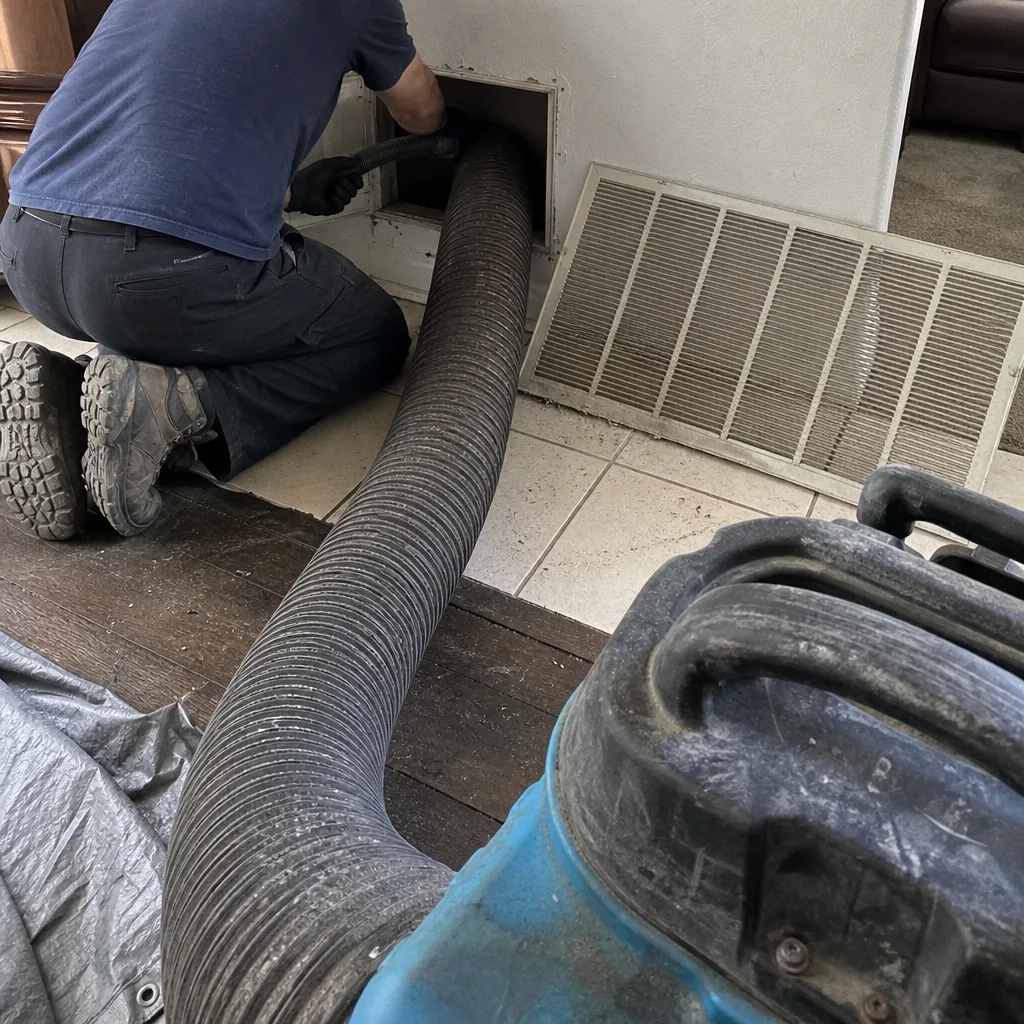
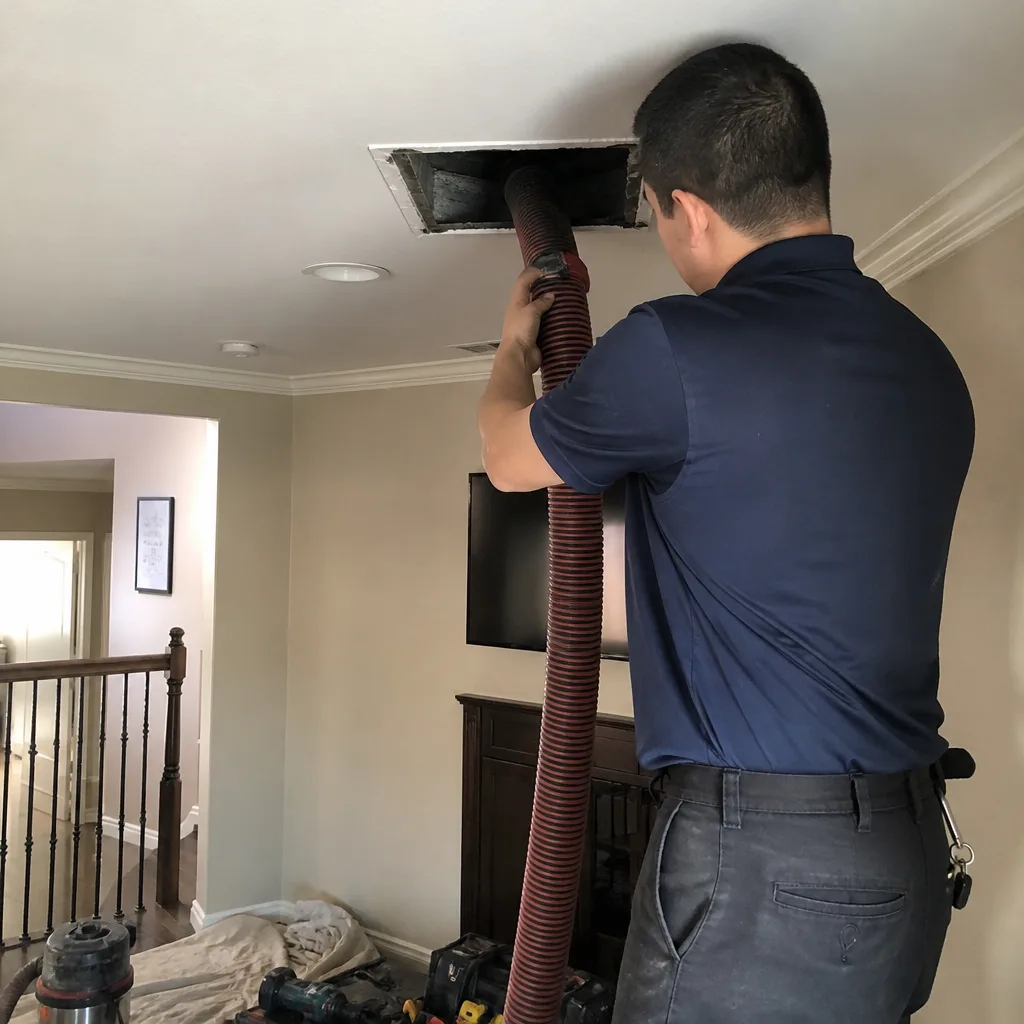
The source-removal vacuum is the foundation. In residential applications, this is either a truck-mounted unit or a portable Nikro HEPA-filtration vacuum. The key specification isn’t just suction power; it’s the filtration. A HEPA filter captures 99.97 percent of particles at 0.3 microns. This matters because a vacuum without HEPA filtration is just moving dust from one location to another. The source-removal approach means the vacuum is creating negative pressure on the entire duct system while cleaning is happening, so any dislodged material is pulled toward the vacuum rather than pushed into the living space. This is the single most important difference between professional and DIY work.
The rotary brush system, such as Rotobrush equipment, solves the physical reach problem discussed earlier. A rotary brush head travels through the duct on a powered shaft, agitating the full interior surface area. Combined with the negative pressure from the vacuum, this achieves actual debris removal rather than debris relocation. The brush head reaches the trunk line, the branch runs, the bends and transitions. This is the difference between cleaning the first five feet and cleaning the full run.
The compressed air whip is used for specific situations where a rotary brush isn’t ideal, such as lined ducts or delicate flex duct. The whip agitates debris loose with controlled air pressure while the vacuum captures it. This is a technique tool, not a main workhorse, but it demonstrates the professional’s ability to adapt to the specific duct material in the home.
The video inspection scope is what separates a legitimate cleaning company from a hose-and-gone operator. Before cleaning, it documents the condition of the ducts. After cleaning, it shows the results. For Westminster homeowners, this is your proof the work was actually done. If a company cannot show you before-and-after footage of the inside of your ducts, you have no way to verify their work.
Finally, proper contractors use containment equipment from manufacturers like Abatement Technologies. This involves sealing off register openings and creating controlled airflow paths so that during the cleaning process, your living spaces don’t become a settling zone for dislodged particulate. This is the piece most homeowners never see and most discount operators skip entirely.
Westminster Climate Factors That Affect Duct Contamination
Westminster’s specific climate patterns influence how quickly and with what type of material your ducts accumulate contamination. Our seasonal air duct cleaning guide for Westminster can help you calibrate how often cleaning matters and what you’re dealing with.
Westminster sits a few miles inland from the coast. We get the marine layer in the mornings, especially during May Gray and June Gloom, but we don’t get the consistently high humidity of a place like Houston. What that means for ducts is moderate moisture exposure. The marine layer keeps early-morning humidity elevated, but the dry inland air takes over by afternoon. This creates a cycle where dust that enters the ducts has the opportunity to pick up slight moisture overnight and then bake dry during the day. Repeated cycles cause dust to adhere to duct surfaces rather than blowing through. It’s not mold country, but it’s a pattern that creates sticky, hardened deposits over time.
Santa Ana wind events in the fall push dry, dusty air through the region. Homes in Westminster with any gaps in the building envelope, especially older tract homes with less sealing, see elevated dust infiltration during these wind events. That fine, powdery dust that coats furniture during Santa Anas is also entering your return ducts and making its way through the system.
Homes near major roadways, including the 405 and the 22, experience higher particulate loading from vehicle traffic. That sooty, fine-grained material deposits in ductwork and is particularly good at adhering to the light moisture the marine layer provides. These aren’t emergency conditions. They’re cumulative conditions, which is why a regular professional cleaning schedule matters more than emergency intervention.
The Decision Framework: DIY vs Professional in Six Checks
Here’s a practical framework we use when Westminster homeowners call and ask whether they should attempt a DIY cleaning first or go straight to professional service. Run through these six checks and the answer usually becomes obvious.
- Check your registers. Remove a vent grille and look inside with a flashlight. If you see light dust accumulation within the first few feet and the rest of what’s visible looks clean, a DIY surface pass is reasonable. If you see heavy buildup, dark material, or debris extending beyond what your light reaches, call a professional.
- Check your return. The return register, the one where the filter lives, is usually the dirtiest visible point in the system. Pull the filter and look at the return plenum behind it. If there’s significant dust buildup on the metal surfaces there, that material has been bypassing your filter for some time and has distributed throughout the system. One DIY approach cannot solve this.
- Assess the occupants. Anyone with asthma, allergies, COPD, or compromised immunity in the home? Then the dislodging problem we discussed earlier is reason enough to skip DIY and call a contractor with proper HEPA containment. The risk-to-reward ratio changes when vulnerable people breathe your air.
- Consider the home’s age and history. Homes built before 1990 in Westminster often have original ductwork unless a major remodel or HVAC replacement happened. Original ducts mean decades of accumulation, possible loose joints, and material degradation. This is not a DIY situation, and it may require Air Duct Repair in Westminster in addition to cleaning.
- Review recent work. If you’ve had drywall work, flooring replacement, or roof work in the last 12 months, construction debris is in your ducts. A professional cleaning will remove it throughout the system. A DIY pass will remove it from the first few feet and leave you with a false sense of completion.
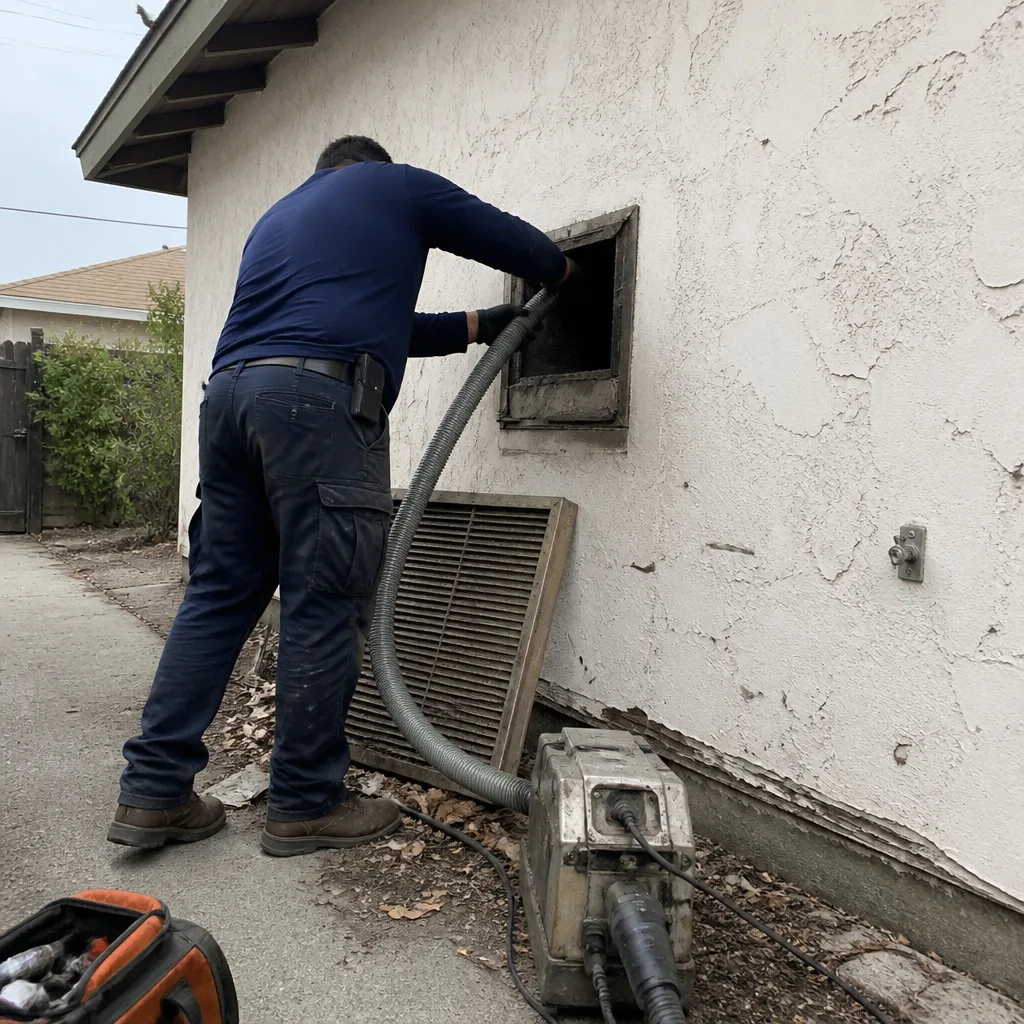
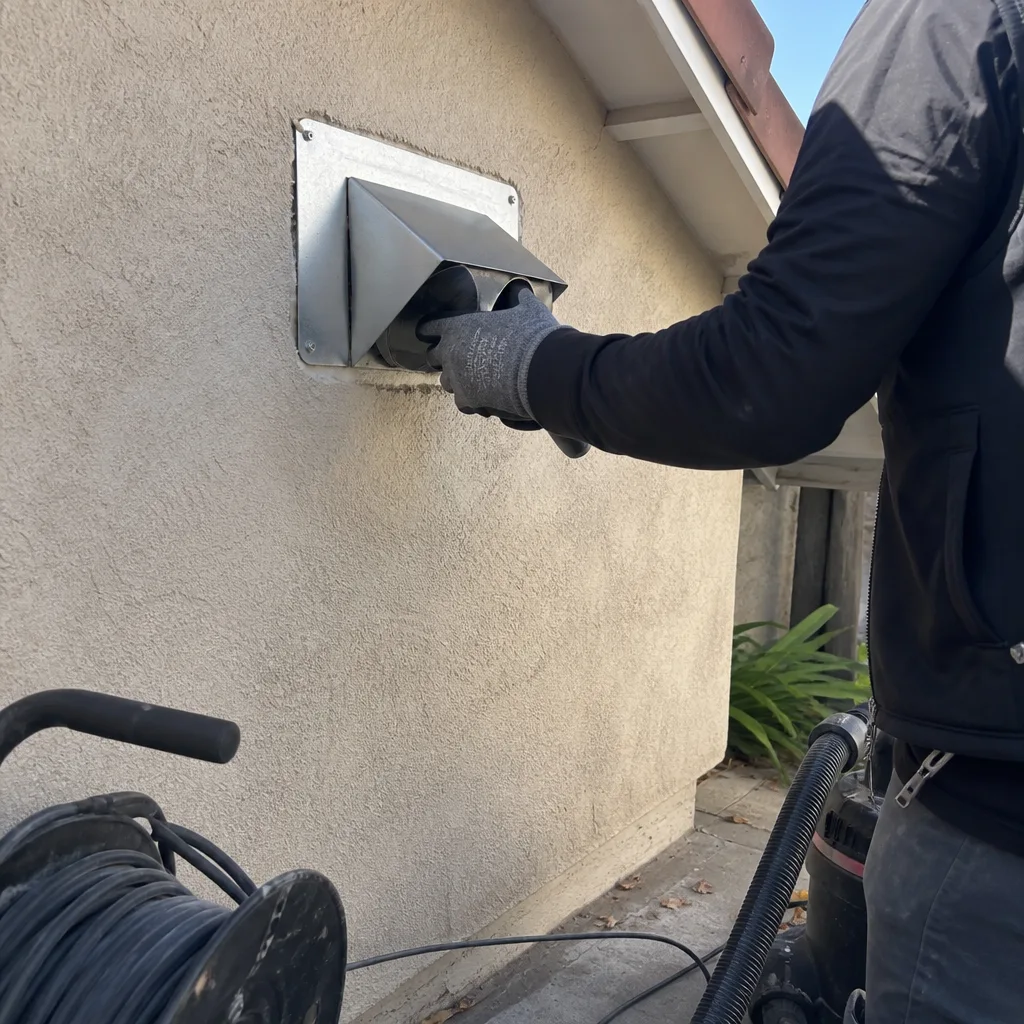
- Look at your dryer vent while you’re thinking about it. Dryer lint is a different contamination profile from HVAC dust, but it’s relevant. If your dryer vent hasn’t been cleaned in two or more years, that’s a fire hazard independent of your HVAC ducts. Professional Dryer Vent Cleaning in Westminster addresses the lint accumulation with equipment designed for the job. It’s not an upsell; it’s a separate maintenance requirement for your home.
The Repair Dimension: What DIY Cleaning Cannot Address
One of the structural limitations of DIY duct work isn’t about cleaning at all. It’s about discovery. When a professional contractor cleans your ducts, the process inherently involves inspection. We’re inside the system with a video scope. We see what’s actually there. And what’s actually there is frequently something that needs repair, not just cleaning.
Disconnected duct runs are more common than most homeowners realize. The flexible ductwork used in many Westminster homes, especially those built during the housing boom decades, connects to trunk lines and register boxes with zip ties and tape. Over years of thermal expansion and contraction, these connections fail. A disconnected branch run means conditioned air is blowing into your attic or crawlspace instead of your living room. No amount of register vacuuming addresses this.
Crushed or kinked flex duct is another common finding. Flex duct that’s been compressed by attic storage, pest activity, or poor initial installation restricts airflow. Rodent damage is unfortunately common in Westminster attics, and rats and mice chew through ductwork with remarkable enthusiasm. These are structural problems that cleaning alone cannot solve. They require repair or replacement of the damaged duct sections.
Leaks at seams and joints are the third category. A properly sealed duct system keeps conditioned air inside until it reaches the register. Leaks at seams mean you’re paying to condition your attic. In Westminster, where summer attic temperatures can exceed 130 degrees, leaking cool air into that environment is expensive. Duct sealing is a repair function, not a cleaning function, and it’s work performed by companies that do Air Duct Repair in Westminster, not by cleaning-only operators.
This is why the DIY versus professional decision is not just about cleaning quality. A professional cleaning includes an inspection that often surfaces repair needs the homeowner never knew existed. If the goal is a fully functional, efficient HVAC system, the inspection component is arguably as valuable as the cleaning itself.
Common Mistakes to Avoid
- Believing register-level cleaning equals system cleaning. We covered the 10 to 15 percent ceiling. Repeating it here because it’s the most common misconception: cleaning what you can see does not clean what you can’t see, and the parts you can’t see are where the air quality problems live.
- Using a leaf blower to “clean” ducts. Yes, people do this. It dislodges debris at high velocity with zero capture, distributing years of accumulated dust throughout the home in minutes. If a contractor suggests this approach, end the conversation.
- Buying a cheap “duct cleaning service” from a group deal site. Westminster homeowners get targeted by these offers. The standard model is a low teaser price, a technician arrives with a shop vac, spends 45 minutes, and the result is indistinguishable from what you could do yourself. Professional equipment costs real money to deploy, and that cost cannot be hidden inside a $49 coupon.
- Skipping the filter check. The single highest-impact thing any Westminster homeowner can do for duct cleanliness is maintain a proper filter and change it on schedule. No amount of professional cleaning compensates for a collapsed, bypassed, or clogged filter that allows particulate into the system in the first place.
- Ignoring the dryer vent because it’s not HVAC. Lint accumulation in dryer vents is a leading cause of house fires. It’s also a separate system from your HVAC ducts that requires separate attention. If you’re thinking about air flow and ductwork in your home, include the dryer vent in that assessment.
- Treating duct cleaning as an emergency service. Duct contamination is cumulative. It builds slowly. The solution is not an emergency call; it’s a scheduled maintenance item. Westminster homeowners who get caught off guard are usually those who never considered their ducts until a visible problem appeared.
- Failing to verify the work. If a company cannot show you before-and-after video of the inside of your ducts, you have no evidence the service was performed. Demand the footage. Every legitimate operator in Westminster should be able to provide it.
See the difference
 Before
 After
 Before
 After
 Before
 After
When to Call a Professional
If any of these apply to your Westminster home, skip the DIY attempt and schedule a professional cleaning: visible mold in or around ducts or registers, evidence of rodent or pest activity in the system, someone in the home with a respiratory condition, a history of water damage or flooding, ducts that haven’t been professionally cleaned in more than five years, or a remodel within the last 12 months that generated significant dust. In any of these cases, the dislodging problem makes DIY counterproductive, and a proper source-removal cleaning with HEPA containment is the responsible approach. Duct Cleaning Westminster offers free estimates in Westminster – call (877) 752-8412 to schedule an assessment.
Frequently Asked Questions
Professional air duct cleaning in Westminster typically costs between $350 and $700 for a whole-home system, depending on the home’s square footage, number of registers, system accessibility, and contamination level. Homes with multiple HVAC systems or heavy contamination run higher. Some companies quote per-vent pricing; we recommend working with contractors who provide one flat price for the complete system before work begins. Call (877) 752-8412 for an exact quote – estimates are free.
Cheap duct cleaning quotes usually reflect cheap equipment and a truncated process. A two-person crew with a truck-mounted HEPA vacuum, a Rotobrush rotary brush system, and containment setup takes three to five hours on a typical home. A one-person operation with a shop vac takes 45 minutes. The $49 or $99 offers are structured around high-volume, low-contact-time work that leaves the inaccessible 85 percent of your ducts untouched. Then the company converts to upsells for services that should have been included.
Ask for video documentation. A professional Westminster duct cleaning contractor should be able to show you before-and-after footage from inside your main trunk line and representative branch runs, captured with a video inspection scope. If a company cannot provide internal duct footage, there’s no way to verify the work was performed beyond a clean-looking register grill, which you could accomplish yourself.
The National Air Duct Cleaners Association recommends professional cleaning every three to five years for most homes. Westminster-specific factors can shorten that interval: homes near major roadways, households with pets, homes with recent remodel work, or occupants with respiratory conditions may benefit from cleaning every two to three years. Homes with good filtration, no pets, and minimal outdoor particulate exposure may stretch to five years or beyond.
Duct cleaning has two independent value propositions: air quality and system efficiency. Even without allergy concerns, removing caked-on debris from coils, blower components, and duct surfaces improves airflow and reduces strain on the HVAC system. For Westminster homeowners with attic-mounted systems in unconditioned space, the efficiency component alone can justify the cost. Add in the inspection value, which often surfaces repair needs before they become expensive failures, and the service earns its keep even for non-allergic households.
Sometimes. Musty odors from vents usually indicate microbial growth somewhere in the system, most commonly the evaporator coil or condensate pan in the air handler. Professional cleaning that includes coil cleaning and drain pan treatment can eliminate the source. If the odor persists after cleaning, the problem may be in the duct liner or insulation, which requires inspection and possibly repair. Call (877) 752-8412 to discuss your specific situation.
The Bottom Line
DIY duct cleaning in Westminster has a legitimate but narrow scope: register-level surface cleaning, which addresses about 10 to 15 percent of your system’s surface area. Everything beyond that requires professional source-removal equipment, proper HEPA filtration, and the inspection capability that comes with a commercial-grade approach. The decision isn’t about whether DIY is bad; it’s about whether DIY matches what you’re actually trying to accomplish. If you want cleaner-looking grilles, grab the shop vac. If you want a duct system that delivers clean air throughout your Westminster home, call a contractor who offers professional air duct cleaning with the equipment to actually do the job. The CFM numbers don’t lie.
Written by the team at Duct Cleaning Westminster. For more guides & resources, visit our blog.