
Last updated November 2, 2026
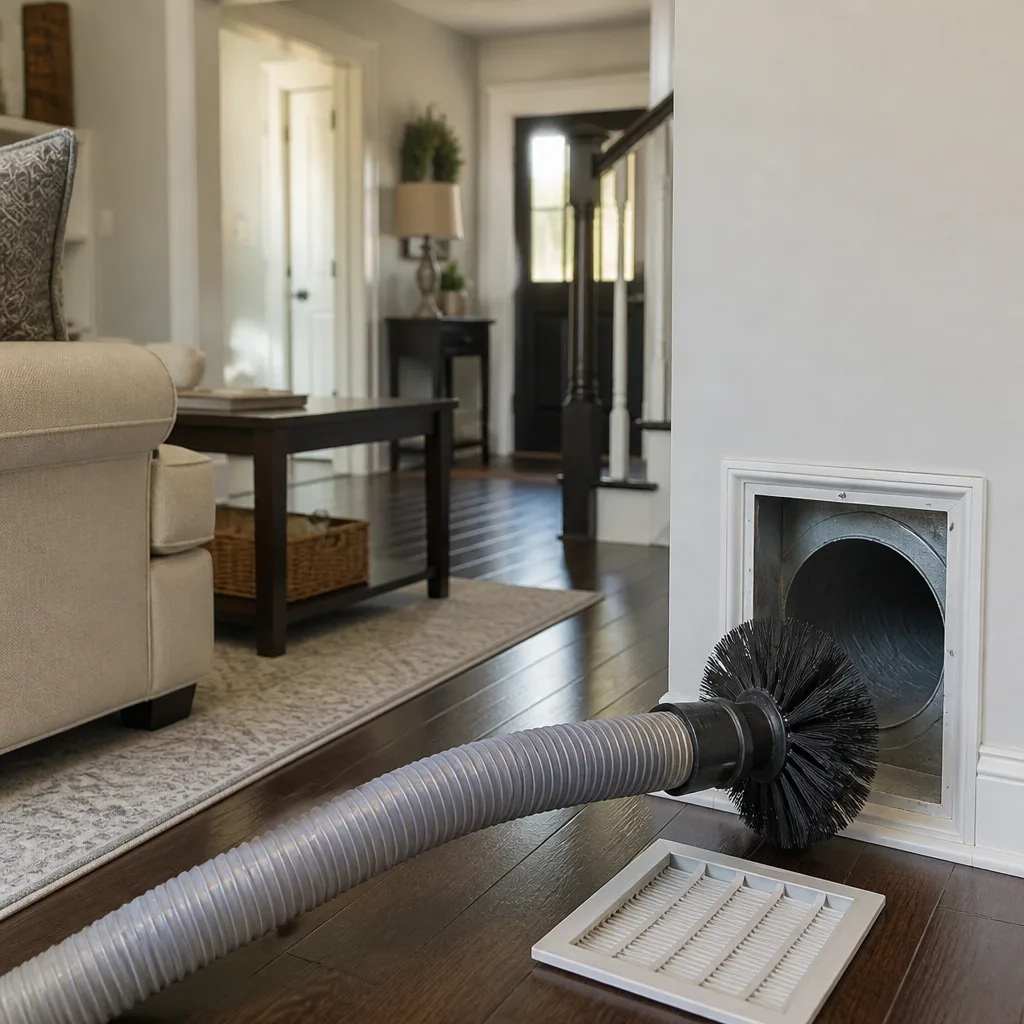 Whole-home duct cleaning
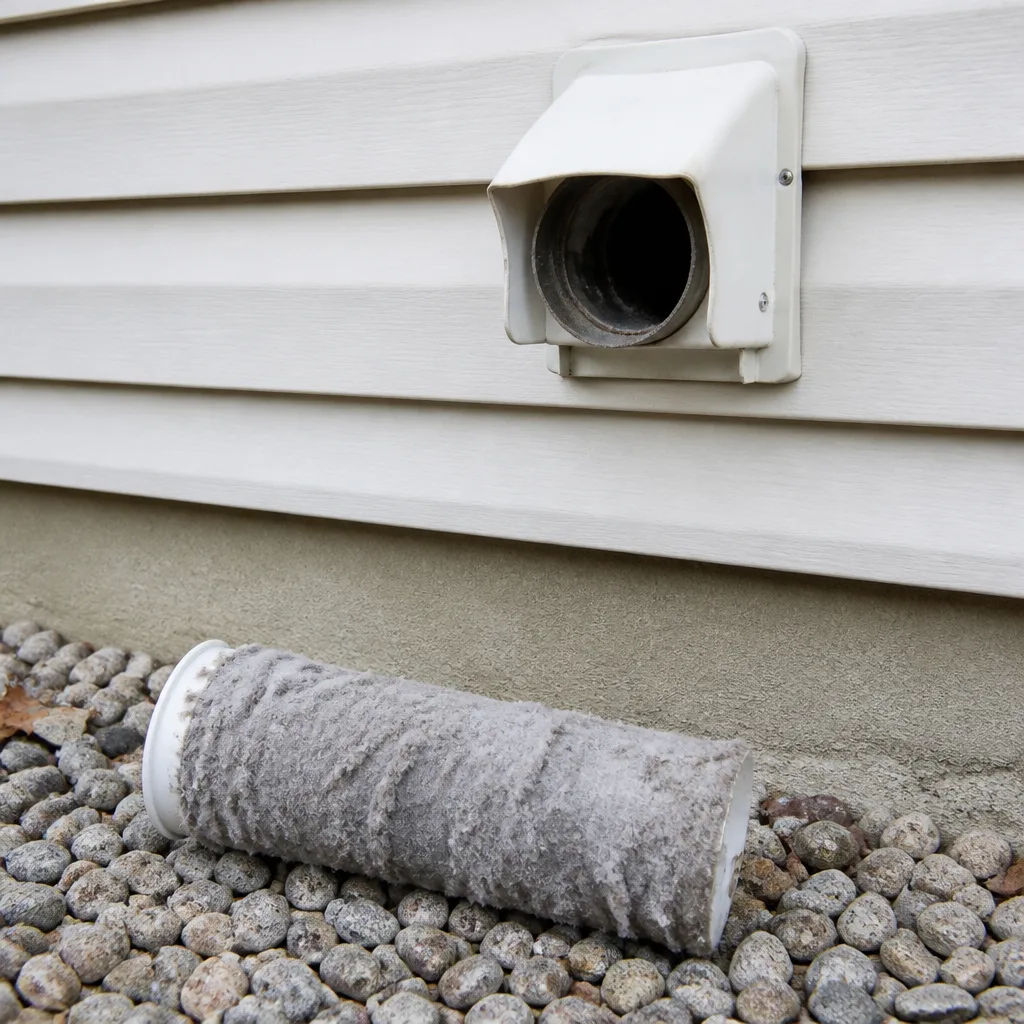 Dryer vent cleaning
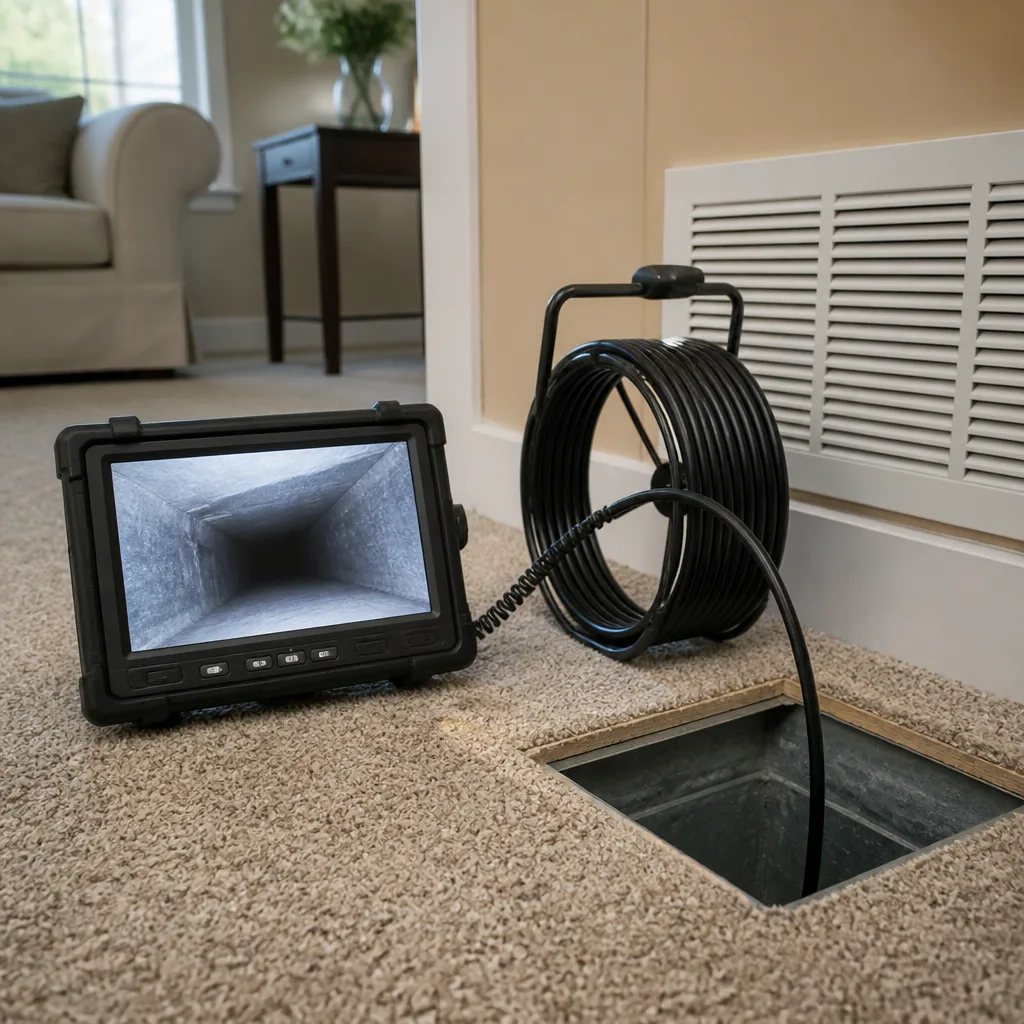 Camera inspection
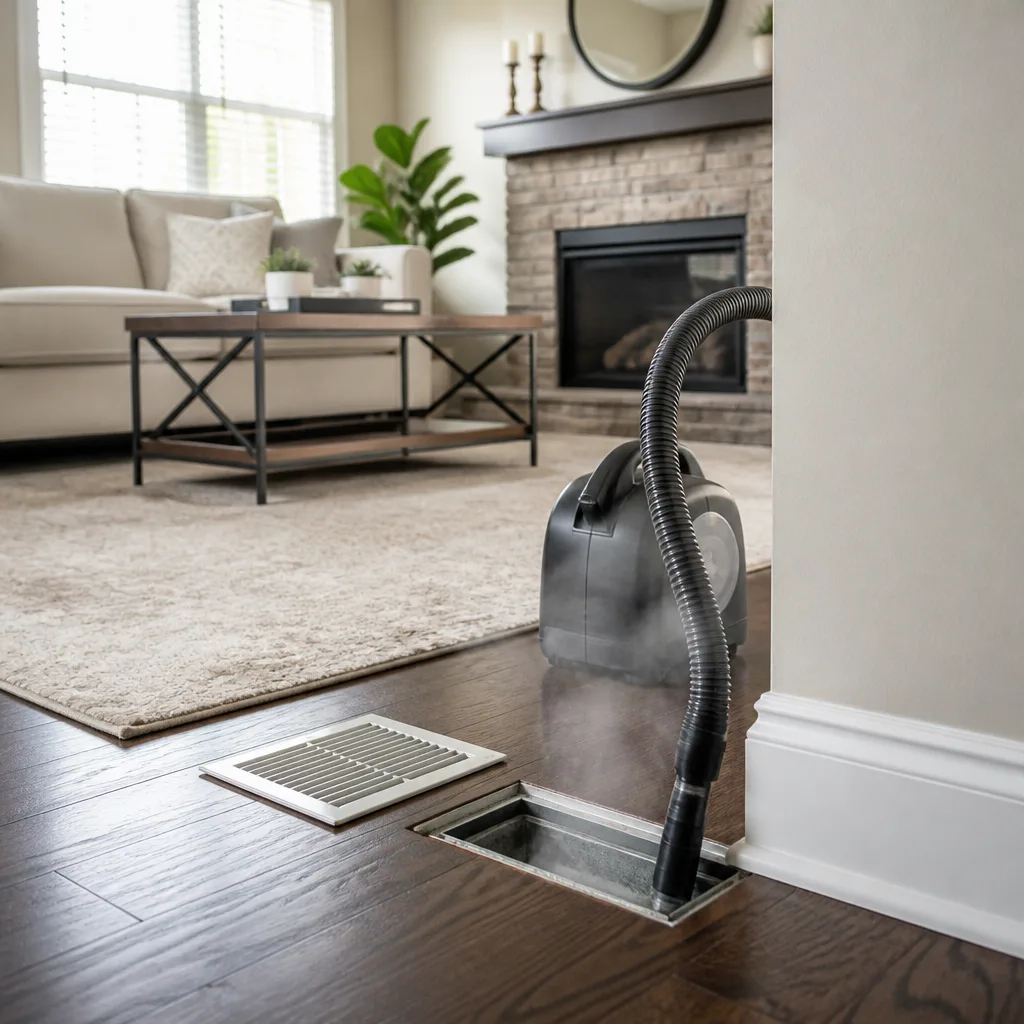 Sanitizing & deodorizing
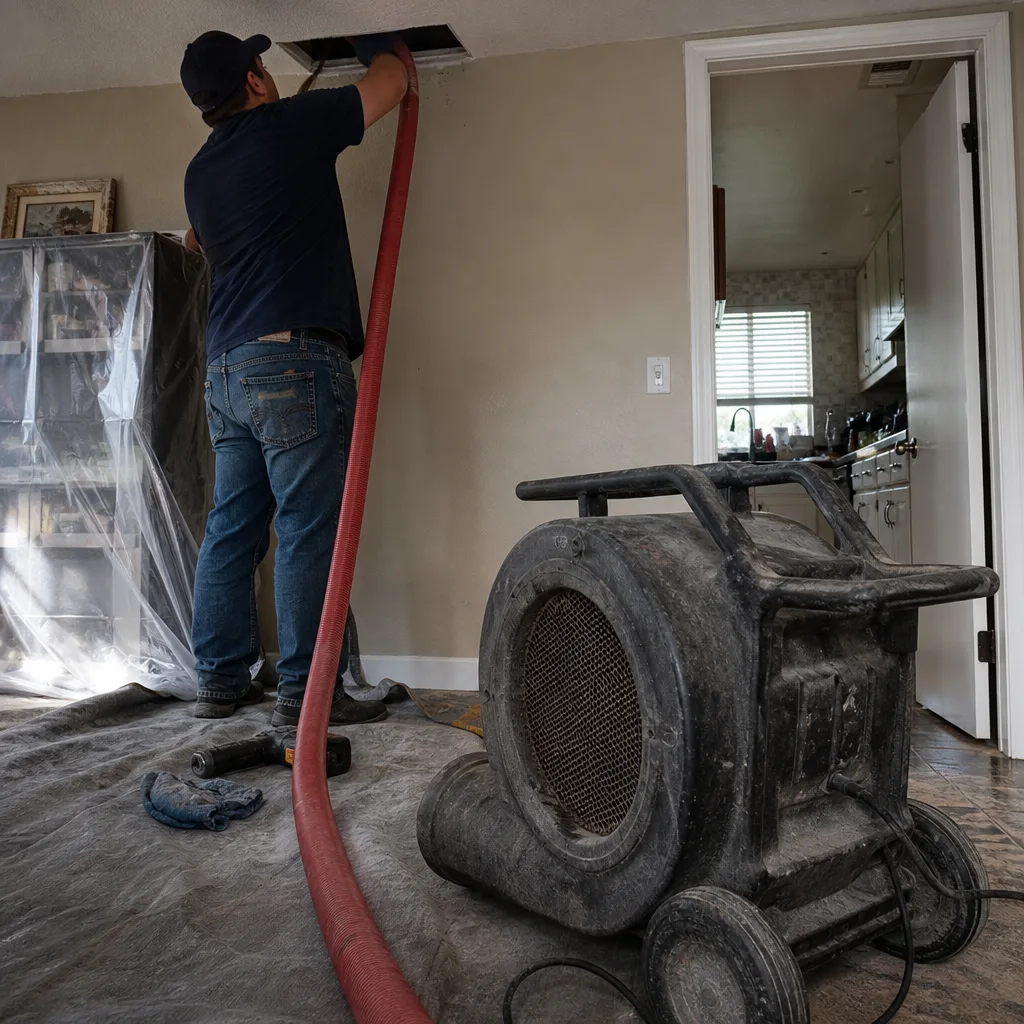
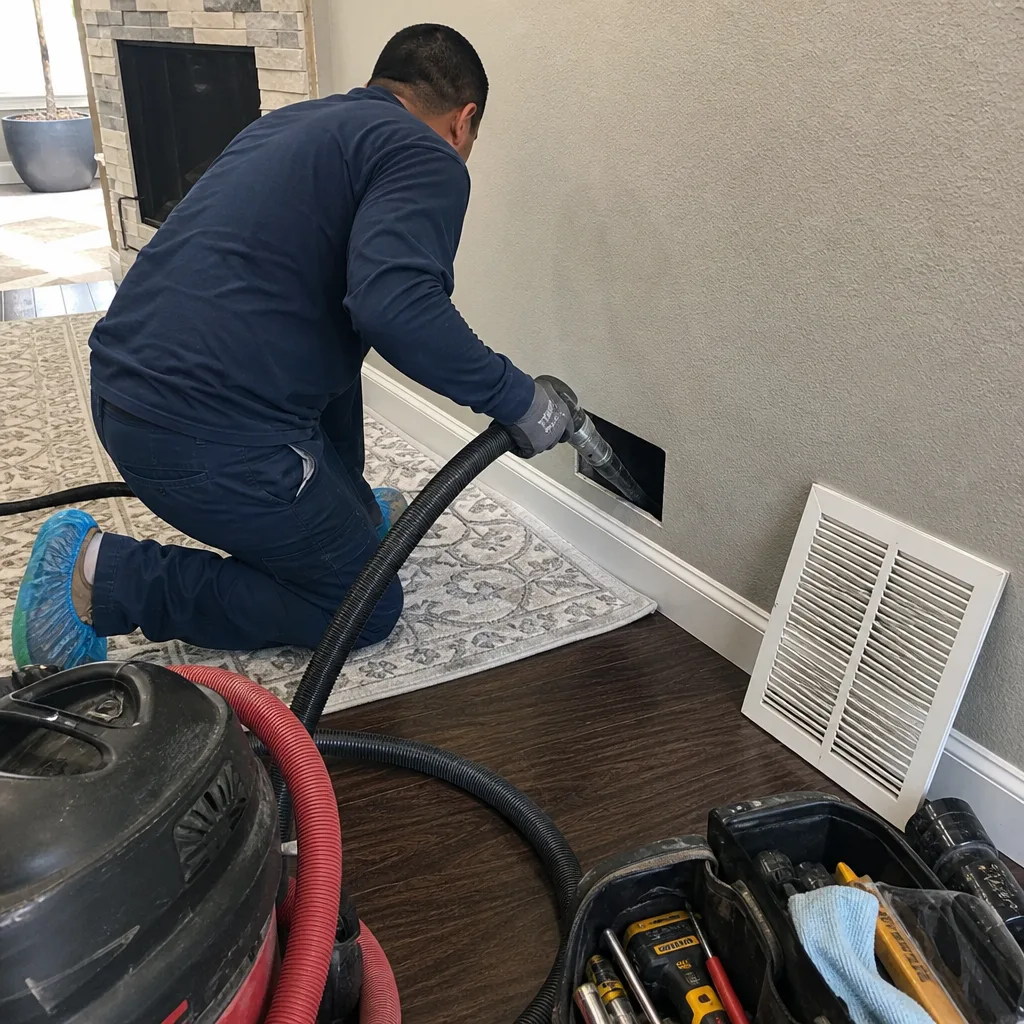
Whole-system duct and dryer vent check with before-and-after photos - you see exactly what came out of your vents
That "$99 whole-house special" is a bait ad - the real number appears once they are in your hallway, or the "clean" is a shop-vac at the register. We photograph the inside of your ducts before and after instead.
Seasonal Air Duct Cleaning Care for Westminster: Year-Round Homeowner’s Guide
During a Santa Ana event, outdoor particulate matter in Westminster can spike to 5 to 10 times normal levels in under an hour, and a system without a properly seated filter can pull that load directly into the duct trunk, compressing months of normal accumulation into a single weather event. Most seasonal duct care guides are written for places with real winters: snow, frost, a furnace that sleeps half the year. Westminster doesn’t work that way. Our maintenance calendar is driven by three forces most national guides never mention: Santa Ana wind events, June Gloom humidity, and wildfire smoke advisories that drift over from the foothills. This guide explains what those forces do to your ductwork, when they hit, and what a homeowner in Westminster should actually do about it, season by season.
Styles & brands we work with
- Whole-home duct cleaning
- Dryer vent cleaning
- Camera inspection
- Sanitizing & deodorizing
Quick Answer
Seasonal air duct cleaning care in Westminster means timing your inspections and cleanings around three local weather patterns rather than a traditional four-season calendar. The critical windows are late summer through fall for Santa Ana wind contamination, late spring for June Gloom humidity checks, and immediately after any wildfire smoke event. A professional air duct cleaning in Westminster should be scheduled at minimum every 3 to 5 years, but homes near construction, homes with pets, and homes occupied by people with asthma or allergies often benefit from a fall cleaning every 2 to 3 years, timed before the heating season begins.
Table of Contents
- The Santa Ana Season: Westminster’s Highest-Risk Window
- June Gloom and Duct Humidity: The Microbial Risk
- Summer HVAC Runtime: Why a Clogged Return Is at Its Worst
- Wildfire Smoke Protocol for Westminster Homeowners
- The Year-End Reset: Preparing for Heating Mode
- A Filter Strategy That Actually Works for Westminster Air
- Signs Your Ducts Need Attention Sooner Than Scheduled
- Common Mistakes to Avoid
- When to Call a Professional
- Frequently Asked Questions
- The Bottom Line
The Santa Ana Season: Westminster’s Highest-Risk Window
Santa Ana winds typically begin in late September and can run through February, with the strongest events clustering in October and November. These winds blow from the high desert toward the coast, and by the time they reach Westminster, they’re carrying fine dust, pollen fragments, and whatever else the inland valleys have to offer. What makes Santa Ana season uniquely hard on duct systems is the combination of sustained wind and extremely low humidity, sometimes dropping below 10 percent. Dry, light particulate travels farther and stays airborne longer, which means more of it gets pulled into return registers and distributed through the supply side of your system.
We see a pattern in Westminster homes after significant wind events. Returns located near exterior doors or in rooms with older window seals show visibly heavier accumulation. Supply registers in bedrooms at the end of long duct runs, where airflow is slowest, develop a fine layer of dust that reappears within days of wiping it clean. That’s a signal that the duct interior, not just the register, is holding particulate that keeps getting pushed out as air moves through.
Before a Santa Ana Event
When wind advisories are issued for Orange County, there are three things worth doing before the dust starts moving:
- Check filter seating. A filter that’s bowed, loose, or not fully seated in its slot allows unfiltered air to bypass it entirely. In Santa Ana conditions, that bypass air carries the full particulate load directly into your duct trunk.
- Seal obvious return gaps. Walk the return path from registers to the air handler. Gaps at the filter slot, loose return duct joints, or a return grille that doesn’t sit flush against the wall all pull unconditioned, unfiltered air when the blower runs.
- Consider pre-event filter replacement. Starting a dust event with a fresh filter gives the system maximum surface area to capture what’s coming. A filter that’s already loaded has less capacity and higher resistance.
After a Significant Wind Event
Wait for the winds to fully subside before doing anything. Then:
- Inspect the filter. If it’s visibly loaded with fine tan or reddish dust, that material was in your airstream. Some of it stopped at the filter. Some of it didn’t.
- Check supply registers in low-airflow rooms. Bedrooms at the end of long runs and rooms with partially closed dampers are where settled dust shows up first. If you see a fine film, clean it and check again in a week. If it returns, the duct interior is likely holding significant dust.
- Schedule a professional inspection if you see rapid recurrence. An air duct repair in Westminster may be needed if the wind event exposed loose joints or separated returns that allowed particulate to enter the system downstream of the filter.
In our experience, Westminster homes within a mile of the 405 or the 22 see faster dust accumulation during Santa Ana events simply because the freeway corridors generate their own particulate, and the wind pushes it into residential streets. Homes in the neighborhoods east of Beach Boulevard, closer to the Santa Ana River channel, also report heavier dust loads when the winds come from the east. This is local, specific accumulation, not a generic dust problem, and it’s why a national seasonal guide won’t tell you what your own registers are telling you.
June Gloom and Duct Humidity: The Microbial Risk
Late May through early July in Westminster brings the marine layer, that persistent overcast that sits over the coastal plain most mornings and sometimes doesn’t burn off until afternoon. June Gloom pushes outdoor relative humidity into the 70 and 80 percent range for weeks at a time. Inside a home, the HVAC system is cycling to maintain comfort, and the ductwork is exchanging air between the conditioned interior and the attic or crawlspace where the duct runs live. If the ducts are poorly insulated, or if the attic is hot and the duct surface is cool, condensation forms on the outside of the duct jacket. That moisture, combined with the organic dust already inside the ducts, creates conditions where microbial growth can begin.
What to watch for during June Gloom:
- Musty odor from supply registers when the system first starts. This is the most common early indicator. The smell fades after a few minutes of airflow, which makes it easy to dismiss. It shouldn’t be ignored.
- Visible condensation or water staining on duct insulation in the attic. If you go into the attic on a June morning and see sweating on the duct exterior, the temperature differential is working against you.
- Increased dust or allergy symptoms that track with the marine layer season. If household members notice more sneezing or congestion specifically in late spring, the ducts may be contributing.
Homes with older duct systems, particularly those with fiberglass duct board rather than sheet metal wrapped in insulation, are at higher risk because the interior surface is more porous and holds moisture and organic material more readily. Homes that had a roof leak or plumbing leak in the past also carry residual risk: dust inside a duct turns to mud, and mud dries into a biological growth medium that reactivates when humidity rises again.
The practical takeaway is this: if you notice any of the signs above during June Gloom, a visual inspection of the duct interior is worth scheduling. A professional can tell the difference between normal household dust, which is light gray and dry, and the darker, clumped material that indicates moisture has been present. That distinction matters because cleaning alone won’t fix a condensation problem. The underlying cause, usually insulation failure or a duct leak pulling humid attic air into the system, has to be addressed too. That’s why we run Duct Cleaning Westminster home inspections with both cleaning and repair in mind. Cleaning a duct that’s going to re-accumulate moisture is a band-aid, and band-aids don’t hold in June Gloom conditions.
Summer HVAC Runtime: Why a Clogged Return Is at Its Worst
Westminster summers push HVAC systems to their highest annual runtime. July through September, the system may cycle for 8 to 12 hours a day. That’s the period when a restricted return, a loaded filter, or a partially blocked coil exerts maximum stress on the blower motor and compressor. It’s also when the consequences of neglected ductwork show up in your energy bill and your comfort.
Think about what a clogged return does mechanically. The blower is designed to move a specific volume of air, typically 400 cubic feet per minute per ton of cooling. When the return side is restricted, the blower has to work harder to pull air through the system. Static pressure rises. Airflow across the evaporator coil drops. The coil gets colder than it should, eventually freezing in severe cases. The compressor runs longer to try to satisfy the thermostat. Energy consumption rises, and cooling output falls. The homeowner experiences this as rooms that never quite cool down, a unit that runs constantly, and a bill that climbs through the summer.
What to Check Before Peak Cooling Season
- Replace or upgrade the filter in late June. Before the July heat arrives, start the high-runtime season with a clean filter. If you run a basic 1-inch filter, replace it monthly during summer. If you run a 4-inch media filter, check it monthly and replace it when it’s visibly loaded.
- Walk the house and feel return airflow. Hold a tissue near each return grille. It should be pulled against the grille firmly. If it barely moves in one room but moves strongly in another, you have a return balance or restriction problem.
- Listen for changes in system noise. A blower that’s gotten louder over the summer, or a whistling sound from the return, indicates rising static pressure. That’s a mechanical warning sign, not a quirk.
- Schedule a post-summer inspection in September or October. After three months of maximum runtime, the duct system has been processing every particle that entered the home. A post-season inspection catches accumulation before it gets pressed deeper into the system by winter heating cycles.
The summer season is also when we most often find disconnected or leaking ducts, because the temperature differential between the attic, which can hit 140 degrees in August, and the conditioned air inside the ducts, around 55 to 60 degrees, is at its extreme. That differential causes metal ducts to expand and contract, which can loosen joints over time. A duct that separated at a joint is losing cooled air into the attic, which means the system is working to cool the roof structure instead of your living room. In Westminster’s summer, that’s money leaving the system at a time when you’re already paying peak rates.
Wildfire Smoke Protocol for Westminster Homeowners
Westminster sits far enough from the forested mountains that direct wildfire threat is low, but smoke travels. When fires burn in the Angeles National Forest, the San Bernardino Mountains, or even further north, the prevailing offshore flow can carry smoke across the LA Basin and into Orange County. The result is that familiar orange-gray sky and an air quality index that spikes into the unhealthy range for days at a time.
Wildfire smoke is different from ordinary dust. The particles are finer, typically 0.4 to 0.7 microns, which means they penetrate deeper into the lungs and pass more easily through standard filters. They’re also chemically active, carrying combustion byproducts that can irritate airways at lower concentrations than ordinary particulate. For a duct system, a smoke event is a loading event: the entire volume of air in the home passes through the return, the filter, and the supply side, and smoke particles deposit on every interior surface they touch.
What to Do During a Smoke Advisory
- Upgrade the filter temporarily. If you normally run a basic MERV 8 filter, install a MERV 13 during the smoke event. MERV 13 filters capture a meaningful fraction of smoke particles, MERV 8 does not. Don’t leave the MERV 13 in permanently unless your system is designed for it; the higher resistance reduces airflow. Use it during the event, then return to your normal filter.
- Run the fan continuously. Set the thermostat to fan-on rather than auto. This keeps air moving through the filter constantly, which captures more smoke particles than intermittent cycling.
- Keep windows and doors closed. Obvious, but the failure mode is subtle: when the house is sealed, the HVAC system is the only air exchange mechanism you have. If the filter bypasses, you’re concentrating smoke inside rather than keeping it out.
- Check the filter daily during the event. A filter that’s gone from white to gray in 48 hours is telling you that the system is doing its job. Replace it when it’s visibly loaded.
After the Smoke Clears
Once the advisory lifts and outdoor air returns to moderate or better, assess the system. If your filter captured significant smoke, some smoke made it past the filter and into the duct interior. That material will continue to release odor and fine particles into the airstream for weeks or months. You’ll notice it most when the system first starts, as the air movement stirs settled particles off the duct walls.
A post-smoke duct cleaning removes that residual material. This is a situation where cleaning is genuinely warranted, not a routine interval service. We’ve cleaned systems in Westminster after smoke events and removed filter media loaded completely black with soot while the duct interiors held a fine film that coated every supply run. The homeowner couldn’t smell it anymore after a few weeks, but the material was still there, recirculating at a level below conscious detection. For households with asthma, allergies, or young children, that residual load matters.
The Year-End Reset: Preparing for Heating Mode
Westminster homes use their heating systems differently than homes in colder climates. The furnace or heat pump may run for only a few hours in the early morning during December through February, then sit idle the rest of the day. That intermittent operation creates a specific set of conditions inside the duct system.
During the cooling season, the evaporator coil condenses moisture out of the air, and that moisture flows to the condensate drain. The coil and the immediate ductwork downstream stay damp for part of every cooling cycle. When the system shifts to heating mode, that residual moisture dries out, but the minerals and organic material it left behind remain. The heat exchanger also gets its first firing of the season, and any dust that settled on it during the idle period burns off in the first few heating cycles. Homeowners often notice a brief burning smell the first time the heat runs, which is that dust load cooking off. If the smell persists beyond the first day or two, it’s worth investigating further.
Why Fall Cleaning Before Heating Season Makes Sense
- Removes summer accumulation before it bakes. Dust that sat in the ducts through the cooling season dries and hardens when the heat exchanger warms the air. Once baked, it’s harder to remove and more likely to break loose as fine particles that smell when they hit the hot surfaces.
- Gives the supply plenum and heat exchanger area a clean start. These components run hot during heating season. Debris on or near them creates odor and, in extreme cases, contributes to combustion efficiency problems in gas furnaces.
- Identifies cold-season duct leaks before heat is wasted. Heated air leaking into an uninsulated attic is pure loss. A fall inspection catches separation or damage while it’s still accessible and before you’re paying to heat the rafters.
- Addresses the Santa Ana dust that accumulated in October and November. By late fall, the system may have collected significant particulate from wind events. Cleaning before the holidays means the system runs clean during the season when the house is sealed against cold and guests fill the rooms.
For most Westminster homes, a fall cleaning every 2 to 3 years is the right interval. Homes with dogs or cats that shed, homes with smokers, homes where cooking happens frequently with gas appliances, and homes with occupants managing respiratory conditions should consider annual fall cleaning. Homes with sealed attics and newer, well-installed duct systems in low-dust neighborhoods can often go 3 to 5 years between cleanings. The register test is the simplest indicator: wipe a supply register clean, wait two weeks, and check it. If visible dust has returned, the ducts are feeding it.
A Filter Strategy That Actually Works for Westminster Air
Filter advice on the internet tends to be generic: change it every 90 days, upgrade to the highest MERV your system can handle. Westminster’s air doesn’t cooperate with generic advice. Santa Ana season loads filters in weeks, not months. June Gloom doesn’t load filters much at all, but it does wet them, which reduces efficiency and can support growth on the filter media itself. Wildfire smoke events can load a filter to capacity in days.
Here’s the approach we recommend for Westminster homeowners:
- Summer and Santa Ana season (July through November): check monthly, replace when visibly loaded. The air is carrying more particulate, and the system runs more hours. A filter that looks gray after four weeks has done its job and is now restricting airflow.
- June Gloom (May through June): check for moisture, not just dust. A filter that feels damp or shows water staining needs replacement even if it doesn’t look dirty. Wet filter media is a growth medium.
- Smoke events: check daily, upgrade to MERV 13 temporarily, replace when loaded. Smoke will turn a white filter gray within 48 hours in a sealed house with the fan running.
- Winter (December through February): monthly checks are usually sufficient. The air is cleaner, but the system is still circulating whatever Santa Ana left behind.
The filter slot matters as much as the filter itself. A filter that’s loose in its slot, even by a quarter inch, allows air to bypass around the edges. That bypass air is unfiltered, and in Santa Ana conditions, it’s carrying exactly the load you’re trying to keep out of the ducts. If your filter slot doesn’t hold the filter snugly, or if there’s a visible gap around the filter frame, have it corrected. This is a common issue in Westminster homes with original HVAC installations from the 1970s and 1980s, when filter slots were built to looser tolerances than modern practice calls for.
Signs Your Ducts Need Attention Sooner Than Scheduled
The calendar is a guide, not a rule. Westminster’s weather patterns mean that some years, a system that was cleaned two years ago is already due again. These are the indicators we tell homeowners to watch for between scheduled cleanings:
- Dust returns to surfaces within days of cleaning. If you wipe a shelf and it’s coated again in three days, the dust is coming from the air, not the surfaces, and the duct system is the delivery mechanism.
- Visible dust at supply registers when the system runs. Stand in a dark room with a flashlight pointed at a supply register while the system is running. If you see particles moving in the beam, that’s visible evidence of duct contamination.
- Rooms that never reach the thermostat setpoint. A room that’s persistently warmer in summer or colder in winter, despite the system running, may have a duct leak or a disconnected run serving that room.
- Musty or stale odor when the system starts. This points to moisture inside the ducts or microbial growth, especially if it’s worse during June Gloom.
- Increased dust or symptoms after a specific event. After Santa Ana winds, after a wildfire smoke advisory, after a neighbor’s construction project. These events load the system, and if the load was heavy, the schedule should be advanced.
- Energy bills climbing without a change in usage. Rising bills with the same thermostat settings often mean the system is working harder to move air through a restricted system, which can be a filter issue, a coil issue, or a duct issue.
None of these signs alone is proof that cleaning is required. But two or more together, especially if they follow a known loading event, make a professional inspection the sensible next step.
Common Mistakes to Avoid
- Waiting for a visible problem before checking anything. By the time dust is visible on every surface in the home, the duct system has been distributing contamination for weeks or months. The fix is more expensive and the system runs inefficiently in the meantime.
- Using the same filter year-round and changing it on a fixed 90-day schedule. Westminster’s air quality swings wildly by season. A filter that’s fine in February may be packed solid by mid-October. Seasonally aware filter management costs the same and works far better.
- Running the fan constantly during a smoke event without a filter upgrade. Fan-on mode with a standard MERV 8 filter just circulates smoke particles through the house faster. The strategy only works with a filter that captures smoke, which means MERV 13 or better.
- Ignoring the smell of dust when the heat first comes on. The first-heat smell is common, but a persistent or worsening odor indicates material on the heat exchanger that won’t simply burn off in a day. That material may be from duct contamination or, worse, from debris that entered the system through a damaged return.
- Assuming duct cleaning and duct repair are separate problems handled by separate companies. A duct system that’s contaminated is often also damaged. Cleaning a system with a disconnected return or a leaking joint just means the contamination comes back. The two services belong together, which is why we built our company around air duct repair and cleaning as one scope of work.
- Sealing the house during June Gloom to keep humidity out while running the AC less. Lower runtime means less dehumidification, which means the interior humidity climbs. The ducts, already at risk from the marine layer, now sit in a higher-humidity environment for longer periods.
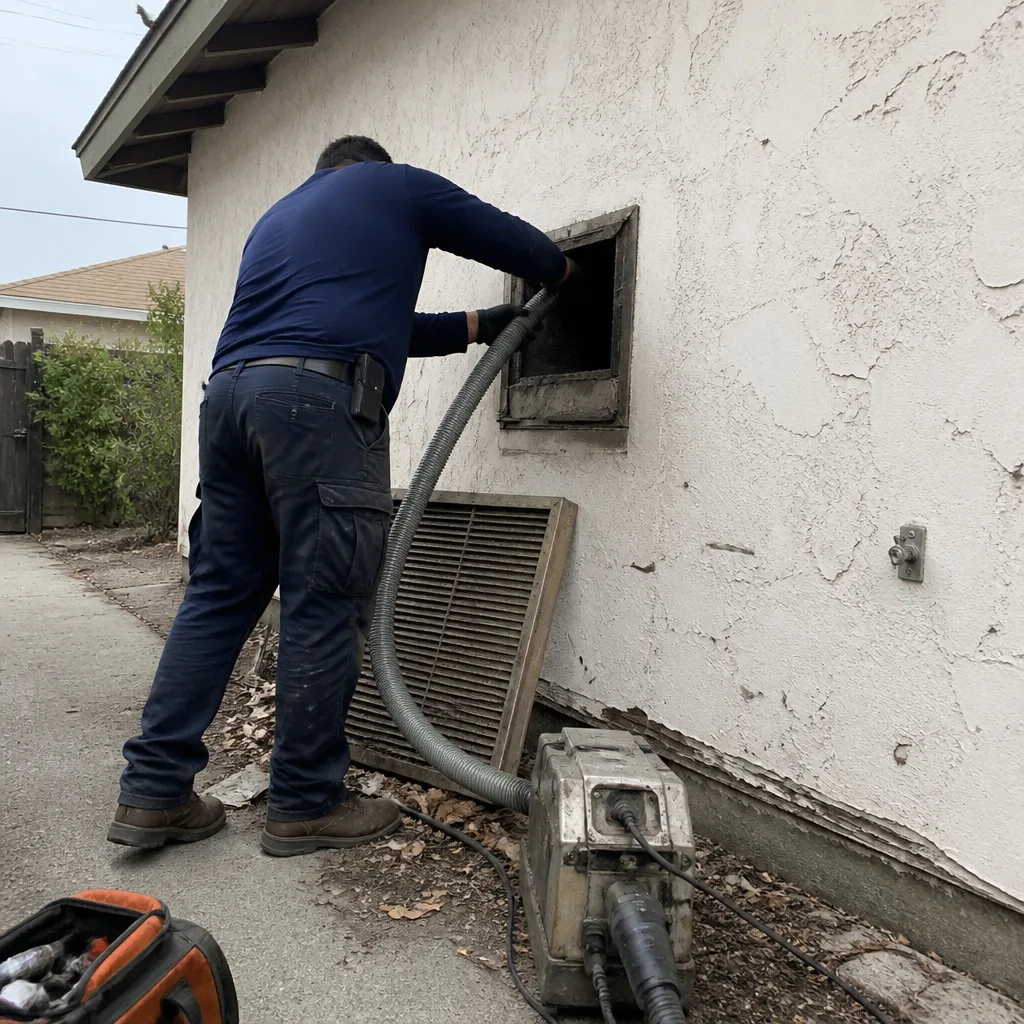
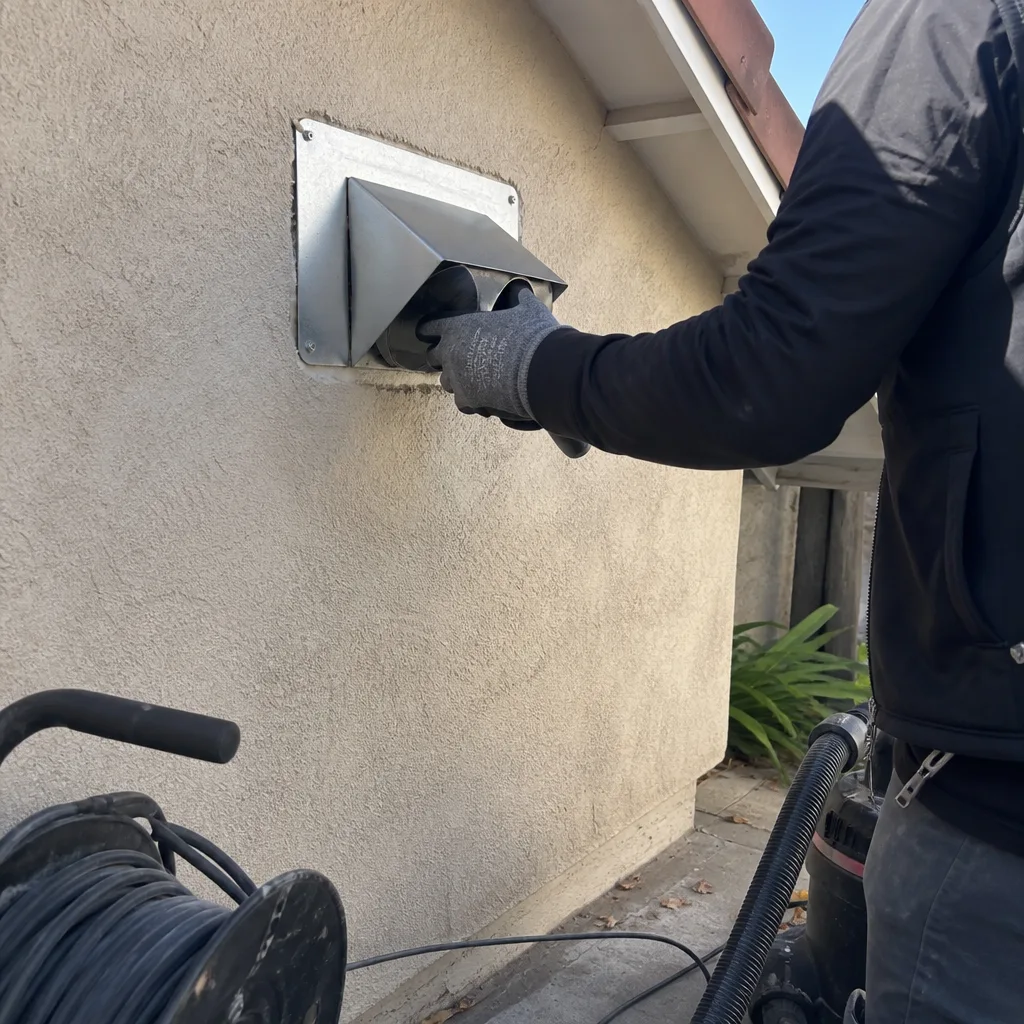
- Neglecting the dryer vent while focusing on the ducts. Westminster’s dry, windy climate makes lint accumulation especially flammable. A dryer vent cleaning in Westminster is a fire-safety service, and it belongs on the same seasonal inspection calendar as duct care, not as an afterthought.
When to Call a Professional
Some situations call for equipment and access that homeowners don’t have. If you see visible mold growth on any duct surface, on the filter slot, or on the register grilles, a professional assessment is needed before anyone cleans, because cleaning without addressing the moisture source means the problem returns, and disturbing mold-contaminated surfaces without proper containment spreads spores through the living space. On the repair side, if rooms are consistently under-conditioned despite a working system, if you hear airflow noise from the attic, or if you find separated duct sections during an attic inspection, that’s a structural problem, not a cleanliness problem. We handle both: Duct Cleaning Westminster offers free estimates in Westminster with Rotobrush rotary brush systems and Nikro HEPA-filtration vacuums on every job, and our repair capability means we address what we find, not just what we were hired to clean. Call (877) 752-8412 to schedule an inspection.
Frequently Asked Questions
Most Westminster homes should have air ducts cleaned every 2 to 3 years, with the ideal timing in the fall before heating season begins. Homes with pets, smokers, allergy-sensitive occupants, or high local dust loads from freeway proximity or Santa Ana exposure may benefit from annual fall cleanings, while homes with newer sealed duct systems and low-dust interiors can often extend to 3 to 5 years. Call (877) 752-8412 for a free assessment of your specific system.
Santa Ana winds carry fine, dry, high-velocity particulate from the inland deserts, and that dust penetrates window seals, door gaps, and return paths, loading the duct system in hours rather than months. The extremely low humidity of Santa Ana events also keeps particles airborne longer, which means more material enters the return and gets distributed through the supply side. Homes near freeways and the Santa Ana River channel see the heaviest accumulation.
Wildfire smoke deposits ultrafine particles on duct interior surfaces, and while the material can be removed with professional cleaning, it doesn’t leave on its own and continues to recirculate into the living space until it’s addressed. The odor may fade after a few weeks, but the particles remain and can aggravate respiratory conditions. We recommend a professional assessment after any significant smoke event where the filter was visibly loaded. Call (877) 752-8412 to schedule a post-smoke inspection.
June Gloom pushes Westminster’s outdoor humidity to 70 to 80 percent for weeks, and that moisture finds its way into duct systems through condensation on cold duct surfaces, wet filters, and humid attic air drawn into leaky returns. The result is a period where microbial growth inside ducts is more likely than any other time of year, especially in homes with older fiberglass duct board or known past moisture issues.
Duct cleaning removes accumulated dust, debris, and biological material from the interior of the duct system using professional equipment like Rotobrush rotary brushes and Nikro HEPA-filtration vacuums, while air duct repair in Westminster fixes structural problems such as disconnected sections, leaking joints, damaged insulation, and poorly seated returns that allow contamination to enter the system in the first place. Most homes that need cleaning also have repair issues, which is why we handle both under one scope of work rather than asking you to coordinate multiple contractors.
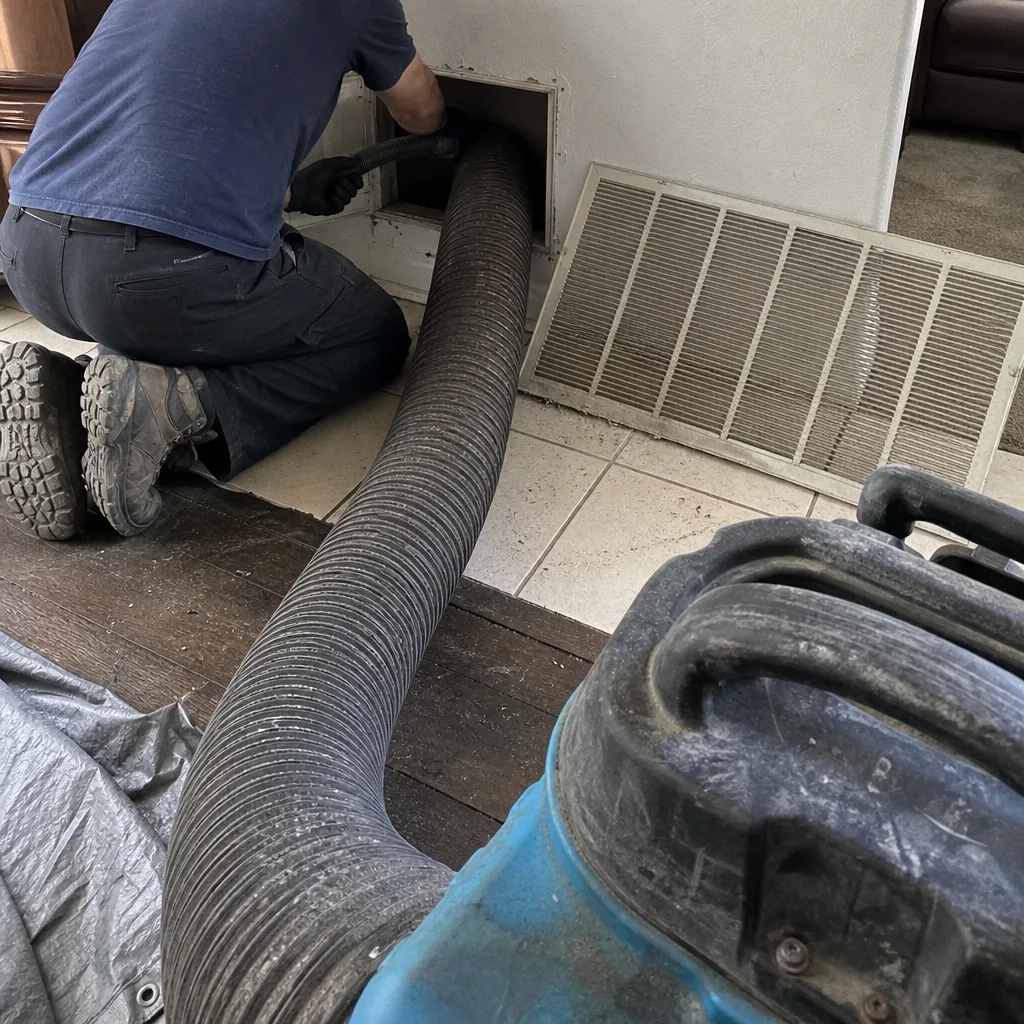
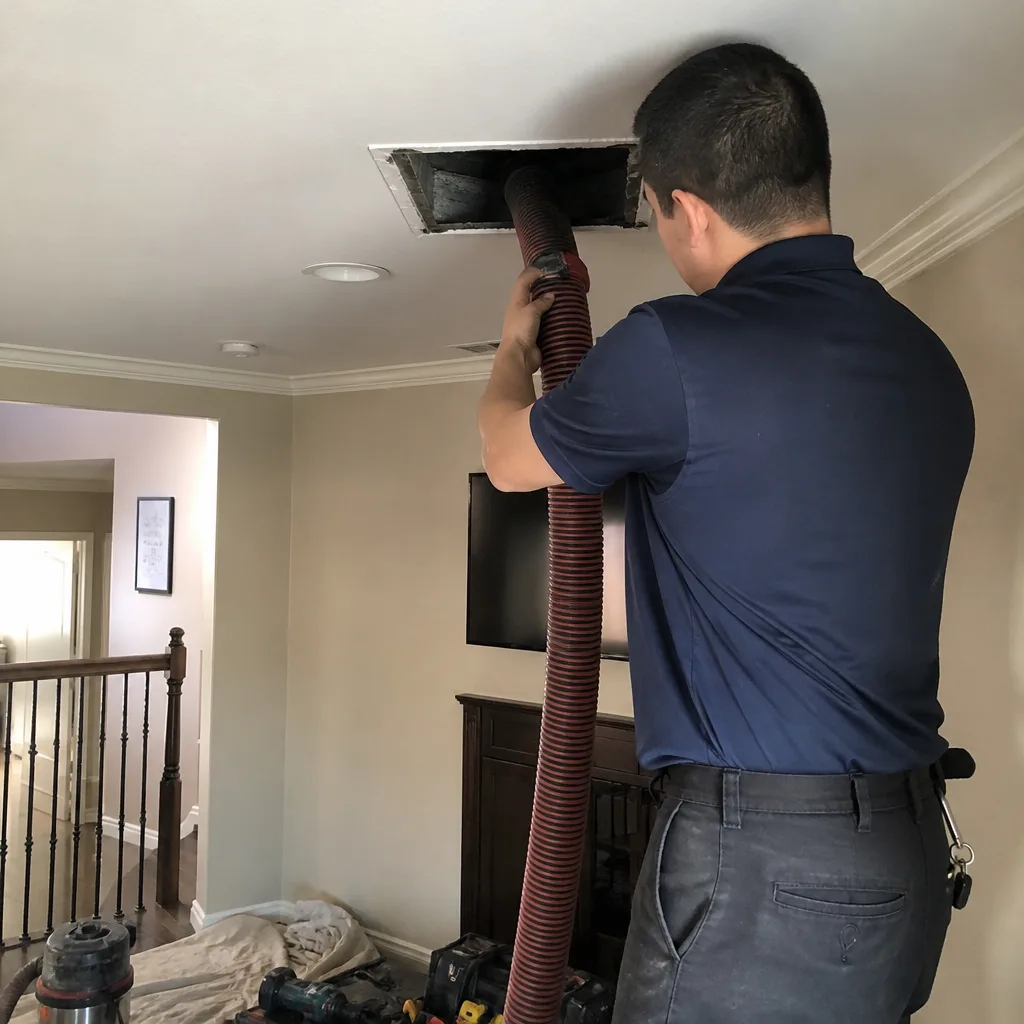
A professional duct cleaning in Westminster should include before-and-after photos of the duct interior, not just a receipt. With Nikro HEPA-filtration vacuums and Rotobrush rotary brush agitation, you should be able to see the difference in the photos: clean metal surfaces, no visible dust film, and registers that show the same. We provide photo documentation on every cleaning because we believe you should be able to verify the work without climbing into the attic yourself. Call (877) 752-8412 to ask about our process.
The Bottom Line
Westminster’s duct care calendar is written by the weather, not by the seasons. Santa Ana winds load the system with fine particulate in the fall. June Gloom raises the humidity risk in late spring. Summer pushes the system to maximum runtime when restrictions cost the most. Wildfire smoke events can load the entire system in days and leave residue that recirculates for months. A homeowner who checks filters seasonally, watches for the signs of duct contamination, and schedules professional cleaning in the fall before heating season is addressing the real risks of this specific climate. If you’re seeing dust return quickly, smelling the system when it starts, or dealing with rooms that never reach temperature, call Duct Cleaning Westminster home at (877) 752-8412 for a free estimate, and we’ll inspect what’s actually happening inside your ducts.
Written by the team at Duct Cleaning Westminster, serving Westminster since 2017.
See the difference
 Before
 After
 Before
 After
 Before
 After